Table of Contents
ToggleIntroduction
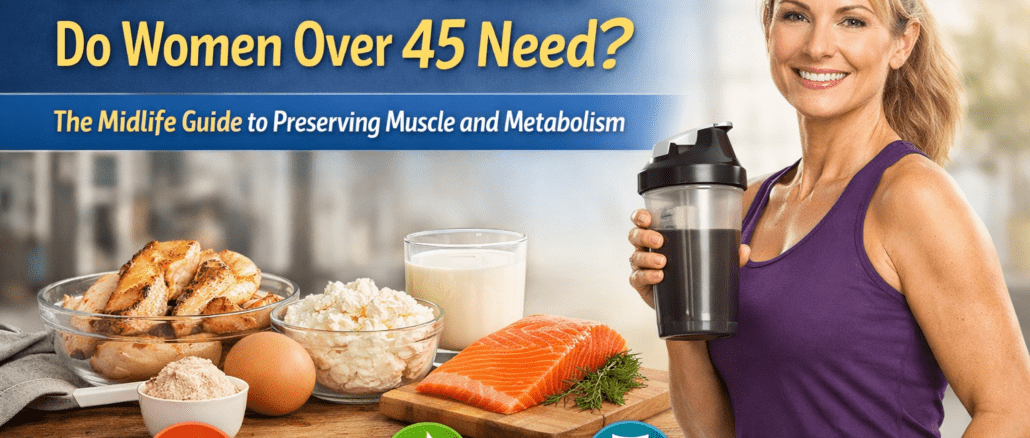
How much protein do women over 45 need? This question matters more in midlife, when muscle starts to decline and metabolism begins to slow down.
After 45, hormone changes, lower muscle mass, and changes in daily activity can all affect how well the body burns calories. Protein plays a key role in keeping muscle strong, so knowing how much you need can help support a healthy metabolism.
If protein intake is too low, age-related muscle loss may accelerate. Over time, this may lead to slower calorie burn and easier fat gain.
Why Protein Needs Change After 45
Protein plays a central role in repairing and maintaining muscle tissue. As we explain in our article on muscle loss after 45, muscle naturally decreases with age, especially if you are not doing strength training or eating enough nutritious food.
Hormone changes during perimenopause can also affect how well your body builds and protects muscle. When muscle mass goes down, your body burns fewer calories at rest, which can play a role in midlife weight gain.
Because of these changes, women over 45 may need slightly more protein than they did in early adulthood.
How Much Protein Do Women Over 45 Need Per Day?
General dietary guidelines often suggest about 0.8 grams of protein per kilogram of body weight per day for adults.
However, research increasingly suggests that adults over 40 may benefit from higher intake levels, especially when trying to preserve muscle mass.
Many experts recommend a range of:
1.0 to 1.2 grams of protein per kilogram of body weight per day
For example:
A woman weighing 150 pounds (68 kg) may benefit from approximately 68–82 grams of protein daily.
According to the National Institute on Aging, adequate protein intake is important for maintaining muscle and supporting healthy aging.
Individual needs may vary depending on activity level, overall health, and resistance training habits.
How Protein Supports Metabolism After 45
Protein affects metabolism in several key ways:
Helps repair and build muscle
Supports a healthy resting metabolism
Helps keep blood sugar steady
Helps you feel full longer
Muscle burns calories even when you are resting, so keeping muscle strong helps your body use more energy each day.
Protein also supports insulin balance, which we explain in our article on insulin resistance in women over 40.
When blood sugar stays steady, the body may be less likely to store extra energy as fat.
Can Protein Help With Belly Fat?
Protein does not directly remove belly fat, but it supports several processes that affect how the body stores fat:
Helps protect muscle mass
Supports daily calorie burn
Helps reduce cravings
Keeps blood sugar more stable
As we explain in our guide on cortisol and belly fat after 45, stress hormones and insulin changes can lead to weight gain around the abdomen.
Getting enough protein helps preserve muscle, which may help balance some of these metabolic changes.
Best Protein Sources for Women Over 45
Good sources of protein include:
Eggs
Greek yogurt
Lean chicken or turkey
Fish
Tofu and tempeh
Beans and lentils
Milk, cottage cheese, and other dairy foods
Eating protein throughout the day may help your body repair muscle better than eating most of it in one large meal.
Should You Consider Protein Supplements?
Whole foods are usually the best way to get nutrients. However, some women find it hard to reach their daily protein goals with food alone.
In those cases, protein powders or simple meal plans can help when used in a balanced way.
If you are looking into metabolism support options, our detailed CitrusBurn review explains the ingredients and their intended benefits in clear terms.
Supplements should support healthy habits, not replace regular meals, movement, and good sleep.
Frequently Asked Questions
How much protein should a 50-year-old woman eat each day?
Many experts suggest about 1.0 to 1.2 grams of protein per kilogram of body weight daily to help protect muscle.
Does protein boost metabolism?
Protein helps maintain muscle, and muscle helps your body burn calories even at rest.
Is eating too much protein harmful?
Very high amounts may not offer extra benefits for most people. A balanced amount based on body weight and activity level is usually best.
Should protein be spread out during the day?
Yes. Eating protein at each meal may help your body repair muscle better than eating most of it at one time.
Final Thoughts
How much protein do women over 45 need? Many women may benefit from slightly higher protein intake than earlier adulthood to help protect muscle and support metabolic health.
Muscle loss after 45 can slow calorie burn, so getting enough protein becomes an important step for maintaining strength and helping manage weight.
When paired with strength training, steady blood sugar, and good stress control, the right amount of protein can support metabolic health during midlife.
Be the first to comment