Table of Contents
ToggleIntroduction
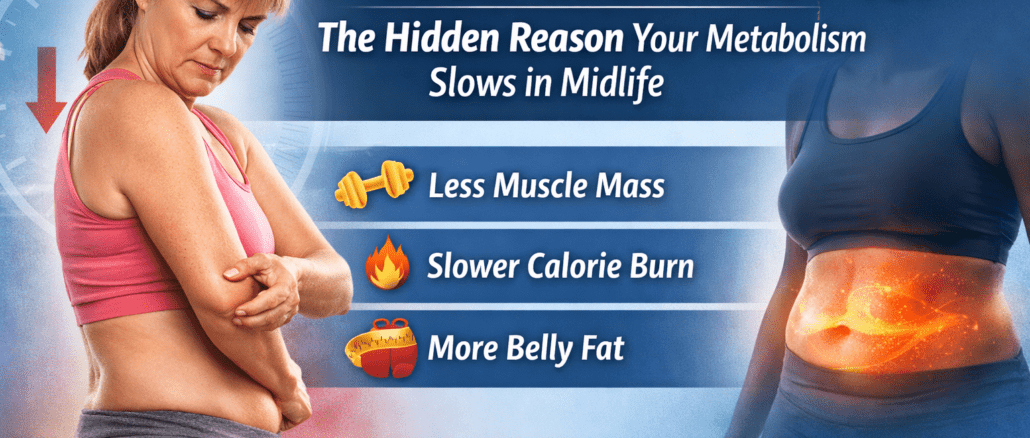
Muscle loss after 45 is one of the most overlooked reasons many American women over 40 suddenly feel like their metabolism is slowing down. In the United States, women often notice lower energy, stubborn belly fat, weaker muscle tone, and weight gain that feels harder to manage even when daily habits stay mostly the same.
For many women, this shift feels confusing and frustrating because the routines that worked in their 30s no longer seem to work the same way after midlife.
This shift is not just about aging. It is closely linked to the gradual loss of muscle mass, known as sarcopenia, which directly affects how many calories your body burns every day.
Understanding this connection is key to reversing midlife weight gain patterns and supporting a healthier metabolism.
What Is Muscle Loss After 45?
Age-related muscle loss is commonly referred to as sarcopenia. It refers to the gradual breakdown of muscle over time, beginning as early as the 30s and becoming more noticeable after 45.
Age-related muscle loss can affect strength, mobility, metabolism, and overall energy levels as women get older.
Muscle burns calories even when your body is at rest, so when muscle mass goes down, your body burns fewer calories throughout the day.
Without regular strength training and adequate protein intake, muscle strength and physical function may gradually decline over time.
If you’re looking for practical habits that support muscle and metabolism together, our **Metabolism Reset After 40** guide provides a helpful starting point.
Why Muscle Mass Declines During Midlife
Many things can lead to muscle loss after 45:
Lower estrogen levels
Less physical activity
Long-term stress
Poor sleep habits
Not eating enough protein
As we explain in our guide on hormonal weight gain after 45, lower estrogen can change how the body keeps muscle and stores fat.
Hormone changes during perimenopause can make it harder to keep muscle, especially if strength training and diet are not adjusted to meet your body’s new needs.
To learn why these hormone changes affect metabolism, read:
How Muscle Loss Slows Metabolism
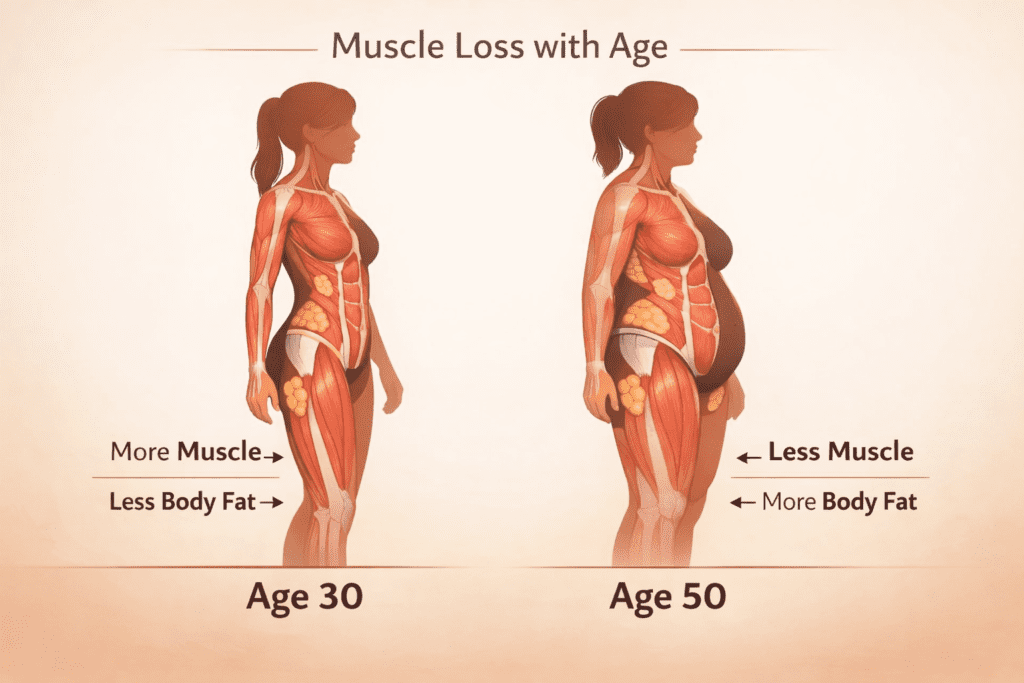
Muscle plays a key role in how many calories your body burns each day.
This is because muscle tissue is metabolically active, meaning it requires energy even while your body is resting.
When you lose muscle, your resting metabolism slows down. Blood sugar control may not work as well, insulin may become less effective, and your body may store fat more easily.
If you want to understand the bigger picture behind these metabolism changes, this guide explains it clearly:
👉 Signs Your Metabolism Is Slowing After 45
As muscle mass declines and insulin response changes, the body becomes more efficient at conserving energy rather than burning it.
The Connection Between Muscle Loss and Belly Fat
Muscle loss after 45 affects more than strength. It also changes your body shape and how your body handles energy.
When you lose muscle, your body burns fewer calories, stress hormones can have a stronger impact, and fat is stored more easily around the belly.
Together, these hormone and metabolism changes help explain the weight pattern many women see during midlife.
Signs Muscle Loss May Be Affecting You
Some common signs can include:
Feeling weaker than you used to feel
Having a harder time keeping muscle tone
Taking longer to recover after workouts
Gaining weight more easily than before
Noticing more fat around the belly
These changes usually happen slowly over time, so they can be easy to miss at first.
Can Muscle Loss After 45 Be Slowed for American Women?

Some muscle loss is a normal part of aging, but healthy habits can help slow it down.
Strength Training
Strength training helps your body build and keep muscle. Lifting weights or using resistance two to three times a week can support lean muscle over time.
Enough Protein
Eating enough protein becomes even more important after 45 because your body becomes less efficient at maintaining muscle. Choosing the right types of protein—and getting enough throughout the day—can make a noticeable difference in strength, metabolism, and recovery.
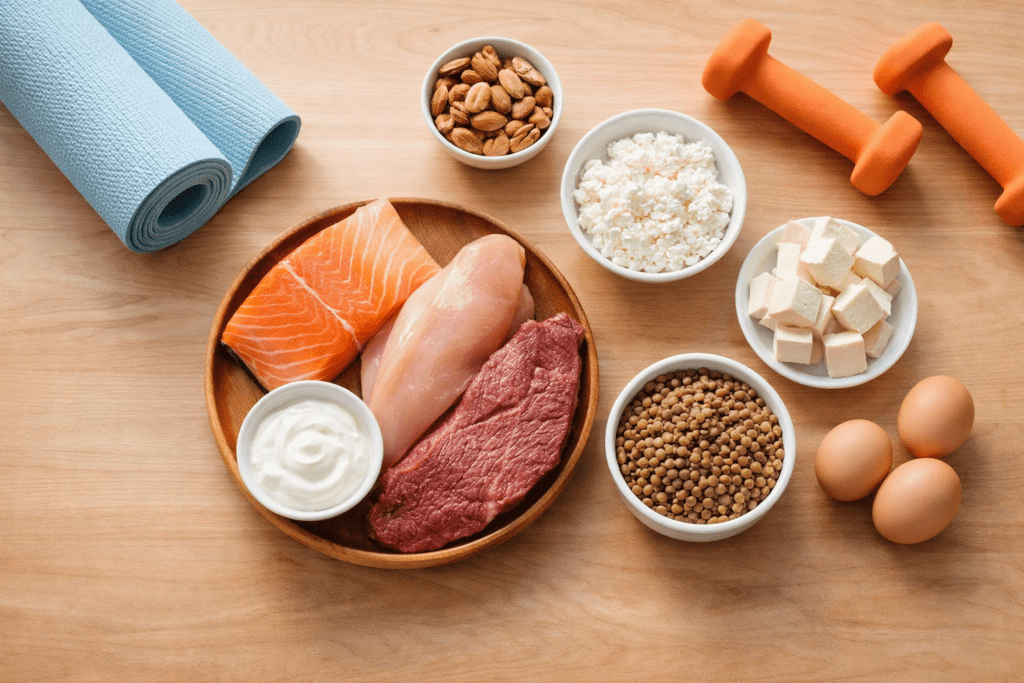
Without enough protein, the body may struggle to repair muscle tissue effectively, which can accelerate muscle loss over time.
If you’re unsure how much protein you actually need after 45, this guide explains recommended daily intake, meal planning, and practical food choices:
👉 How Much Protein Do Women Over 45 Need?
Protein helps repair and protect muscle. Eating protein at each meal may help your body maintain muscle as you age.
Daily Movement
Simple daily movement works even better when paired with healthy morning routines that support energy and metabolism.
👉 Morning Habits That Support Metabolism After 40
Regular movement supports blood flow, steady blood sugar, and overall metabolism. Simple daily activity can make a real difference.
Managing Stress and Sleep
High stress and poor sleep can slow muscle repair and affect hormone balance. Improving sleep and lowering stress can help your body recover better.
Editorial Note: This article is intended for educational purposes and is based on publicly available nutrition, metabolism, and healthy aging research. Individual experiences vary, and the information provided should not be considered medical advice or a substitute for guidance from a qualified healthcare professional.
Final Thoughts
Muscle loss after 45 plays a major role in slower metabolism and weight changes during midlife. As muscle goes down, the body burns fewer calories, and fat may be stored more easily.
When this happens along with hormone shifts, changes in insulin, and higher stress, it can strongly affect body shape and weight.
By focusing on strength training, eating enough protein, improving sleep, and building healthier daily routines, many American women over 40 can help protect muscle and support a steadier metabolism during midlife.
If you’ve started building healthier habits with strength training, protein, better sleep, and daily movement, you may also want to explore our **Best Supplements for Women Over 40** guide. It explains commonly used metabolism-support ingredients, summarizes current research, and helps you compare options before deciding what may fit your goals.
Frequently Asked Questions
Does muscle loss slow metabolism?
Yes, it can. Muscle burns calories even when you are resting, so when you lose muscle, your body burns fewer calories each day.
Why does muscle decrease after 45?
Muscle can decline due to hormone changes, lower estrogen levels, less physical activity, and the natural aging process.
Can strength training rebuild muscle after 45?
In many cases, yes. Strength training helps your body build muscle and can support a healthier metabolism.
Is muscle loss linked to belly fat?
Yes, it often is. When muscle goes down and calorie burn slows, the body may store fat more easily around the abdomen.
Be the first to comment