Table of Contents
ToggleIntro
If you’re an American woman over 40 and suddenly noticing stubborn weight—even though nothing in your routine has changed—you’re not imagining it.
Many women hit this stage and feel frustrated when the scale starts moving in the wrong direction—despite doing everything the same.
It can feel confusing—and honestly a little discouraging—when what used to work simply stops working.
In the United States, many women reach this point and start wondering why their usual routine no longer gives the same results.
This isn’t just about eating less or exercising more.
There are real changes happening inside the body—and understanding them is the first step toward finding what actually works.
Many women begin by making small, sustainable changes that fit into their everyday routine, such as improving nutrition, staying active, prioritizing sleep, and managing stress. These habits can help support overall metabolic health during midlife.
This is one reason why losing weight after 40 feels harder for many women, even when daily habits stay the same. As women get older, the body begins to change.
1. Metabolism Naturally Slows With Age
One reason weight loss gets harder after 40 is that metabolism may slow with age.
Metabolism is how the body turns food into energy.
After age 40, the body may burn fewer calories when resting than it did before.
As women move through midlife, natural changes in muscle mass and hormone levels can gradually affect how the body uses energy. These changes are a normal part of aging and may influence how easily women maintain their weight.
Because of these changes, women may need to adjust their diet and daily activity to help support a healthy metabolism.
2. Hormonal Changes Affect Fat Storage
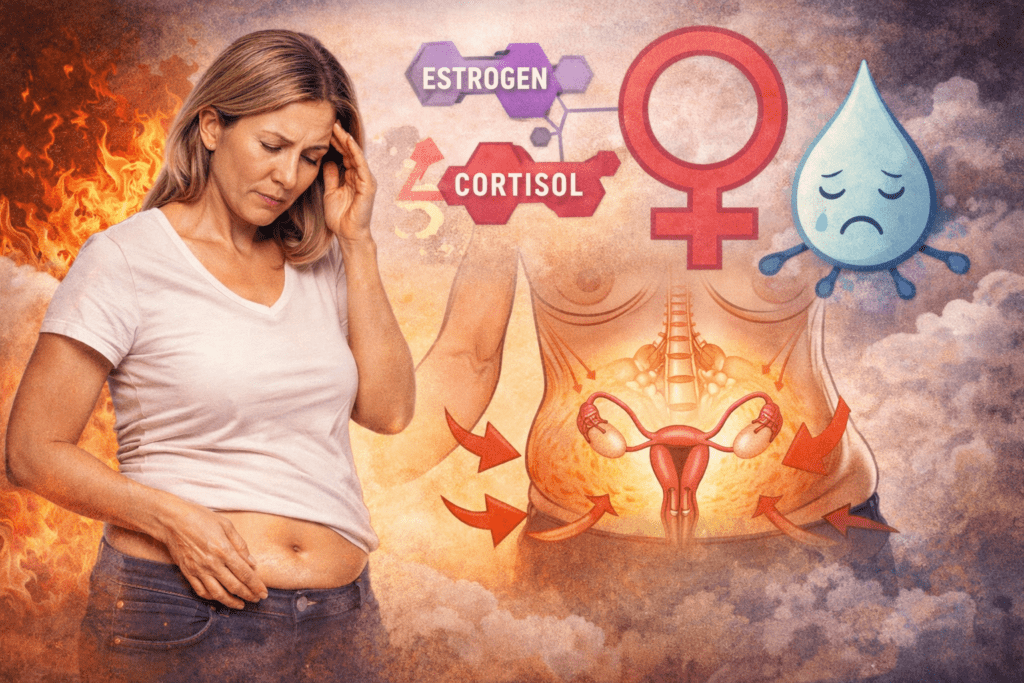
Hormone changes often begin during perimenopause.
To learn more about how these changes affect the body, read our guide on How Hormones Affect Metabolism After 40.
This stage usually starts in the early or mid-40s.
During this time, estrogen levels may begin to drop.
Estrogen helps control how the body stores fat.
When estrogen levels fall, the body may start storing more fat around the belly.
Hormone changes during perimenopause can influence how the body stores fat, especially around the belly, and may also affect how efficiently the body uses energy.
Because of these hormone changes, the body may gain belly fat more easily and burn fat more slowly.
3. Muscle Mass Gradually Declines
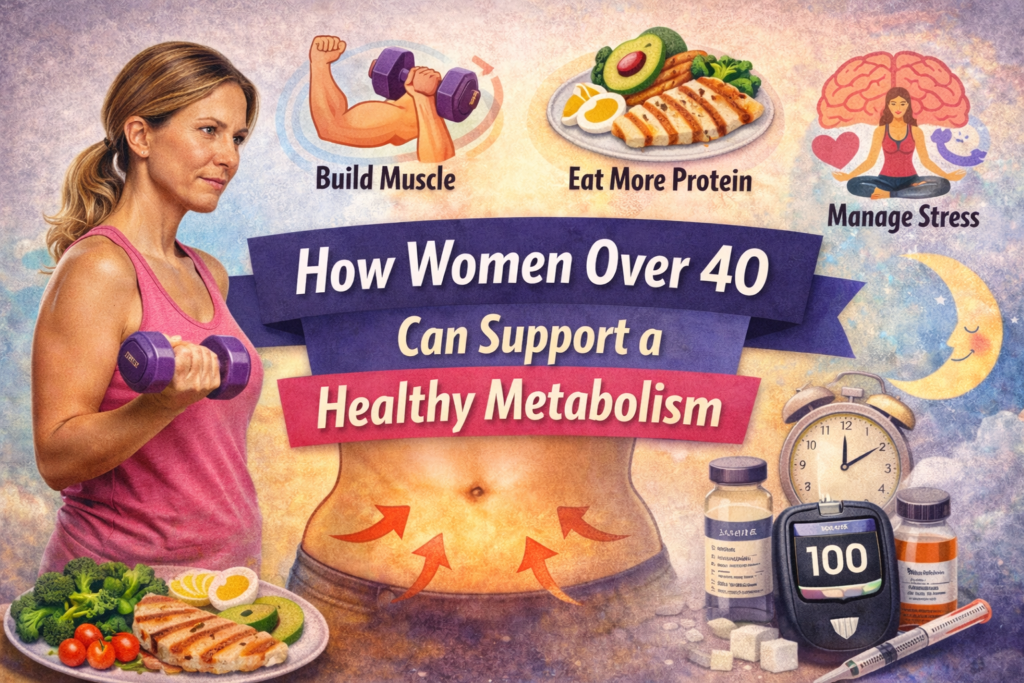
Another reason weight loss gets harder after 40 is muscle loss.
As people age, they may slowly lose muscle. This age-related muscle loss is called sarcopenia.
Muscle burns more calories than fat, even when the body is resting.
When muscle mass goes down, the body may burn fewer calories during the day.
Studies show adults can lose about 3–8% of muscle every 10 years after age 30 if they do not do strength training.
Strength exercises and enough protein may help keep muscle strong and support a healthy metabolism.
Many women don’t notice these changes right away—but over time, they can affect how the body responds to food, exercise, and daily habits.
4. Blood Sugar Regulation May Change
Blood sugar control may change as women get older.
As women reach midlife, the body may not respond to insulin as well as before.
This can affect how the body handles carbs.
When blood sugar rises and falls often, the body may store more fat.
👉 understand how insulin resistance may affect belly fat after 45
Blood sugar balance can play an important role in weight changes during midlife.
As metabolism, hormones, and blood sugar regulation change during midlife, many women find that combining balanced nutrition, regular movement, quality sleep, and stress management provides a more sustainable approach to long-term health.
5. Increased Stress and Cortisol Levels
Many women in their 40s manage busy jobs, family duties, and daily stress.
Long-term stress can raise cortisol levels. Cortisol is a hormone that may cause the body to store more fat around the belly.
Long-term stress may affect sleep quality, hunger signals, and how the body stores fat over time, especially during midlife.
When cortisol stays high for a long time, the body may store more fat and burn less fat.
6. Sleep Quality Often Declines
Sleep habits often change during midlife.
This can happen because of hormone changes, stress, or daily habits.
Poor sleep can affect how the body works.
It may change:
Hunger hormones like ghrelin and leptin
Blood sugar balance
Energy levels and daily activity
Studies show that adults who sleep less than 7 hours a night may have a higher risk of weight gain.
Getting better sleep may help support a healthy metabolism.
7. Physical Activity Levels May Decrease
Busy schedules can make regular exercise harder.
When people move less, it can make other body changes worse.
Regular movement helps the body stay healthy.
It can help:
Keep muscles strong
Support healthy insulin response
Burn calories more easily
Experts suggest a mix of strength training, walking, and moderate cardio to support metabolism and overall health.
8. Diet Patterns Often Stay the Same
But the body changes with age.
Metabolism may slow, and the body may need fewer calories.
Because of this, the same diet that once kept weight stable may slowly lead to weight gain.
Nutrition experts often suggest focusing on:
High-protein meals
Fiber-rich foods
Healthy fats
Whole foods with little processing
Nutrition experts often suggest focusing on high-protein foods, fiber, and healthy fats.
👉 see what foods may help support metabolism after 40
This way of eating may help support steady energy and a healthy metabolism.
9. Gut Health May Influence Metabolism
New research shows the gut may affect metabolism and body weight.
The gut holds trillions of bacteria.
These bacteria help with digestion, inflammation, and how the body stores energy.
When gut health changes, it may affect how the body uses food and stores fat.
Eating fiber-rich foods, fermented foods, and a variety of healthy foods may help support gut health and metabolism.
Learn more about the connection between digestion and metabolism in our guide on How Gut Health Affects Weight Loss After 40.
How American Women Over 40 Can Support a Healthy Metabolism
These body changes are normal after 40.
But some daily habits may help support a healthy metabolism.
1. Do Strength Training
Building muscle can help the body burn more calories, even at rest.
2. Eat Enough Protein
Protein helps keep muscles strong and may help control hunger.
3. Improve Sleep
Going to bed at the same time each night may help support healthy hormones.
4. Reduce Stress
Simple activities like walking, yoga, or meditation may help lower stress levels.
5. Balance Blood Sugar
Meals with protein, fiber, and healthy fats may help keep energy steady.
Where Many Women Start
As these changes become more noticeable, many women look for simple ways to support their metabolism without overcomplicating their routine.
Instead of quick fixes, some women focus on approaches that work with their body—such as improving nutrition, supporting energy levels, and maintaining balance throughout the day.
Because every woman is different, the most effective approach is often one that combines healthy daily habits with realistic, long-term lifestyle changes.
Frequently Asked Questions
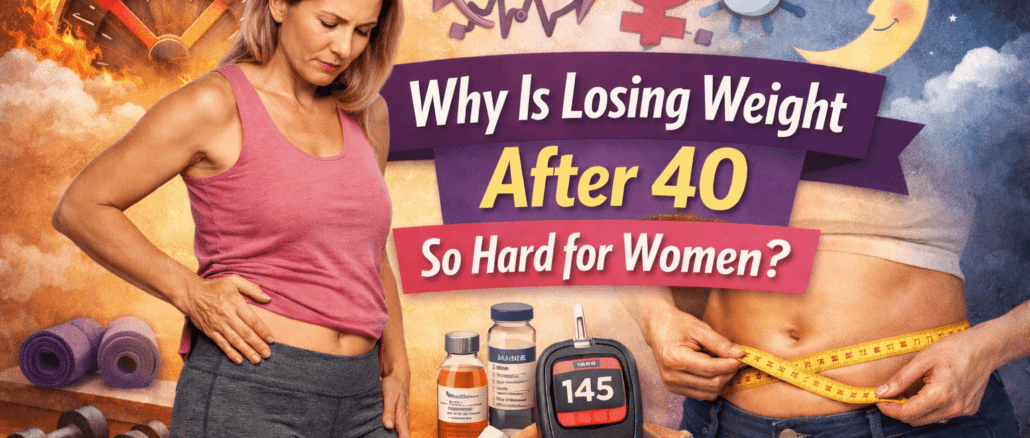
Why Is Losing Weight After 40 Hard for Women?
Many women notice that maintaining the same weight becomes harder after age 40. This can happen even when eating the same foods and following the same daily habits.
This often happens because the body changes with age.
Metabolism may slow.
Muscle mass may decrease.
Hormones may change during perimenopause.
These changes can affect how the body burns calories and stores fat.
Does metabolism slow down after 40?
Metabolism may gradually slow down with age.
This can happen if muscle mass decreases or activity levels drop.
Muscle burns more calories than fat.
Strength training and healthy eating may help support metabolism after 40.
Can hormone changes cause weight gain after 40?
Yes, hormone changes can affect weight in midlife.
Changes in estrogen levels may influence where the body stores fat.
They may also affect hunger and energy balance.
Because of this, weight control may become harder for some women.
How can women support a healthy metabolism after 40?
Women can support metabolism with healthy daily habits.
Helpful habits include:
Strength training
Balanced meals
Good sleep
Stress control
Eating protein-rich foods and staying active may also help support metabolic health.
Expert Note
Research suggests that metabolism during midlife may be influenced by several factors, including hormone changes, muscle mass, sleep quality, physical activity, dietary habits, stress levels, and overall lifestyle patterns. Persistent or unexplained weight changes should be discussed with a qualified healthcare professional.
Health Disclaimer
This article is for educational purposes only and should not be considered medical advice. Always consult a qualified healthcare professional before making significant lifestyle changes or starting new supplements.
Research & References
This article was developed using publicly available information from:
- National Institute on Aging (NIA)
- Harvard T.H. Chan School of Public Health
- Academy of Nutrition and Dietetics
- American Heart Association
Final Thoughts
Why is losing weight after 40 so hard for women? As you’ve seen, it’s usually a combination of metabolism, hormones, muscle changes, and lifestyle factors working together.
The reason is often a mix of body changes.
These may include slower metabolism, hormone changes, muscle loss, blood sugar changes, and daily habits.
These changes are a normal part of aging.
But understanding them can help women make better choices for their health.
By focusing on healthy food, strength training, good sleep, and stress control, many women can still support a healthy metabolism and feel their best during midlife.
Healthy habits remain the foundation of long-term metabolic health. Alongside balanced nutrition, regular exercise, quality sleep, and stress management, some American women also choose to learn about supplements that may complement these healthy routines.
If you’d like to compare evidence-informed options, explore our guide to Best Supplements for Women Over 40.