Table of Contents
ToggleIntro
If you’re an American woman over 40 and your body feels different—even when you’re eating the same foods—your metabolism may not be responding the way it used to.
You may eat the same foods as before, yet weight gain can happen more easily.
In the United States, many women notice this during busy schedules, quick meals, and high daily stress—making it harder to maintain steady energy and weight.
This change can feel confusing and frustrating, especially when you’re making healthy choices but not seeing the results you expected.
This is often the point where many women realize—it’s not just about eating less, but understanding what actually supports their body now.
Hormones start to shift. Muscle slowly decreases. Because of this, the body may burn calories more slowly than before.
Food choices can help support metabolism.
U.S. lifestyle patterns—like coffee-first mornings, processed foods, and irregular meal timing—can also affect how metabolism works after 40.
Some foods help keep muscles strong. Others help keep blood sugar stable and energy steady.
Knowing what foods help boost metabolism after 40 can help women choose better meals and support overall health.
Why Nutrition Matters for Metabolism After 40 (For American Women)
Metabolism is how the body turns food into energy.
Many things affect metabolism. Age, daily activity, and body shape can all play a role.
After age 40, the body may slowly lose muscle. When muscle goes down, the body may burn fewer calories at rest.
Hormonal changes can also affect fat storage in midlife. Learn more in our guide Why Belly Fat Increases After 45 in Women.
During midlife, natural changes in hormones, muscle mass, sleep, and daily habits can affect how the body uses energy and responds to food choices. Balanced meals rich in protein, fiber, and healthy fats may help support overall metabolic health.
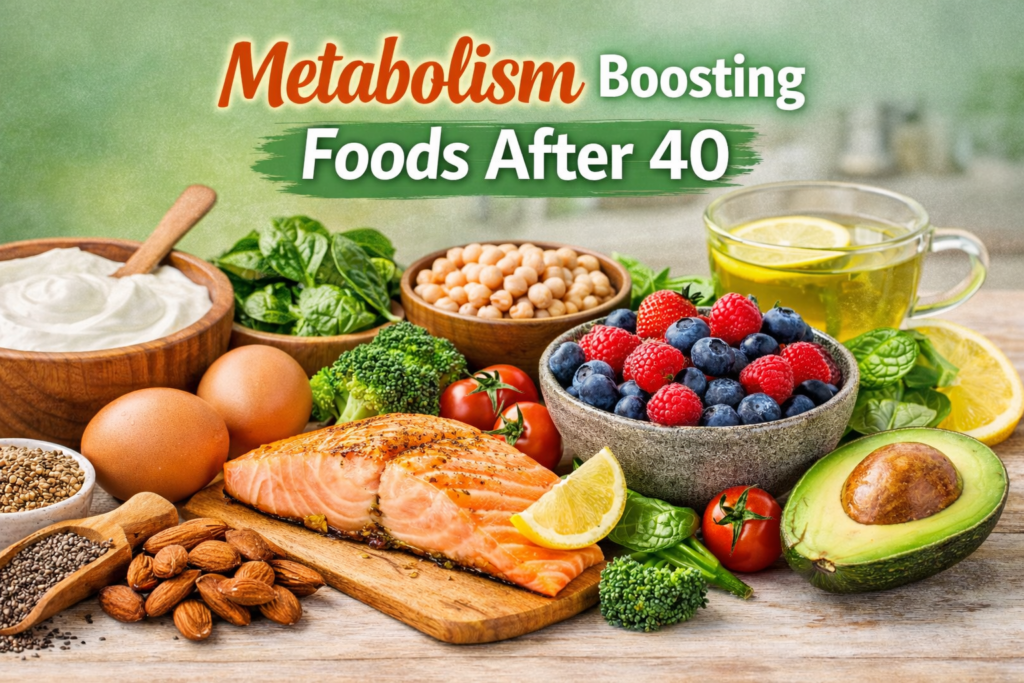
Eating foods rich in protein, fiber, vitamins, and healthy fats may help support steady energy and good metabolic health.
1. Eggs
Eggs are a great food for metabolism.
They are rich in protein. Protein helps keep muscles strong.
Muscle burns more calories than fat. So strong muscles can help support metabolism.
Eggs also contain nutrients like vitamin B12 and choline.
If you’re looking for more meal ideas, explore our guide on 10 Metabolism Boosting Foods for Women Over 40.
These nutrients help the body turn food into energy.
2. Greek Yogurt
Greek yogurt is a healthy food for metabolism.
It is high in protein and probiotics. Protein helps keep muscles strong. Probiotics help support gut health.
The gut helps the body digest food and use nutrients. A healthy gut may help the body use energy better.
Greek yogurt can also help you feel full for a longer time. This may help support healthy eating habits.
3. Fatty Fish
Fatty fish like salmon, sardines, and mackerel are rich in omega-3 fats.
Omega-3 fats may help support heart health. They may also help lower inflammation in the body.
Some research shows that omega-3 fats may help support healthy metabolism.
Omega-3 fats play an important role in overall metabolic health.
If you’ve been trying to eat healthier but still feel stuck, you’re not alone. Midlife changes can affect how the body responds to food, activity, and daily routines, which is why a consistent, balanced approach is often more sustainable than looking for quick fixes.
4. Legumes
Beans, lentils, and chickpeas are healthy plant foods that may help support metabolism.
These foods contain:
Protein
Fiber
Slow-digesting carbs
These nutrients help keep blood sugar steady. They also give the body energy that lasts longer.
Stable blood sugar is important for metabolic health, especially after age 40. You can learn more in our guide Can Insulin Resistance Cause Belly Fat After 45.
5. Nuts and Seeds
Nuts and seeds are healthy foods that may help support metabolism.
They contain healthy fats, protein, and minerals like magnesium.
Magnesium helps the body run many important processes related to metabolism.
Common choices include:
Almonds
Walnuts
Chia seeds
Flaxseeds
Eating nuts and seeds in moderate amounts may help support steady energy and healthy metabolism.
6. Leafy Green Vegetables
Leafy greens like spinach, kale, and arugula are very healthy foods.
They provide nutrients that help support metabolism.
Leafy greens are rich in:
Iron
Magnesium
Fiber
Antioxidants
These nutrients help the body produce energy and stay balanced.
Leafy greens are also low in calories but full of nutrients. This makes them a great addition to healthy meals.
7. Whole Grains
Whole grains like oats, quinoa, and brown rice are healthy sources of carbohydrates.
These grains digest slowly in the body. This helps keep blood sugar levels steady.
Steady blood sugar can help support metabolism and provide lasting energy during the day.
Whole grains can also support heart health and overall wellness.
8. Berries
Berries like blueberries, strawberries, and raspberries are healthy fruits.
They contain fiber and antioxidants that help support metabolism.
These nutrients may help keep blood sugar steady and lower inflammation in the body.
Berries are also naturally sweet and full of nutrients. Because of this, they can be a healthy choice instead of processed desserts.
9. Green Tea
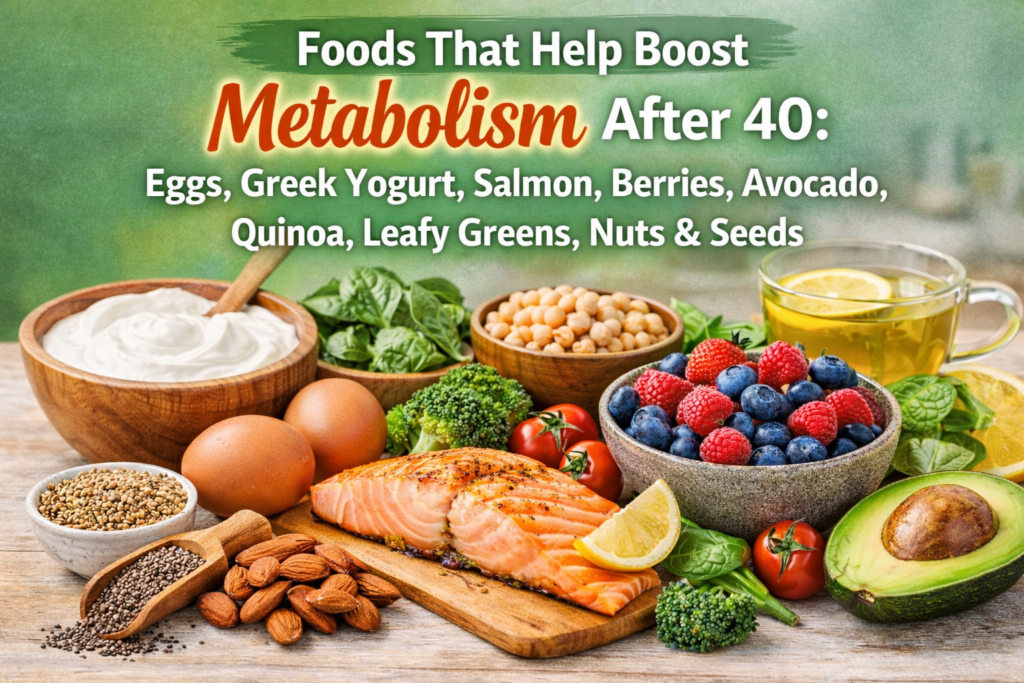
Green tea contains natural compounds called catechins. It also has a small amount of caffeine.
These compounds may help support metabolism and energy balance.
Green tea can be a healthy drink instead of sugary beverages.
If you’re looking for more everyday nutrition ideas, you may also enjoy our guide on Best Diet for Women Over 40.
Drinking green tea often may help keep the body hydrated and support overall metabolic health.
How These Foods Support Metabolism After 40
Knowing what foods help boost metabolism after 40 is not about quick fixes or strict diets. It is about building healthy eating habits for long-term health.
Foods that support metabolism often include:
Protein to help keep muscles strong
Fiber to support digestion
Healthy fats to help balance energy
Vitamins and minerals that help the body work properly
Eating these foods together in balanced meals may help women keep steady energy and support healthy metabolism.
Balanced meals can also help improve blood sugar control. You can explore more strategies in How to Reverse Insulin Resistance After 45 Naturally.
If you want to understand why metabolism changes during midlife, it often comes down to hormonal shifts, muscle changes, and daily habits.
Simple Meal Ideas for Metabolism Support
Here are some simple meals that include foods that support metabolism.
Breakfast
Greek yogurt
Berries
Chia seeds
Lunch
Quinoa salad
Spinach
Grilled salmon
Snack
Almonds
Fresh fruit
Dinner
Lentils
Roasted vegetables
Brown rice
Meals like these give the body nutrients that help support steady energy and healthy metabolism.
Frequently Asked Questions
What Foods Help Boost Metabolism After 40?
Some foods may help support metabolism after age 40. Good choices include protein foods like eggs, Greek yogurt, fish, and beans.
Other healthy foods also help. These include leafy greens, berries, whole grains, nuts, and seeds.
When these foods are part of balanced meals, they can help support energy and overall metabolic health.
Do Certain Foods Increase Metabolism After 40?
No single food can greatly increase metabolism.
However, foods rich in protein, fiber, and healthy fats may help support metabolic health. These foods help keep muscles strong, balance blood sugar, and provide steady energy during the day.
Why Does Metabolism Slow After 40?
Metabolism may slow with age.
This can happen because muscle mass slowly decreases. Hormones also change over time. Daily habits can play a role as well.
Regular exercise and balanced meals may help support metabolism during midlife.
How Can Women Support Metabolism Naturally After 40?
Women can support metabolism with healthy habits.
These include:
Eating nutrient-rich foods
Staying physically active
Doing strength training
Getting good sleep
Managing stress
Balanced meals with protein, fiber, and healthy fats may help support steady energy and healthy metabolism.
Are High-Protein Foods Important for Metabolism After 40?
Yes. Protein helps keep muscles strong.
Muscle burns more calories than fat, even when the body is resting.
Eating enough protein and doing strength training may help women maintain muscle and support metabolism after 40.
Expert Note
Research suggests that metabolism during midlife may be influenced by several factors, including hormone changes, muscle mass, sleep quality, physical activity, dietary habits, and stress levels. Because every woman is different, persistent weight changes or health concerns should be discussed with a qualified healthcare professional.
Health Disclaimer
This article is intended for educational and informational purposes only and should not be considered medical advice. Always consult a qualified healthcare professional before making significant dietary changes or starting new supplements.
Research & References
This article was developed using publicly available health and nutrition resources, including:
- National Institute on Aging (NIA)
- Harvard T.H. Chan School of Public Health
- Academy of Nutrition and Dietetics
- American Heart Association
Final Thoughts
What foods help boost metabolism after 40?
No single food can quickly change metabolism. But some healthy foods may help support metabolism when part of a balanced lifestyle.
Foods like eggs, Greek yogurt, fatty fish, beans, nuts, leafy greens, whole grains, berries, and green tea provide nutrients the body needs.
These nutrients help support muscle strength, digestion, and steady energy.
By choosing whole foods and balanced meals, women over 40 can help support metabolism, keep energy levels steady, and support long-term health.
Healthy eating habits are the foundation of long-term metabolic health. While nutrition and lifestyle habits come first, some American women over 40 also choose to learn about supplements that may complement these healthy routines.
If you’re comparing your options, our guide to Best Supplements for Women Over 40 explains what to look for and how different products compare.