Table of Contents
Toggle7 Day Insulin Resistance Meal Plan for Women Over 40
7 day insulin resistance meal plan for women over 40 is something many U.S. women start searching for when energy drops, weight becomes harder to manage, and sugar cravings feel stronger than before.
If that sounds familiar, you’re not alone. Many women notice that their bodies respond differently to food during midlife.
Common changes include:
• more belly fat
• slower metabolism
• feeling tired after eating
• stronger sugar cravings
These changes may be linked to insulin resistance.
Insulin resistance happens when the body’s cells stop responding well to insulin. When this happens, blood sugar can rise more easily.
Healthy food choices can support better blood sugar management and overall metabolic health.
This often leads women to explore how hormonal and metabolic changes may be influencing their response to healthy eating.
Many women begin with healthy eating. If progress remains slow, they often explore additional lifestyle strategies that complement balanced nutrition.
Learn How Women Compare Metabolism Support Options After 40
Eating balanced meals can:
• keep blood sugar steady
• reduce sugar spikes
• support better energy levels
This guide includes a practical 7-day meal plan, nutrition strategies, and simple lifestyle tips to help support healthy blood sugar and metabolic health after 40.
Why Women Over 40 Benefit from an Insulin Resistance Meal Plan
Hormone changes in midlife can affect how the body uses sugar and stores energy.
Many women notice changes after age 40.
Some common causes include:
• lower estrogen levels
• loss of muscle over time
• daily stress
• a slower metabolism
Healthy meals often include:
• fiber
• healthy fats
• protein
Women over 40 may also benefit from understanding how protein affects metabolism and blood sugar balance:
How Much Protein Do Women Over 45 Need
These nutrients help slow digestion and prevent blood sugar spikes.
While no single meal plan works for everyone, having a consistent structure often makes healthy eating easier to maintain.
• reduce energy crashes
• support steady blood sugar
• improve daily energy
You can also learn more about metabolism changes in this article on our site: Why Metabolism Slows After 45: The Shocking Biological Changes Women Must Understand
Signs You May Have Insulin Resistance After 40
Insulin resistance often develops slowly.
If you want a deeper breakdown of these signs, you can read more here:
• Early Signs of Insulin Resistance After 40
Many people do not notice it in the early stages.
As the body becomes less responsive to insulin, some signs may appear.
Knowing these signs can help you take steps to improve metabolic health.
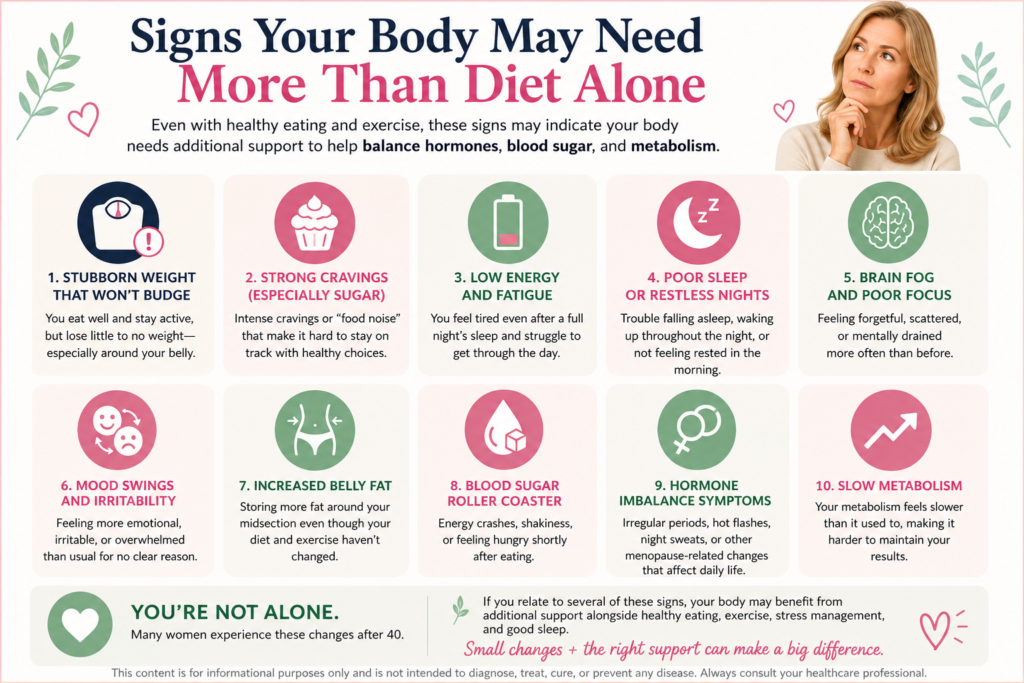
Common signs of insulin resistance after 40 include:
• more belly fat or weight gain around the waist
• strong sugar cravings, especially for sweets or refined carbs
• feeling tired after meals
• trouble losing weight even with diet and exercise
• brain fog or low energy during the day
If you notice these signs regularly, discussing them with your healthcare professional while improving your daily habits can be a sensible next step.
Improving your diet, exercise routine, and daily lifestyle habits can support better blood sugar balance.
Small, consistent improvements are often easier to maintain than making several major lifestyle changes at once.
What Is Insulin Resistance?
Insulin resistance happens when the body does not respond well to insulin.
Insulin is a hormone that helps move sugar from the blood into the body’s cells. The cells use this sugar for energy.
When the body becomes resistant to insulin, the cells do not respond well. Because of this, the body must make more insulin to keep blood sugar stable.
Over time, insulin levels may rise. Blood sugar levels may also increase.
If insulin resistance continues for many years, it may raise the risk of:
• prediabetes
• type 2 diabetes
• metabolic syndrome
Insulin resistance often develops slowly. Many people do not notice symptoms at first.
Many women only realize something changed when they start feeling tired after meals, gain more belly fat, or struggle with cravings despite trying to eat healthier.
However, some people may experience signs such as:
• more belly fat
• feeling tired after meals
• strong sugar cravings
• trouble losing weight
Several lifestyle habits can increase the risk of insulin resistance. These include:
• unhealthy eating habits
• little physical activity
• long-term stress
• hormone changes after age 40
Healthy daily habits can make a meaningful difference over time.
Simple steps such as healthy eating, regular exercise, and balanced daily routines may help improve insulin sensitivity and support metabolic health.
Why Healthy Eating Doesn't Always Produce the Same Results After 40
Many women notice that even when they improve their diet, progress can still feel frustratingly slow.
Hormone changes, muscle loss, poor sleep, stress, and changing insulin sensitivity can all affect how the body responds to food during midlife.
That may include regular physical activity, strength training, sleep, stress management, and—in some cases—carefully chosen supplements.
That may include regular physical activity, strength training, sleep, stress management, and—in some cases—carefully chosen supplements.
Best Foods for Insulin Resistance After 40
Choosing the right foods can help keep blood sugar healthy after age 40.
The best foods for insulin resistance often contain:
• fiber
• protein
• healthy fats
• important nutrients
These nutrients help slow digestion and prevent sudden blood sugar spikes.
These nutrient-rich foods may support steady energy, healthy metabolism, and overall wellness during midlife.
Whole foods that are less processed are usually the best choice. They give the body balanced nutrition and help control blood sugar.
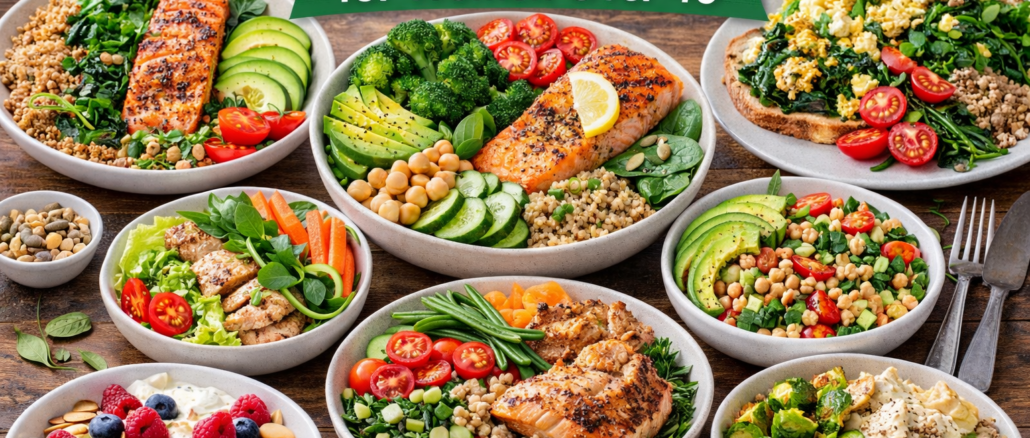
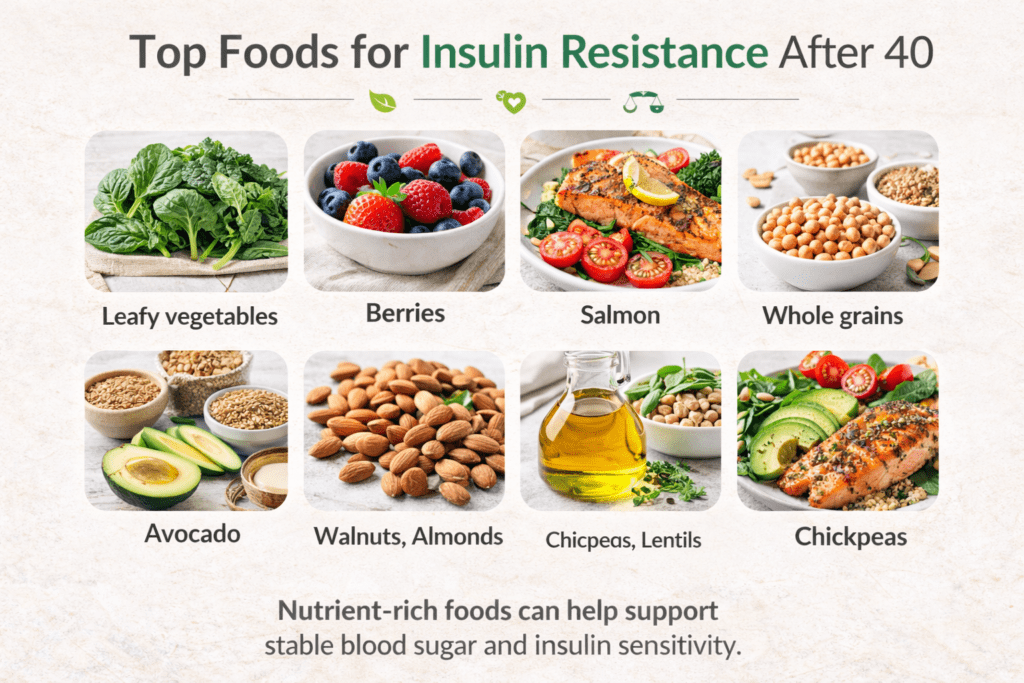
Some of the best foods for insulin resistance after 40 include:
• leafy green vegetables such as spinach, kale, and arugula
• berries like blueberries, strawberries, and raspberries
• fatty fish such as salmon, sardines, and mackerel
• whole grains like oats, quinoa, and brown rice
• legumes such as lentils, chickpeas, and black beans
• nuts and seeds including almonds, walnuts, chia seeds, and flaxseeds
• healthy fats from avocado and olive oil
These nutrient-rich foods can be part of an overall eating pattern that supports healthy blood sugar management and long-term metabolic wellness.
Could Insulin Resistance Be Affecting You? A Quick Self-Check
How many of these sound familiar?
✓ feeling tired after meals
✓ stronger sugar cravings
✓ stubborn belly fat
✓ energy crashes during the day
✓ difficulty losing weight despite healthy eating
If several of these signs sound familiar, improving your nutrition and discussing persistent symptoms with your healthcare professional can be a sensible first step.
Principles Behind a 7 Day Insulin Resistance Meal Plan for Women Over 40
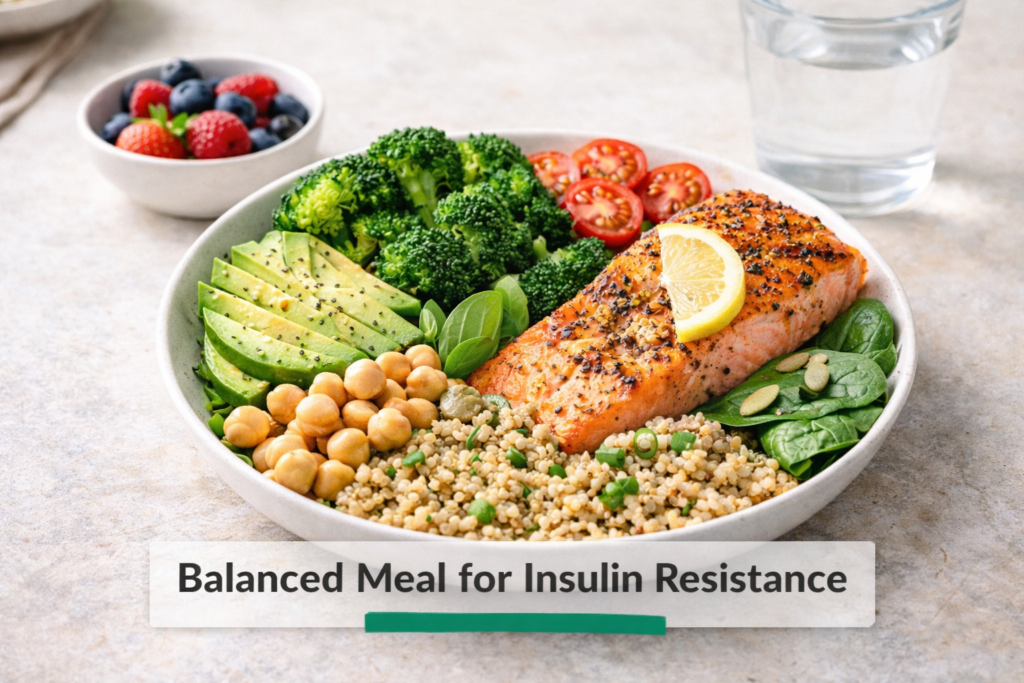
Before you start the weekly plan, it helps to understand the simple nutrition ideas used in this 7 Day Insulin Resistance Meal Plan for Women Over 40.
Focus on Low-Glycemic Foods
Low-glycemic foods break down slowly in the body.
This helps prevent quick blood sugar spikes.
Examples include:
• legumes
• whole grains
• leafy greens
• berries
Include Protein at Every Meal
Protein helps you feel full and keeps blood sugar steady.
Healthy protein foods include:
• eggs
• fish
• Greek yogurt
• chicken or turkey
• plant proteins like beans and lentils
Eat More Fiber
Fiber slows how fast carbs enter the bloodstream.
It also helps support gut health.
High-fiber foods include:
• vegetables
• beans
• seeds
• oats
Choose Healthy Fats
Healthy fats can help support insulin balance.
Good sources include:
• nuts
• seeds
• olive oil
• avocado
Balanced meals that include fiber, protein, and healthy fats may help support more stable blood sugar levels throughout the day.
Portion sizes and individual nutritional needs vary, so consider adapting meals to your personal health goals and any medical advice you’ve received.
Focusing on balanced meals consistently is one practical way to support long-term blood sugar management.
7 Day Insulin Resistance Meal Plan for Women Over 40
Below is a simple weekly meal plan.
The meals below are designed around balanced nutrition that may help support steady energy and healthy blood sugar levels.
Day 1
Breakfast
Greek yogurt with blueberries and chia seeds.
Lunch
Grilled chicken salad with spinach, avocado, and olive oil.
Dinner
Baked salmon with quinoa and roasted vegetables.
Day 2
Breakfast
Scrambled eggs with spinach and whole-grain toast.
Lunch
Lentil soup with mixed vegetables.
Dinner
Grilled turkey with sweet potato and broccoli.
Day 3
Breakfast
Oatmeal with walnuts and raspberries.
Lunch
Tuna salad with leafy greens and olive oil dressing.
Dinner
Stir-fried tofu with vegetables and brown rice.
Day 4
Breakfast
Smoothie with Greek yogurt, berries, flaxseed, and almond milk.
Lunch
Chickpea salad with cucumber, tomatoes, and olive oil.
Dinner
Baked chicken with roasted zucchini and quinoa.
Day 5
Breakfast
Egg omelet with mushrooms, spinach, and tomatoes.
Lunch
Grilled salmon salad with avocado and leafy greens.
Dinner
Lean beef stir-fry with vegetables and brown rice.
Day 6
Breakfast
Chia pudding with almonds and strawberries.
Lunch
Turkey lettuce wraps with hummus and vegetables.
Dinner
Baked cod with roasted Brussels sprouts and quinoa.
Day 7
Breakfast
Greek yogurt bowl with nuts and berries.
Lunch
Quinoa bowl with grilled vegetables and chickpeas.
Dinner
Grilled chicken with sweet potato and green beans.
Why Some Women Still Feel Stuck Even After Improving Their Diet
Many women over 40 discover that balanced meals improve how they feel—but some continue struggling with cravings, low energy, or slow progress.
Because of this, some women begin comparing metabolism-support options that complement healthy eating and long-term lifestyle habits.
If you’re following a meal plan but still feel stuck, you’re not alone. Many women discover that improving nutrition is only one part of supporting long-term metabolic health.
Why Some Women Still Feel Stuck Even After Changing Their Diet
Many American women over 40 improve their meals, reduce sugar, and follow healthy eating plans consistently—yet still struggle with cravings, low energy, or stubborn weight gain.
For many women, this can be frustrating because healthy habits don’t always seem to produce the same results as they once did.
Rather than looking for quick fixes, many women focus on realistic, sustainable habits that support long-term metabolic health.
Quick Question
Have you already improved your diet but still struggle with:
✓ cravings
✓ low energy
✓ stubborn belly fat
✓ slow progress
If so, you may benefit from looking beyond food alone and considering other healthy lifestyle factors.
Smart snacks can help reduce hunger between meals while making it easier to maintain consistent energy levels throughout the day.
Healthy Snacks for an Insulin Resistance Meal Plan
Smart snacks can help reduce hunger between meals while making it easier to maintain consistent energy levels throughout the day.
“Certain drinks may also support healthy blood sugar balance and steady energy levels after 40.”
Snacks can help keep your energy steady between meals.
Healthy snack choices include:
• almonds or walnuts
• apple slices with peanut butter
• Greek yogurt
• hummus with fresh vegetables
These snacks provide fiber and protein, two nutrients that can help support steadier blood sugar levels between meals.
Including a variety of whole, nutrient-rich foods can help support stable blood sugar.
How to Build a Blood Sugar-Friendly Breakfast After 40
Breakfast choices can influence blood sugar levels throughout the day.
A balanced breakfast should include:
protein
fiber
healthy fats
Examples include:
eggs with vegetables
yogurt with berries and seeds
oatmeal with nuts
Choosing balanced breakfast options can help maintain steady energy throughout the day.
Lifestyle Habits That Support Healthy Insulin Sensitivity
Nutrition is important, but daily habits also play a key role in supporting healthy insulin sensitivity.
Regular Exercise
Regular physical activity helps the body use glucose for energy and supports overall metabolic health.
Strength Training
Muscle helps the body use glucose more efficiently.
Good Sleep
Poor sleep may also affect cravings, metabolism, and blood sugar balance after 40.
Why You Wake Up at 3AM After 40
Stress Management
Long-term stress raises cortisol levels.
Long-term stress and elevated cortisol levels may influence blood sugar regulation in some people.
You can learn more here:
What to Compare Before Choosing a Blood Sugar Support Supplement
Before choosing any metabolism or blood sugar support option, many American women compare:
✓ Ingredient transparency
✓ Daily convenience
✓ Non-stimulant formulas
✓ Customer reviews and experiences
✓ Satisfaction guarantees
Taking time to compare these factors can help women choose an option that fits naturally into their wellness routine and long-term goals.
Learning how different ingredients, serving sizes, and intended uses compare can make choosing an option feel less overwhelming.
References
- American Diabetes Association. Standards of Care in Diabetes.
- National Institute of Diabetes and Digestive and Kidney Diseases (NIDDK).
- Centers for Disease Control and Prevention (CDC): Insulin Resistance and Prediabetes.
- Harvard T.H. Chan School of Public Health.
Final Thoughts
A structured 7-day meal plan can make it easier to build healthy eating habits that are realistic to maintain over time.
Balanced meals that include:
• fiber
• protein
• healthy fats
may help keep blood sugar steady.
Over time, consistent healthy habits may support:
• better energy
• healthy weight balance
• long-term health
If you’ve already built healthy eating habits but still have concerns, learning about additional lifestyle strategies and comparing metabolism-support options may be a reasonable next step.
Explore Our Guide to Comparing Metabolism Support Options for Women Over 40
Frequently Asked Questions
What is a 7 day insulin resistance meal plan for women over 40?
A 7 Day Insulin Resistance Meal Plan for Women Over 40 is a simple weekly eating plan.
It includes balanced meals with:
• protein
• fiber
• healthy fats
These nutrients help keep blood sugar steady.
Which foods are best for insulin resistance?
Foods that may help support blood sugar balance include:
• leafy green vegetables
• berries
• nuts and seeds
• beans and lentils
• whole grains
• fatty fish like salmon
Can diet improve insulin resistance after 40?
Results vary from person to person and depend on factors such as overall health, physical activity, sleep, and consistency with healthy habits.
Yes. Healthy eating habits can help.
Balanced meals, regular exercise, and healthy daily habits may support:
• better insulin response
• stable blood sugar
• improved metabolism
Are carbohydrates allowed on an insulin resistance diet?
Yes, carbohydrates can still be part of the diet.
Many nutrition experts suggest choosing high-fiber carbohydrates, such as:
• whole grains
• beans
• lentils
These foods digest more slowly and may help prevent blood sugar spikes.
Some women also explore additional support options alongside healthy nutrition habits to help with energy and metabolism.
Can meal plans alone reverse insulin resistance?
Healthy meals are an important foundation. However, many women combine nutrition, exercise, sleep improvements, and other supportive lifestyle habits to improve long-term metabolic health.
How long does it take to improve insulin resistance?
The timeline varies from person to person. Many women begin noticing improvements within weeks or months when healthy eating, physical activity, quality sleep, and stress management are practiced consistently.
What should I look for in a metabolism-support supplement?
Many women compare factors such as ingredient transparency, non-stimulant formulas, manufacturing quality, customer experiences, and overall value before choosing a supplement.
Comparing products using consistent criteria can make choosing an option feel more straightforward.