Table of Contents
ToggleIntro
How hormones affect metabolism after 40 is something many women start to notice — often without a clear reason.
If you feel like your body changed after 40… even though your habits didn’t — you’re not imagining it.
Many women notice:
• weight gain in new areas
• lower energy
• stronger cravings
• slower metabolism
And it often happens without a clear reason.
This is where hormones start to play a bigger role.
Around age 40, hormone levels begin to change. These changes can influence metabolism, energy levels, and how the body stores fat.
Many women notice that habits that once worked for weight or energy may not work the same way anymore.
Understanding how hormones affect metabolism can help women make lifestyle choices that support energy, weight balance, and overall health.
Hormones like estrogen, progesterone, cortisol, and insulin may shift during this time. These shifts often happen as the body moves toward perimenopause and menopause.
Hormones help control how the body uses energy. Because of this, even small hormone changes can affect weight and metabolism.
Understanding these hormonal changes can help women make informed lifestyle choices that support metabolism and overall well-being during midlife.
Understanding hormonal changes is often the first step toward making more informed lifestyle choices.
From there, many women focus on building realistic daily habits that support metabolism, energy, and long-term wellness.
Alongside balanced meals, strength training, and better sleep, some women also compare additional metabolism-support options that complement healthy daily habits.
Why This Feels So Confusing After 40
Many women aren’t doing anything wrong.
In fact, many are eating better and trying harder than ever.
But after 40, the body responds differently because of hormonal shifts.
That’s why:
• the same diet may not work
• the same workouts feel less effective
• energy and cravings change
This is not about willpower.
Many American women over 40 feel frustrated when their body suddenly responds differently to food, stress, sleep, and exercise — even when they’re trying harder than before.
Consistency, realistic expectations, and simple daily routines are often more sustainable than restrictive diets or constantly changing approaches.
It’s about understanding how your body responds differently during this stage of life.
Why Hormones Matter for Metabolism
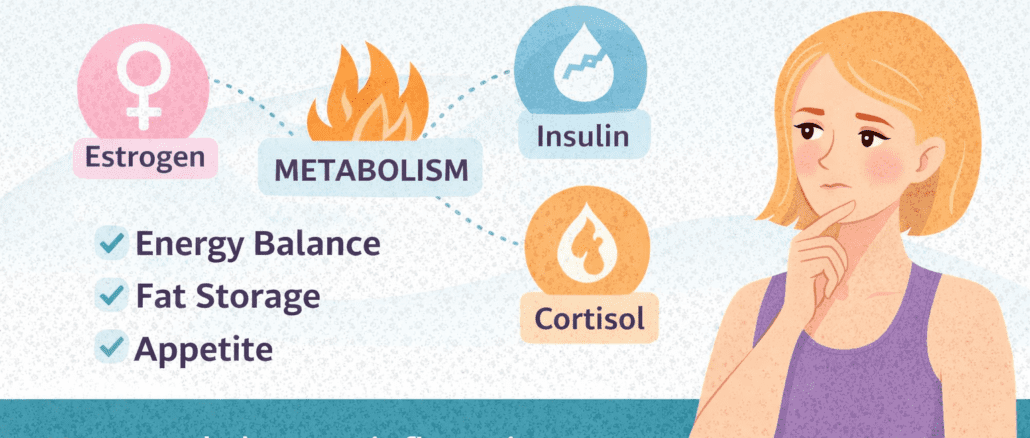
Hormones are chemical messengers that help regulate many essential body functions, including metabolism, appetite, and energy balance.
They help manage metabolism, hunger, energy levels, and how the body stores fat.
Metabolism is the process the body uses to turn food into energy. Hormones help decide how well this process works.
Research suggests that hormone changes during midlife may affect metabolism, energy levels, appetite, and how the body stores fat.
Some key hormones that affect metabolism include:
estrogen
progesterone
insulin
cortisol
thyroid hormones
When these hormones change, the body may burn calories in a different way.
This is one reason many women notice more belly fat, lower energy, and stronger cravings after 40 — even when their routines haven’t changed much.
Other factors such as sleep quality, stress, physical activity, and muscle mass can also contribute to these changes.
Understanding how hormones affect metabolism after 40 can help explain why many women notice changes in weight, appetite, or energy during this time of life.
7 Hormonal Changes That May Affect Metabolism After 40
If you prefer practical explanations first, you can quickly scan the hormone changes below and return to the detailed sections later.
Researchers continue studying how hormonal changes during midlife influence metabolism, appetite, and body composition.
Individual experiences vary, and not every woman will notice the same changes or at the same pace.
Below are some common ways hormones may affect metabolism after 40.
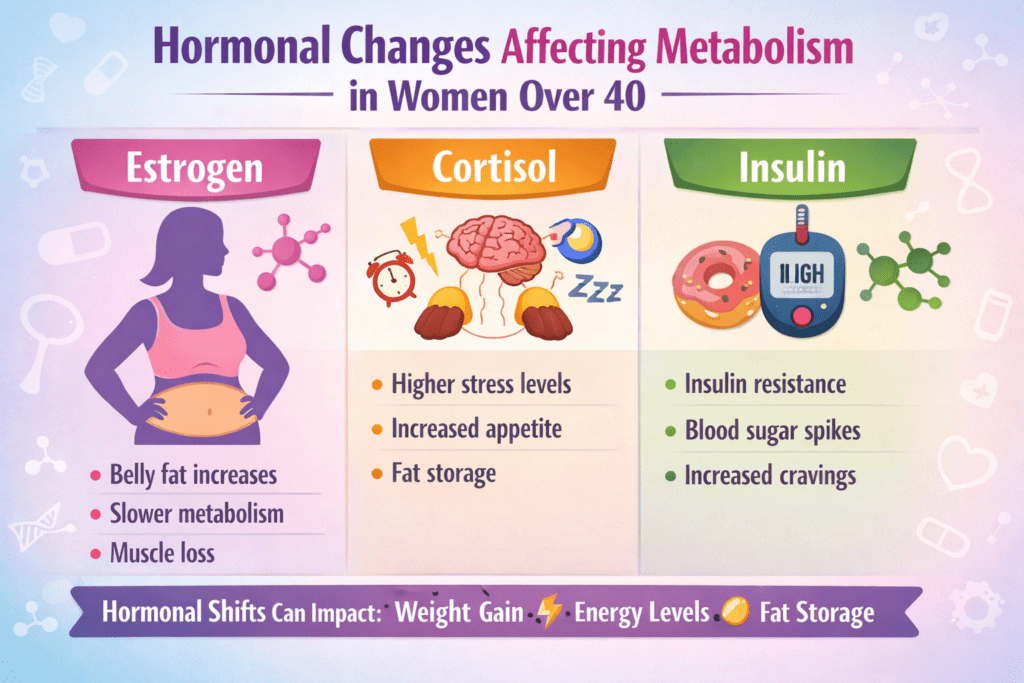
1. Estrogen Changes and Fat Distribution
Estrogen helps control metabolism and body fat.
Before menopause, fat often collects around the hips and thighs. But when estrogen levels drop in midlife, fat storage may change.
Many women notice more fat around the belly.
2. Muscle Loss and Metabolic Rate
Muscle helps the body burn calories.
Muscle burns more calories than fat, even when the body is resting. As women age, muscle mass may slowly decrease.
When muscle decreases, metabolism may slow down.
Hormone changes may also play a role.
Regular strength training and physical activity may help maintain muscle mass and support a healthy metabolic rate.
3. Insulin Sensitivity Changes
Insulin helps control blood sugar levels.
If insulin sensitivity changes, the body may struggle to manage blood sugar and energy.
This may affect metabolism and hunger.
Some women notice changes in blood sugar regulation during midlife, including stronger cravings, energy crashes, or stubborn weight gain.
4. Cortisol and Stress Hormones
Cortisol is known as the stress hormone.
When stress stays high for a long time, cortisol levels may rise.
High cortisol may affect hunger, energy levels, and fat storage.
Ongoing stress and cortisol changes may also contribute to stubborn belly fat after 45.
Cortisol and Belly Fat After 45
Many women notice that belly fat after 40 feels different than weight changes earlier in life, especially during hormonal shifts and ongoing stress.
Why Belly Fat After 40 Is Different Than Weight Gain in Your 30s
The Sleep Foundation explains that stress and sleep patterns can affect hormone balance and metabolism.
Many women also notice that ongoing stress affects sleep, cravings, and belly fat differently after 40.
5. Sleep Hormones and Metabolism
Sleep and hormones are closely linked. Research shows that sleep quality may influence hormones that regulate appetite and metabolism.
Hormones that control sleep, such as melatonin, also affect hunger and energy balance.
Poor sleep may increase hunger hormones.
Sleep disruptions are also very common during midlife and may affect metabolism, cravings, and energy levels.
Why You Wake Up at 3AM After 40
Consistent, high-quality sleep may help support healthy metabolism and hormone regulation.
6. Appetite Hormones and Hunger Signals
Hormones like leptin and ghrelin help control hunger.
Changes in these hormones may affect appetite during midlife.
Some women notice stronger cravings or different hunger patterns.
Eating balanced meals with protein, fiber, and healthy fats may help control hunger.
7. Hormonal Effects on Energy Levels
Hormones influence how efficiently the body produces and uses energy throughout the day.
When hormone levels change, women may notice changes in:
energy levels
tiredness
metabolism
motivation to exercise
If energy levels drop, daily habits like exercise and movement may also change. This can affect metabolism over time.
Why Many Women Still Feel Stuck Despite Healthy Habits
Many women notice that healthy habits still matter—but the same routines that worked in their 20s or 30s may not always produce the same results after 40.
Many American women over 40 improve their meals, exercise regularly, sleep more, and try to reduce stress—yet still feel frustrated by stubborn weight gain, low energy, or cravings.
For some women, this feels confusing because they believe they are already doing everything right.
Hormonal changes during midlife can make progress feel slower than expected.
Understanding these changes can make it easier to set realistic expectations and focus on sustainable habits.
This is often the point where many women begin exploring additional metabolism support alongside healthy daily habits.
Rather than searching for quick fixes, many women now look for realistic options that fit naturally into long-term wellness routines.
Lifestyle Habits That May Support Hormonal Metabolism
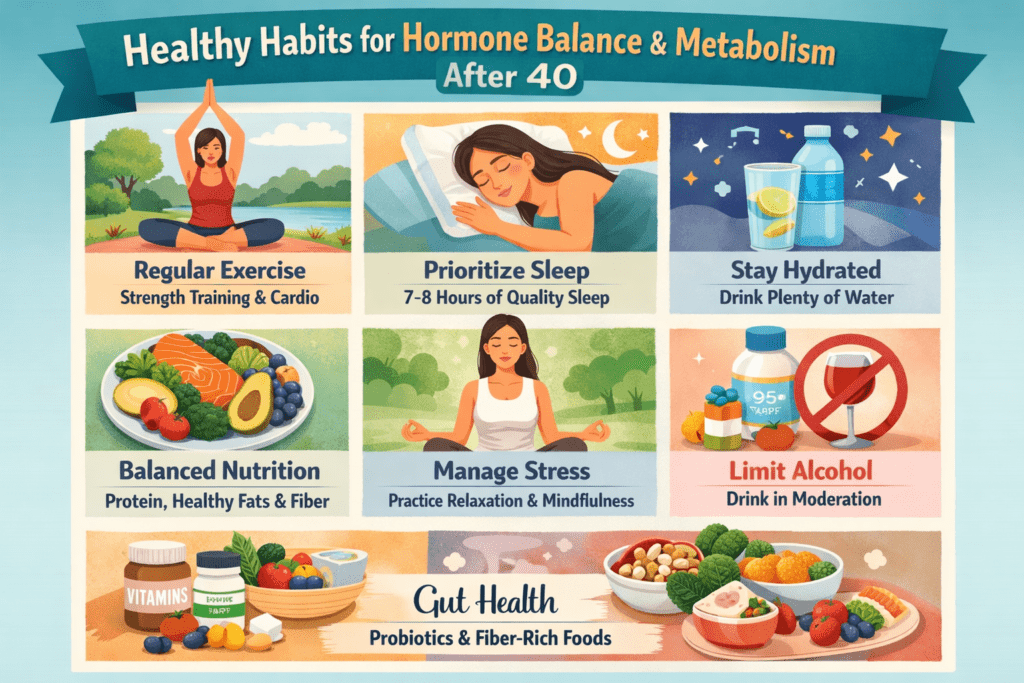
Hormone changes are a normal part of aging. But daily habits can help support a healthy metabolism.
Some habits that may help include:
regular exercise
strength training
balanced meals with protein and fiber
Protein also becomes more important during midlife because it helps support metabolism, muscle health, and appetite control.
How Much Protein Do Women Over 45 Need
enough sleep
stress control
drinking enough water
These habits can help support hormone balance and how the body uses energy.
While these routines remain the foundation, some women also compare additional support options that fit alongside their existing habits.
Some women eventually decide to explore additional metabolism-support options when healthy habits alone no longer feel like enough after 40.
Where Many Women Start When Healthy Habits Aren't Enough After 40
Many women begin by looking for options that are simple, easy to follow, and designed to work alongside healthy lifestyle habits rather than replace them.
For many women, simplicity and consistency become more important than trying multiple complicated approaches at once.
When progress feels slower than expected, many women begin looking beyond just diet and exercise.
Some choose to explore simple, supportive options that fit into their daily routine—especially when focusing on metabolism, energy, and balance.
These options are intended to complement—not replace—healthy daily habits.
Many women begin by looking for options that are:
✓ easy to use every day
✓ transparent about ingredients
✓ non-stimulant
✓ realistic for long-term use
✓ designed to complement healthy habits
Most women don’t start with extreme changes.
They begin with:
• improving food quality
• managing stress
• sleeping better
• staying consistent
And when that’s not enough, they begin exploring additional support that fits into their routine.
Why Many Women Explore Additional Metabolism Support
Healthy habits remain the foundation of long-term wellness.
However, many women notice that after 40, healthy eating, regular exercise, and better sleep do not always produce the same results they once did.
Because of this, some women begin exploring additional metabolism support alongside their existing routines.
Many women compare factors such as:
✓ support for metabolism and energy together
✓ simple daily routines
✓ non-stimulant options
✓ ingredient transparency
✓ realistic long-term wellness support
For many women, the goal is not finding a quick fix, but finding support that complements healthy lifestyle habits.
How Understanding Hormonal Changes Can Help Women Over 40
Learning how hormones affect metabolism after 40 can help women understand body changes in midlife.
Hormonal changes are a normal part of aging, but daily habits can influence how these changes affect metabolism over time.
Healthy routines such as balanced meals, regular activity, quality sleep, and stress management may help support metabolic health during midlife.
Even small changes in daily habits may help support energy levels and metabolic balance during midlife.
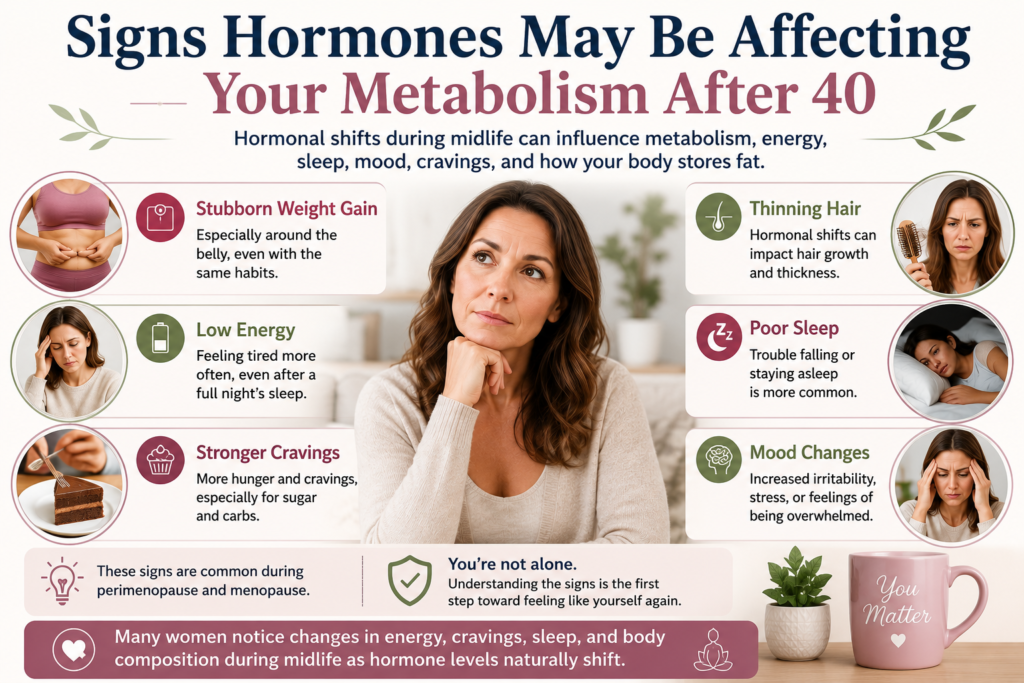
Signs Hormones May Be Affecting Your Metabolism
Some women notice body changes during midlife. Hormone shifts may be one reason.
The infographic below highlights some of the most common signs many women notice during perimenopause and menopause.
Common signs may include:
more belly fat
lower energy
changes in hunger
trouble keeping a healthy weight
slower recovery after exercise
These changes can happen for many reasons. Hormones, sleep, stress, and daily habits may all play a role.
Recognizing these signs may help women decide when to review their lifestyle habits or discuss persistent symptoms with a healthcare professional.
Signs Hormones May Be Affecting Your Metabolism After 40
How Lifestyle Changes May Support Metabolism After 40
Hormones can change during midlife. These changes may affect how the body uses energy.
Consistent daily habits may also help support metabolic health.
Simple healthy habits include:
• regular exercise
• strength training
• healthy meals
• good sleep
• managing stress
These habits may help support metabolism and keep energy levels steady during midlife.
How to Compare Metabolism Support Options After 40
Before choosing any metabolism-support option, many American women compare:
✓ Ingredient transparency
✓ Daily convenience
✓ Non-stimulant formulas
✓ Customer reviews and experiences
✓ Satisfaction guarantees
If you’re comparing different metabolism-support options, many women begin by reviewing ingredients, daily convenience, and overall value before deciding what fits best with their routine.
Many women also compare:
✓ ease of daily use
✓ customer experiences
✓ long-term value
✓ simplicity of the routine
✓ whether the option fits naturally into everyday life
Taking time to compare these factors can help women choose an option that feels realistic, sustainable, and aligned with their wellness goals.
Final Thoughts
Understanding how hormones affect metabolism after 40 can help women see why the body changes in midlife.
Hormones influence many aspects of metabolism, including fat storage, appetite, energy balance, and muscle maintenance.
Although hormonal changes are a normal part of aging, consistent healthy habits remain one of the most effective ways to support metabolic health.
Women can support metabolism by focusing on balanced meals, regular activity, good sleep, and stress control.
Practicing these habits consistently may help support healthier metabolism, energy levels, and long-term well-being during midlife.
If you’ve been focusing on healthy habits but still feel like something is missing, you’re not alone.
Many women choose a balanced approach by combining healthy daily habits with additional support that fits naturally into their routine.
If you’ve already improved your daily habits but still feel stuck, many women begin comparing additional metabolism-support options before deciding what best fits their needs.
Frequently Asked Questions
How do hormones affect metabolism after 40?
Hormones help control many body processes. Changes in hormones like estrogen, insulin, and cortisol may affect how the body burns energy and stores fat.
Why does metabolism change in midlife?
Metabolism may change for several reasons. Hormone shifts, lower muscle mass, daily habits, sleep, and stress can all play a role.
Can daily habits support hormone balance?
Healthy habits may help support hormone balance. These include regular exercise, balanced meals, good sleep, and stress control.
Do hormones cause weight gain after 40?
Hormone changes may affect where the body stores fat and how it uses energy. But diet, activity, sleep, and stress also affect weight.
Can metabolism be supported naturally after 40?
Many women support metabolism with simple daily habits. These may include strength training, balanced meals, drinking enough water, and healthy sleep routines.
When do women usually start looking for metabolism support after 40?
Many women begin exploring additional support when healthy habits such as better nutrition, exercise, and sleep no longer seem to produce the same results they once did.`