Table of Contents
ToggleIntroduction
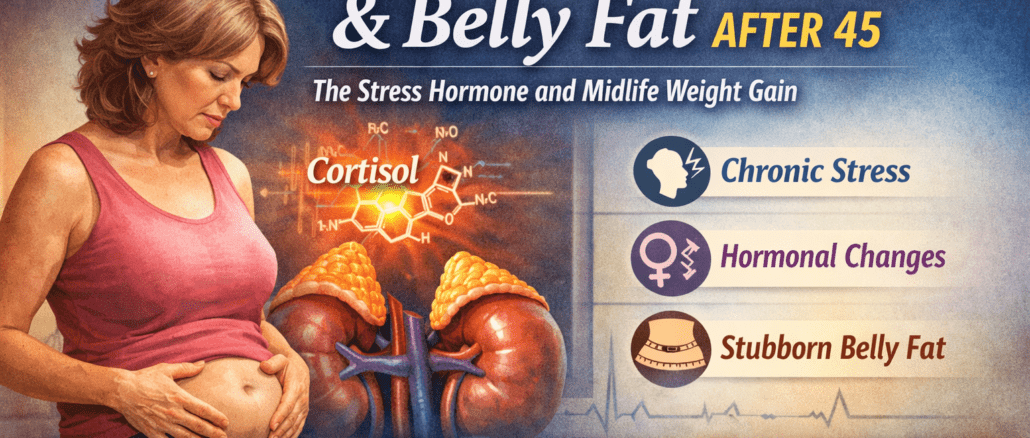
Cortisol and belly fat after 45 are more connected than many women realize, especially when weight around the abdomen does not respond to diet or exercise. In many cases, ongoing stress can quietly influence these changes.
Cortisol is the body’s main stress hormone, and when levels stay elevated for long periods, the body may be more likely to store fat, particularly around the midsection. This response is part of how the body protects itself during perceived stress.
During midlife, hormonal shifts, changes in sleep quality, and higher daily stress often occur at the same time. Together, these factors affect how cortisol, estrogen, and insulin interact, which helps explain why belly fat can become more noticeable after 45.
What Is Cortisol?
Cortisol is a hormone made by your adrenal glands.
It helps control many body functions, such as:
Stress response
Blood sugar
Inflammation
Sleep and wake cycles
Energy levels
In small amounts, cortisol is helpful. It gives you energy and focus when needed.
But long-term stress is different. When stress lasts too long, cortisol can stay high for too long.
The body is not designed for prolonged, unrelieved stress.
Medical experts at the Cleveland Clinic explain that cortisol plays a key role in the body’s stress response and metabolic regulation.
Why Cortisol Levels Rise After 45
Midlife often brings more stress.
Work pressure may increase, parents may need care, financial concerns can grow, sleep may suffer, and hormones begin to change.
At the same time, estrogen levels begin to drop.
When estrogen goes down:
You may handle stress less well
Sleep may become poor
Blood sugar control may change
These changes can make cortisol more likely to store fat.
The Link Between Cortisol and Belly Fat After 45
Cortisol helps release sugar into the blood during stress.
When this happens often, insulin levels may rise to control blood sugar.
Over time, this cycle can lead to more belly fat.
As discussed in our guide on hormonal weight gain after 45, declining estrogen can influence how the body responds to other hormones, including cortisol.
Deep belly fat, which sits around the organs, reacts strongly to stress hormones. This is why belly fat can feel harder to lose in midlife.
After 45, belly fat is often linked to stress, insulin changes, and hormone shifts.
Cortisol, Insulin, and Blood Sugar
Cortisol does not work alone.
When stress raises cortisol, blood sugar goes up. Your body then releases insulin to lower it.
When this happens often, insulin resistance can begin.
We explain this link in our article on insulin resistance in women over 40, where blood sugar balance plays a key role in weight changes after 40.
High cortisol plus unstable insulin makes belly fat easier to store and harder to lose.
How Sleep Affects Cortisol After 45
Sleep problems become more common during perimenopause.
Poor sleep can:
Raise cortisol
Increase hunger hormones
Lower insulin response
Increase cravings
When sleep gets worse, stress hormones stay high longer.
This helps explain why poor sleep often leads to weight and energy changes.
Signs High Cortisol May Be Affecting You
Only medical tests can confirm cortisol levels.
Still, some common signs may appear:
More belly fat
Poor sleep
Feeling tired but unable to relax
Strong sugar cravings during stress
Low energy after stressful days
These signs often overlap with other hormone changes. This is why cortisol and belly fat after 45 can be confusing.
Can Lowering Cortisol Help Reduce Belly Fat?
Cortisol is important for the body. But long-term stress can affect metabolism.
Managing stress may help restore balance.
Helpful strategies include:
Strength Training
Building muscle helps control blood sugar. It may also reduce stress hormone effects. This is explained in our guide on metabolism after 40.
Daily Gentle Movement
Easy movement helps. Walking outside works well, especially after meals.
Better Sleep
Improving sleep habits can lower cortisol at night.
Breathing and Relaxation
Some women also look into nutrition support or supplements. If you are exploring options, our CitrusBurn review explains the ingredients to help you decide.
Frequently Asked Questions
Does cortisol cause belly fat after 45?
High cortisol can lead to more belly fat. This risk rises with insulin issues and hormone changes.
Why is belly fat worse during menopause?
Estrogen drops. Stress rises. Muscle mass falls. Sleep often gets worse. All can add to belly fat.
Can stress alone cause weight gain?
Yes. Long-term stress can change eating habits. It can raise insulin and increase fat storage.
How can I lower cortisol naturally?
Focus on good sleep. Manage stress. Lift weights. Keep blood sugar steady.
Final Thoughts
Cortisol and belly fat after 45 are often connected through ongoing stress, hormone changes, poor sleep, and shifts in blood sugar balance, which together can affect how the body stores fat.
Midlife brings natural body changes, but gaining belly fat is not unavoidable, especially when you understand how stress hormones influence metabolism and daily energy use.
With steady habits such as better sleep, regular strength training, simple stress management, and balanced blood sugar, many women can support better metabolic balance over time.
Be the first to comment