Table of Contents
ToggleIntro
Many American women over 40 notice that metabolism changes start feeling very real during midlife—especially when the same meals, workouts, and daily routines suddenly stop working the way they used to.
In the United States, many women notice these shifts while balancing busy schedules, stress, inconsistent sleep, processed foods, and changing hormone patterns that affect metabolism over time.
These changes are far more common than most women realize—and for many U.S. women over 40, this is often the first moment they realize their body is responding differently during midlife.
This isn’t just about eating less or exercising more.
For many women, this is the stage where their body suddenly feels unfamiliar—even when they’re still trying to make healthy choices.
After 40, real biological changes begin to affect how your body burns energy, stores fat, and responds to food.
Research shows that metabolism is influenced by hormones, muscle mass, and lifestyle changes as we age, which is why results may feel different after 40.
Understanding these changes is the first step toward making strategies that actually work.
Instead, some start by exploring simple support options that fit into their daily lifestyle—especially when energy feels lower or results slow down despite consistent effort.
Hormonal Changes and Estrogen Decline
One main reason metabolism slows after 40 is hormone change. As women get closer to menopause, estrogen starts to drop.
Estrogen helps control fat, hunger, and blood sugar. When it drops, the body may store more fat, often around the belly.
This is not just about diet or exercise. It is a normal body change.
Lower estrogen can also affect how your body uses sugar for energy.
This is also one reason many women begin noticing more stubborn belly fat and slower energy during midlife.
Over time, this may raise the risk of insulin resistance.
When this happens, your body cannot use carbs as well. This can lead to slow weight gain, even if your habits stay the same.
Hormone changes can also affect hunger and energy. Some women feel more cravings or less full after eating.
Estrogen also works with other hormones like cortisol, which affects stress and metabolism.
This helps explain why “eat less” often does not work well after 40.
➡️ How Hormones Affect Metabolism After 40
What this means in real life is that many women can gain weight even when their diet has not changed, which can feel confusing without understanding the hormonal shift.
Muscle Mass Loss and Metabolic Slowdown
Another major reason metabolism changes after 40 is the gradual loss of muscle mass, which is a natural process that happens as the body ages. Muscle tissue stays active even at rest and burns more calories than fat, so when muscle mass slowly declines, the body also burns fewer calories throughout the day even if eating habits stay the same.
After the age of 30, adults may lose small amounts of muscle each year if they do not include strength-based activity, and by the time many women reach their 40s and 50s, this slow loss can begin to affect metabolism in noticeable ways.
Lower muscle mass also changes how the body manages blood sugar, because muscles help pull glucose out of the bloodstream to be used for energy. When muscle tissue decreases, this process becomes less efficient, which over time can lead to fat gain, lower energy, and more frequent energy swings.
This helps explain why simply eating fewer calories often does not work well during midlife, since muscle plays a key role in keeping metabolism steady. Focusing on strength training, eating enough protein, and allowing proper recovery becomes more important for supporting muscle and long-term metabolic health during this stage of life.
Supporting cellular energy and muscle preservation often becomes a priority during midlife.
If you’d like to understand why preserving muscle becomes so important after midlife, you may also find this guide helpful:
Mitochondrial Function and Cellular Energy
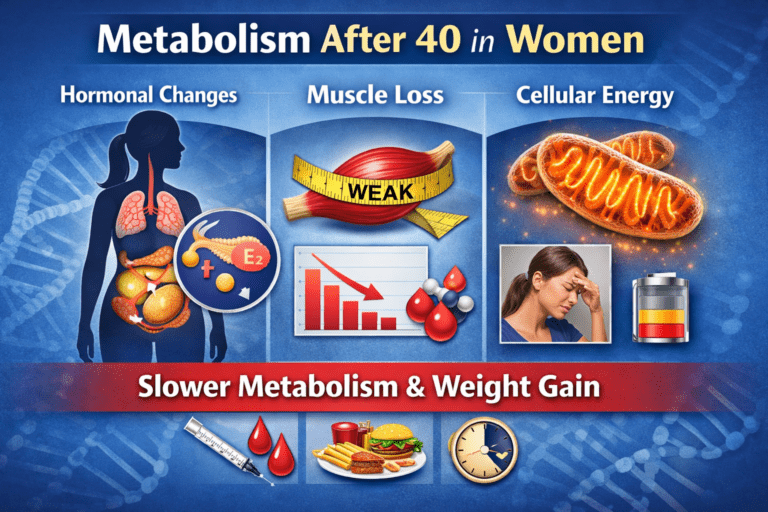
Metabolism is not controlled by hormones and muscle alone, because it also depends on what happens inside each cell of the body. At the center of this process are mitochondria, which play a key role in how the body creates and uses energy.
Mitochondria are often described as the power plants of the cell because they turn nutrients from food into usable energy called ATP. This energy supports every organ in the body and allows normal daily functions to take place.
As women get older, mitochondrial function can slowly decline, and research suggests that hormonal changes and oxidative stress may reduce how well these cells produce energy. When energy production at the cellular level becomes less efficient, overall metabolic efficiency may also decrease.
This gradual decline may help explain common midlife concerns such as ongoing fatigue, slower recovery after exercise, and increased difficulty maintaining a healthy weight. Even when calorie intake does not change, lower cellular energy output can affect how the body stores and burns fuel.
Research continues to show that mitochondrial health can be supported through lifestyle habits such as regular movement, quality sleep, balanced nutrition, and stress control. Both resistance training and moderate aerobic exercise have been linked to improved mitochondrial function when practiced consistently.
Understanding the role of mitochondria offers a clearer picture of why metabolism changes after 40, shifting the focus away from calorie counting and toward cellular efficiency and long-term metabolic strength.
Metabolism after 40 is influenced by hormones, muscle mass, and how efficiently the body produces energy.
Insulin Sensitivity and Fat Storage After 40
Insulin plays a key role in metabolism after 40. Its main job is to move sugar from the blood into cells, where the body uses it for energy. When insulin works well, blood sugar stays steady and less energy gets stored as fat.
During midlife, hormone changes can reduce how well insulin works. Lower estrogen levels can make the body less sensitive to insulin. When this happens, the body has a harder time using carbs for energy, which can lead to more fat storage around the belly.
Muscle loss can make this problem worse. Muscle helps pull sugar out of the blood, so having less muscle can make blood sugar harder to control.
These changes help explain why many women gain weight in midlife, even when habits stay the same.
If you’re noticing more cravings, belly fat, or blood sugar changes, this guide explains the early warning signs:
👉 Signs of Insulin Resistance After 45
Metabolism after 40 depends on more than calories alone, because hormones and energy use also matter.
Why Traditional Diet Advice Often Stops Working for Many American Women Over 40
This is one of the most frustrating parts of metabolism after 40—and one of the most misunderstood.
For many women, the habits that worked in their 20s and 30s stop working the same way after 40.
For many American women, the habits that worked in their 20s and 30s often stop working the same way after 40—especially with modern U.S. lifestyle patterns, stress, and inconsistent routines.
Eating less and exercising more may lead to very small changes, or sometimes no change at all.
This happens because metabolism in midlife is not controlled by calories alone. Hormone changes, muscle loss, cell energy levels, and blood sugar control all affect how the body responds to food and movement.
Cutting calories too much can slow metabolism even more. When the body senses low energy intake, it may reduce how many calories it burns at rest in order to protect itself. This response can make long-term weight control harder.
Doing a lot of cardio without strength training can also lead to muscle loss. As muscle decreases, the body burns fewer calories throughout the day, which can create a cycle where managing weight feels more difficult over time.
Metabolism after 40 often needs a smarter approach. Instead of focusing only on eating less, many women benefit from:
• Adding strength training
• Protecting muscle mass
• Managing daily stress
• Improving sleep quality
• Keeping blood sugar steady
Moving away from short-term dieting and toward long-term metabolic support becomes more important during this stage of life.
Evidence-Based Ways to Support Metabolism After 40
Metabolic changes after 40 are real, but they can still be improved. Research shows that simple lifestyle steps can support metabolic health during midlife.
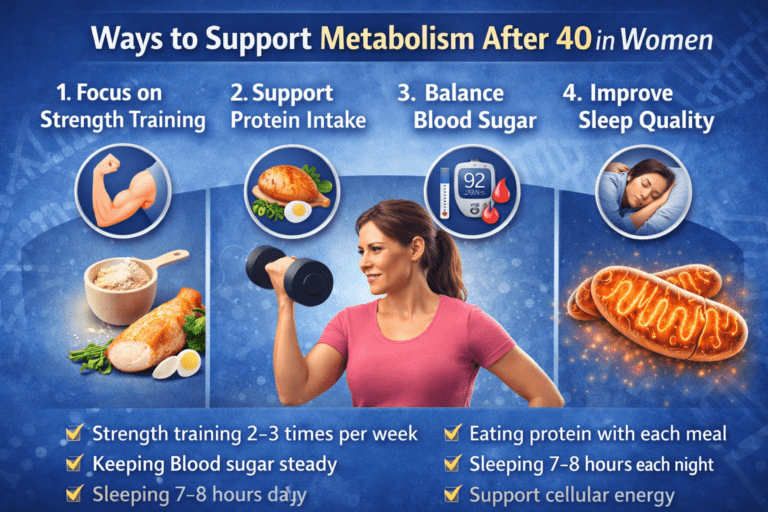
1. Focus on Strength Training
Strength training helps protect and build muscle. Since muscle helps the body burn calories at rest, keeping muscle becomes more important after 40. Even two or three workouts each week can lead to real results over time.
2. Support Protein Intake
Protein helps keep muscle strong and supports recovery.
If you’re unsure how much protein women need after midlife, this guide explains daily recommendations and practical meal planning:
👉 How Much Protein Do Women Over 45 Need?
Many experts suggest spreading protein across meals to help the body use it more effectively.
3. Balance Blood Sugar
Meals with protein, fiber, and healthy fats can help keep blood sugar steady.
Many women also begin adjusting their eating patterns during midlife to better support blood sugar and metabolism.
Stable blood sugar supports better energy and may reduce fat storage linked to insulin changes.
4. Improve Sleep Quality
Sleep plays a key role in hormone balance.
If poor sleep has become more common after 40, you may also find this guide helpful:
👉 Does Poor Sleep Slow Metabolism After 45
Poor sleep can raise stress hormones and affect hunger and blood sugar control. Regular sleep habits and stress reduction can support better metabolism.
5. Support Cellular Energy
Regular movement helps support energy production in cells. A mix of strength training and moderate cardio works well over time. Managing stress and eating nutrient-rich foods also support long-term cell health.
What Actually Helps Metabolism After 40?
Understanding the problem is important—but knowing what actually helps is what creates results.
Most women see better progress when they focus on:
• Supporting hormones naturally
• Maintaining muscle through strength training
• Keeping blood sugar stable
• Improving sleep and recovery
• Supporting cellular energy
➡️ Morning Habits That Support Metabolism After 40
If you’re looking for practical daily habits that fit into a busy routine, this guide explains simple morning strategies that may support metabolism and energy after 40.
Simple Daily Habits to Support Metabolism After 40
Small daily habits can help improve metabolism over time:
• Strength training 2–3 times per week
• Eating protein with each meal
• Walking after meals
• Sleeping 7–8 hours each night
• Managing daily stress
These habits support steady energy and long-term metabolic health.
Editorial Note: This article is intended for educational purposes and is based on publicly available nutrition, metabolism, and healthy aging research. Individual experiences vary, and the information provided should not be considered medical advice or a substitute for guidance from a qualified healthcare professional.
Final Thoughts
Metabolism after 40 is not about doing more—it’s about doing what works for your body now.
When you understand these changes, it becomes easier to avoid frustration and choose strategies that actually support long-term results.
When women understand these changes, they can move past outdated diet advice and choose approaches based on science. With the right plan, it becomes possible to support metabolism, keep energy steady, and build strength during this stage of life.
For many American women over 40, metabolism support becomes less about extreme dieting and more about building realistic habits that fit modern U.S. lifestyles, energy needs, and long-term wellness goals.
This article is based on scientific research related to metabolism, hormones, and aging in women.
If you’ve already started improving your nutrition, movement, sleep, and daily habits, you may also want to explore our Best Supplements for Women Over 40 guide. It explains commonly used metabolism-support ingredients, summarizes current research, and helps you compare options before deciding what may fit your goals.


Be the first to comment