
Table of Contents
ToggleIntroduction
If you’re over 45 and starting to notice stubborn belly fat, slower results from dieting, or weight gain that feels different than it did in your 30s, you’re not imagining it. This kind of change can feel sudden and confusing, especially when your habits haven’t changed much.
Hormonal weight gain after 45 is real, and it’s very common.
Many women describe it in the same way. They say they’re eating the same foods but gaining weight anyway. They notice their stomach getting bigger than it ever was before. And they feel frustrated because the things that used to work no longer seem to help.
The truth is, your body isn’t broken. It’s going through a natural shift.
As women move through perimenopause and closer to menopause, hormone levels begin to change. Estrogen levels slowly decline, which can affect how the body handles blood sugar and where it stores fat. Stress hormones like cortisol may become harder to manage, and muscle mass can gradually decrease with age. Together, these changes can slow metabolism and make fat easier to store, especially around the midsection.
When you understand what’s happening inside your body, it becomes easier to respond in a smarter way. Instead of feeling stuck or blaming yourself, you can start working with your body rather than against it.
Hormonal weight gain after 45 often feels sudden, but it is usually the result of gradual shifts in estrogen, metabolism, and body composition.
These changes are closely connected to broader shifts in metabolism after 40, where hormonal transitions begin influencing how efficiently your body burns calories.
Why Weight Gain Feels Different After 45
Weight gain in midlife is not just about how many calories you eat. It’s more about how your body handles energy. This includes how it stores fat, how it uses sugar, and how well it burns calories each day.
After 45, several changes tend to happen. Fat often shifts toward the belly area, even if your weight stays the same. Muscle mass slowly decreases, which can lower the number of calories your body burns at rest. At the same time, blood sugar becomes harder to control, making it easier to store fat.
These changes are closely linked to what happens after 40, when hormones begin to affect metabolism more strongly. As hormone levels shift, the body does not burn calories as easily as it once did.
By the mid to late 40s, these effects become easier to notice. This is why weight gain during this stage can feel sudden, stubborn, and harder to reverse than before.
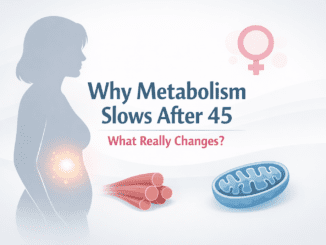
If you're noticing that your calorie burn feels slower than it used to, our detailed guide on why metabolism slows after 45 explains the hormonal and metabolic reasons behind these changes.
The Role of Estrogen in Midlife Weight Gain
Estrogen plays an important role in how your body stores fat, controls hunger, and manages blood sugar. When estrogen levels are steady, your body tends to handle energy and fat more easily.
As estrogen begins to change and slowly decline, several things can happen. The body may start storing more fat, especially around the belly. Blood sugar can become harder to manage, which makes fat storage easier. At the same time, keeping muscle becomes more difficult, and the body’s energy balance can shift.
Medical groups like the Mayo Clinic and the Cleveland Clinic have explained how these hormone changes during menopause can affect body shape and increase belly fat.
Before menopause, estrogen helps store fat in the hips and thighs. After estrogen drops, fat storage often moves toward the midsection instead.
This does not mean weight gain is guaranteed. It does mean that the approach you used before may need to change to match how your body works now.
Understanding hormonal weight gain after 45 starts with recognizing how estrogen directly influences fat distribution and metabolic efficiency.
According to the Mayo Clinic, menopause-related hormonal changes can influence body fat distribution and increase abdominal weight gain.
The Cleveland Clinic explains that declining estrogen levels can alter fat storage patterns and increase abdominal fat during menopause.
Insulin Resistance and Blood Sugar Changes
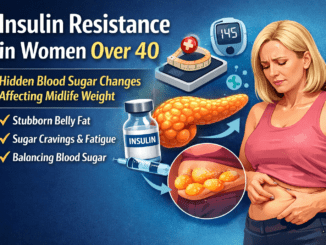
Estrogen and insulin work closely together to control how your body uses sugar for energy. When estrogen levels start to drop, insulin may not work as well as it once did.
As this happens, cells can become less responsive to insulin, which can lead to higher blood sugar levels after meals. Your tolerance for carbohydrates may change, and cravings or energy crashes can become more common. Over time, these shifts can make it easier for the body to store fat, especially around the belly.
If you have noticed feeling hungrier than usual, getting tired in the afternoon, craving sugar more often, or gaining weight even when you eat moderately, blood sugar balance may be part of the reason.
We explore this topic further in our upcoming guide on insulin resistance in women over 40 and how blood sugar regulation influences midlife weight changes.
Cortisol, Stress, and Belly Fat
Midlife often comes with more stress than earlier years. Career pressure, caring for aging parents, money concerns, and changes in sleep can all add up over time.
Ongoing stress raises cortisol, the body’s main stress hormone. When cortisol stays high for long periods, it can lead to more fat storage around the belly. It can also disrupt sleep, increase cravings for high-calorie foods, and make it harder to keep muscle.
Poor sleep alone can affect weight control. Even small changes in sleep can alter hunger signals and make appetite harder to manage.
Hormonal weight gain after 45 is rarely caused by one issue. In most cases, it comes from several factors working together, including hormone changes, blood sugar shifts, stress levels, and daily lifestyle demands.
Why Muscle Loss Accelerates After 45
Muscle is active tissue that helps your body burn calories, even when you are resting. The more lean muscle you have, the more energy your body uses throughout the day.
Muscle mass starts to slowly decline in your 30s, and after 45 this loss often speeds up. Lower estrogen levels can make it harder for the body to build and maintain muscle. Recovery from exercise may take longer, and the number of calories burned at rest can drop.
As muscle decreases, calorie burn also drops. This makes fat easier to store and weight harder to manage, even if eating habits have not changed much.
This muscle loss is one of the most overlooked reasons for weight gain in midlife. Protecting and rebuilding lean muscle becomes one of the most effective ways to support metabolism after 45.
These strategies align closely with the broader principles discussed in our guide on metabolism after 40, where muscle preservation plays a central role in long-term metabolic health.
The National Institute on Aging highlights that age-related muscle loss (sarcopenia) can significantly impact strength and metabolic efficiency over time.
Why Belly Fat Increases During Perimenopause
Many women notice weight gain around the belly during perimenopause. This change often feels different from weight gain earlier in life.
Several factors usually work together. Estrogen levels fluctuate, which can affect where fat is stored. Visceral fat, which sits deep around the organs, tends to increase during this time. Muscle mass may decrease, stress hormones like cortisol may rise, and the body may not respond to insulin as well as before.
Visceral fat is active tissue that responds to hormones and stress. Because of this, belly fat during midlife can be harder to lose.
This is why weight gain around the midsection often does not respond well to traditional dieting alone.
The good news is that hormonal weight gain after 45 is not random — it follows predictable biological patterns that can be addressed strategically.
This pattern of hormonal weight gain after 45 is largely driven by the interaction between estrogen decline, insulin sensitivity changes, and stress-related cortisol shifts.
Can Hormonal Weight Gain After 45 Be Prevented?
Hormonal changes are a normal part of midlife, but their effects on body shape can often be managed. With the right approach, it is possible to support metabolism and maintain strength.
One of the most effective strategies is strength training. Lifting weights or using resistance helps protect lean muscle, improves how the body handles blood sugar, and supports a higher calorie burn at rest. Even two or three strength sessions each week can lead to noticeable benefits over time.
Increase Protein Intake
Getting enough protein helps protect muscle and keeps you feeling full longer. It also plays a role in steady energy throughout the day.
Women over 45 often do better when protein is spread evenly across meals. This approach supports muscle repair and helps keep blood sugar more stable.
Stabilize Blood Sugar
Simple daily habits can make a real difference. Pairing carbohydrates with protein helps slow blood sugar spikes and keeps energy more stable. Taking a short 10 to 15 minute walk after meals can also help the body use sugar more effectively.
If long fasting periods leave you feeling tired or shaky, avoiding them may help. Keeping blood sugar steady sends fewer signals to store fat, which supports healthier weight balance over time.
Improve Sleep Quality
Good sleep habits can make a real difference. Try to keep a consistent sleep schedule, limit screen use in the evening, and find simple ways to relax before bed.
Better sleep helps regulate hunger signals and keeps stress hormones like cortisol in better balance, which supports healthier weight control.
Manage Stress Strategically
Managing stress can be simple and practical when you build small daily habits into your routine.
You can support your body with light daily movement, slow and steady breathing, quiet mindfulness practices, and regular walks outdoors in natural light.
Lowering your overall stress levels may help reduce belly fat and improve how your body stores energy.
Consider Metabolism-Support Tools
Some women choose to use structured nutrition plans or metabolism-support supplements along with healthy lifestyle changes. These options can offer added support when used thoughtfully.
If you are researching different products, reviewing detailed supplement breakdowns can help you understand ingredients and how formulas are designed. This makes it easier to decide what fits your needs.
The goal is to make informed choices, not to look for quick fixes.
Some women also explore structured nutrition plans or supplements to support metabolic health. If you're researching options, you can read our detailed CitrusBurn review to understand ingredients and formulation before making a decision.
Frequently Asked Questions
Why am I suddenly gaining weight at 45?
Weight gain around this age is often linked to hormone changes. Estrogen levels decline, muscle mass can drop, stress may increase, and the body may handle blood sugar less efficiently during perimenopause.
Does menopause slow metabolism?
Metabolism does not stop, but it can change. Hormone shifts may lower calorie burn at rest, affect muscle maintenance, and change where fat is stored.
Can hormone imbalance cause belly fat?
Yes, hormone changes can play a role. Lower estrogen and higher stress hormones like cortisol may encourage fat storage around the belly.
Is weight gain after 45 reversible?
For many women, body composition can improve. Strength training, enough protein, steady blood sugar, better sleep, and stress management often help support healthier weight balance.
Final Thoughts
Hormonal weight gain after 45 is not a personal failure — it’s a biological transition influenced by shifting hormones and metabolism.
Your body is responding to new hormone signals. When you understand these changes, such as shifts in estrogen, changes in blood sugar response, muscle loss, and stress hormones, you can adjust your approach in a more supportive way.
Metabolism in midlife is different, but it is not hopeless. With the right habits, many women are able to support steady energy, maintain muscle tone, and improve metabolic health over time.
The goal is not to fight your body, but to understand how it works now and support it wisely.
Be the first to comment