Table of Contents
ToggleIntro
Have you noticed that losing weight after 40 feels completely different than it used to? Many American women find that despite eating well, staying active, and following the same routines that once worked, weight gain becomes more frustrating and stubborn. If this sounds familiar, hormone changes may be playing a role.
## Why Hormones Change: 9 Signs Your Hormones Are Affecting Your Weight After 40
If you’re an American woman over 40 and your body suddenly feels different—even though your routine hasn’t changed—you’re not imagining it.
Many women notice stubborn weight gain, lower energy, and stronger cravings—even when their daily routine hasn’t changed very much.
These signs may be linked to hormone changes—and understanding them could help you take the next step.
Understanding these common signs can help explain why your body may feel different during midlife.
During your 40s, natural hormonal and metabolic changes gradually become more noticeable.
Hormones like estrogen, progesterone, cortisol, and insulin may shift. These changes can affect how the body stores fat, uses energy, and supports metabolism.
Because of these changes, maintaining a healthy weight may feel more challenging—even when eating habits and physical activity haven’t changed. This is why many women begin looking more closely at nutrition, movement, sleep, and other lifestyle habits that support metabolic health.
Recognizing these common signs can make it easier to choose practical lifestyle habits that support metabolic health and overall well-being.
One of the most frustrating aspects is that these changes can happen even when you’re following the same healthy habits that worked for years.
That’s usually the moment many women realize—this isn’t just about willpower or diet anymore… something deeper is changing.
Many women say they first notice these changes in their early 40s.
Although everyone’s experience is different, recognizing these patterns early can make it easier to build healthy habits before small changes become more frustrating.
Despite eating the same foods and staying active, they may begin experiencing stubborn belly fat, stronger cravings, or lower energy levels than before.
These changes don’t necessarily happen all at once. Many women notice one or two subtle signs first before recognizing a broader pattern over time.
Hormones help regulate metabolism, appetite, energy levels, and where the body stores fat. As these hormone levels change during midlife, many women notice changes in how their body responds to food, activity, and stress.
As women move into midlife, hormone levels can start to change. This may happen because of perimenopause, stress, and changes in how the body handles sugar.
Research from organizations including the National Institutes of Health (NIH) and the North American Menopause Society suggests that hormonal changes during midlife can influence body composition, energy balance, fat distribution, and metabolism.
As these changes occur, some women notice that weight is more likely to collect around the midsection than it did earlier in adulthood.
Quick Self-Check
If you recognize several of these signs—such as stubborn belly fat, stronger cravings, poor sleep, and lower energy—it may be worth discussing these changes with your healthcare provider while also reviewing your daily lifestyle habits.
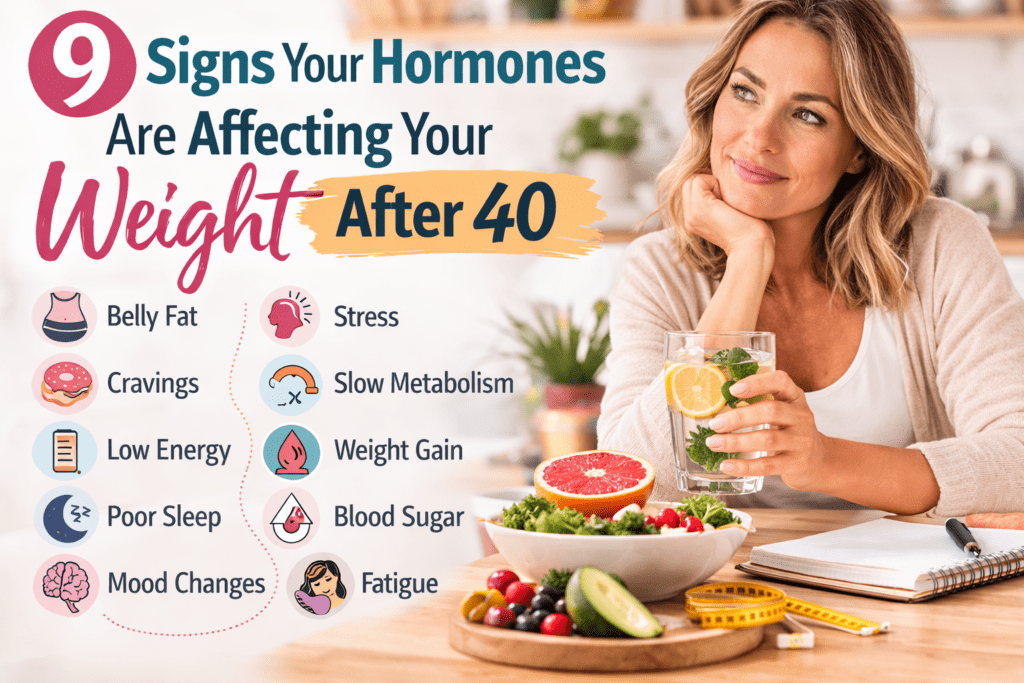
Here are nine common signs that hormonal changes may be influencing weight, metabolism, and energy after 40.
### 1. Gradual Weight Gain Around the Belly
One common sign is weight gain around the belly.
Hormone changes, especially lower estrogen, can affect where the body stores fat.
Some women also notice that hormonal changes can lead to more fat storage around the stomach area.
Learn more in our guide on **Why belly fat appears after 45**
Instead of the hips and thighs, fat may start to build around the stomach.
These changes can also affect how the body uses sugar and how metabolism works.
### 2. Increased Cravings for Sugar or Carbs
Related: Read our guide on Signs of insulin resistance after 45.
Another sign is stronger cravings for sugar or refined carbs.
When blood sugar goes up and down, hunger can increase. This can make people want sweet foods or foods high in carbs.
### 3. Slower Metabolism
Related: Learn why metabolism slows after 45.
Many women over 40 notice that their metabolism slows down.
And for many, this is the moment things start to feel frustrating—when the same effort no longer gives the same results.
Hormone changes can affect how the body turns food into energy. Muscle may also decrease with age, which can cause the body to burn fewer calories during the day.
Healthy habits can help support metabolism.
Regular movement, enough protein, and good sleep may help the body stay balanced.
### 4. Difficulty Losing Weight
Related: Learn why many women find that diet and exercise stop working after 45.
Many women find that weight loss becomes harder after 40.
Methods that worked before may not work the same way now.
Hormone changes and stress can affect how the body burns fat or stores it.
Weight loss is still possible, but daily habits may need some changes.
For some women, healthy eating and exercise alone may not seem as effective as they once were. Researchers continue studying how age-related changes in metabolism and cellular energy production may influence these results.
### 5. Increased Fatigue
Feeling tired more often can also be a sign of hormone changes.
Long periods of stress can raise cortisol levels. This may cause the body to save energy and store more fat.
When people feel very tired, they may move less or skip exercise. This can make weight control more difficult.
### 6. Poor Sleep Quality
Sleep and hormones work closely together.
Hormone changes can affect melatonin, the hormone that helps control sleep.
Sleep quality can also influence metabolism, energy levels, and hormone balance during midlife.
Learn more in our guide: Why You Wake Up at 3 AM After 40.
Because of this, good sleep may become harder.
When sleep is not enough, people may feel hungrier and have more cravings the next day.
### 7. Mood Changes and Emotional Eating
Related: Read about stress eating after 40.
Hormone changes can affect mood.
Some people may feel more stress, irritation, or worry. These feelings may lead to emotional eating or changes in food habits.
Knowing what triggers these feelings can help people make healthier choices.
### 8. Increased Stress and Cortisol Levels
Long-term stress can raise cortisol levels.
High cortisol may cause the body to store more fat, especially around the belly. It can also increase cravings for high-calorie foods.
Simple stress management habits may help. Gentle exercise, mindfulness, and relaxation can support better balance.
### 9. Changes in Blood Sugar Balance
The last sign involves changes in blood sugar balance.
As people age, the body may respond to insulin in a different way. When blood sugar goes up and down often, the body may store more energy as fat.
Eating balanced meals can help keep blood sugar steady.
Meals with protein, fiber, and healthy fats may support better balance.
If you want to learn more about daily habits that support metabolism after 40, read our guide on: **morning routine that supports metabolism after 40**
Could These Signs Mean Your Body Needs Additional Support?
Many American women notice that healthy habits alone don’t always produce the same results after 40.
You may want to explore additional metabolism support if:
✓ Weight loss feels harder than it used to
✓ Belly fat continues increasing despite healthy eating
✓ Energy levels remain low throughout the day
✓ Cravings have become more frequent
✓ You feel like your body is responding differently than before
✓ Lifestyle changes no longer seem as effective as they once did
While healthy habits remain the foundation of long-term wellness, some women choose to explore additional support as part of their overall routine.
## Lifestyle Habits That May Support Hormonal Balance (Common in U.S. Women Over 40)
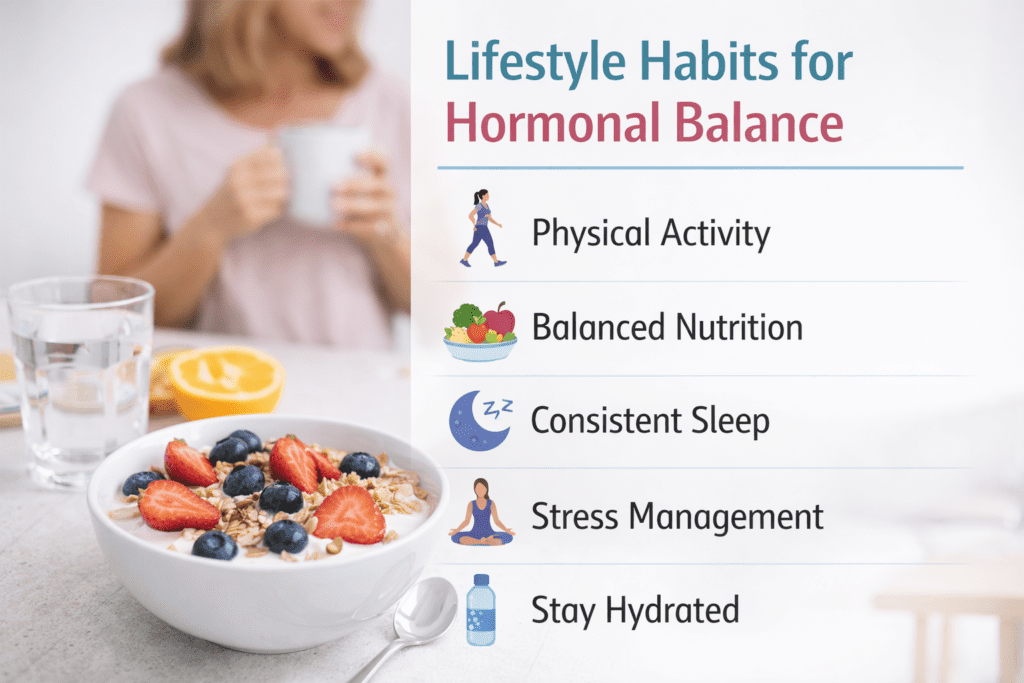
Hormone changes are a normal part of aging. Some daily habits can help support metabolism and overall health.
Helpful habits include:
Regular physical activity
Balanced meals with protein and fiber
A consistent sleep schedule
Stress management habits
Drinking enough water during the day
Small daily habits can make a big difference over time.
Why Healthy Habits Sometimes Aren't Enough After 40
Many women are surprised that the strategies that worked in their 30s no longer produce the same results after 40. Age-related changes in hormones, sleep patterns, stress levels, and cellular energy production may all influence metabolism.
Because of these changes, some women choose to combine healthy lifestyle habits with additional nutritional support as part of their daily routine.
Why Metabolism Feels Different After 40
Many women are surprised that the habits that worked in their 20s and 30s no longer produce the same results after 40.
During midlife, several factors can influence metabolism. Hormonal shifts, changes in muscle mass, increased stress, and age-related changes in cellular energy production may all affect how the body uses energy.
This may help explain why some women experience stubborn belly fat, lower energy, or slower weight loss even when their eating habits have not changed significantly.
Understanding these changes can help women make more informed decisions about nutrition, physical activity, and overall wellness.
Why Some Women Explore Additional Metabolism Support
Many American women look for metabolism support that:
• Fits easily into busy daily routines
• Complements healthy eating habits
• Supports healthy energy production
• Works alongside exercise and lifestyle habits
• Uses ingredients backed by research
Many women prefer options that support overall wellness rather than quick fixes.
Along with balanced nutrition, regular movement, and quality sleep, some women explore supplements designed to support metabolism and healthy energy production during midlife.
When researching supplements, many women look for ingredients that support cellular energy, metabolic health, and overall wellness.
Lifestyle Habits Alone vs Lifestyle Habits + Additional Metabolism Support
| Lifestyle Habits Alone | Lifestyle Habits + Additional Metabolism Support |
|---|---|
| Focuses on nutrition, movement, and sleep | Combines healthy habits with additional wellness support |
| May take time to notice changes | Some women prefer additional daily support alongside healthy routines |
| Requires consistency over time | Designed to complement—not replace—healthy habits |
| Foundation of long-term wellness | May provide additional support for overall metabolic wellness |
Healthy habits should always remain the foundation of long-term health. However, many American women explore additional support options when they feel their body is changing and lifestyle habits alone no longer seem enough.
Final Thoughts
Understanding 9 Signs Your Hormones Are Affecting Your Weight After 40 can help women notice body changes during midlife.
Hormones affect many parts of the body. They influence metabolism, hunger, sleep, and how the body stores fat.
When people recognize these signs, they can make better choices for their health.
In the United States, many women are now combining these habits with targeted support that fits into their daily routine and lifestyle.
U.S.-based, research-backed insights
If you’re looking for simple, realistic options that fit into a typical American lifestyle, it may help to explore what others are already using as part of their routine.
Frequently Asked Questions
Why do hormones affect weight after 40?
Hormones control metabolism, hunger, and fat storage. When hormone levels change during midlife, the body may store fat in new places and burn energy more slowly.
Can hormonal weight gain be prevented?
Healthy daily habits may help support hormone balance. Regular movement, balanced meals, and stress control can help support metabolism and overall health.
What hormones influence weight gain?
Several hormones can affect weight. These include estrogen, insulin, cortisol, and thyroid hormones.
Is belly fat related to hormonal changes?
Hormone changes can affect where the body stores fat. Some women notice more fat around the belly during midlife.