Table of Contents
ToggleHow Gut Health Affects Weight Loss After 40 in Women
You clean up your diet on Monday.
You swap your usual drive-thru breakfast for Greek yogurt and berries. You skip dessert after dinner. You even manage to squeeze in a walk between work, errands, and everything else life throws at you.
A few weeks later, the scale hasn’t moved.
Even more frustrating, the healthy habits that worked in your 30s may no longer seem to make much difference.
Worse, your jeans still feel tight, you’re bloated by evening, and some days you look six months pregnant after a perfectly normal meal.
It’s easy to wonder whether you’re doing something wrong.
But what if calories and exercise aren’t the whole story?
For many women in their 40s and beyond, changes inside the digestive system may quietly influence energy levels, cravings, inflammation, and even weight-loss efforts.
Understanding how gut health affects weight loss after 40 may help explain why healthy habits sometimes produce slower results during midlife.
Why Gut Health Becomes More Important After 40
Your gut does much more than digest food.
It also plays a role in appetite regulation, immune function, nutrient processing, and communication with your brain.
Inside your digestive system live trillions of tiny organisms called the gut microbiome. These helpful bacteria break down food, make certain nutrients, support your immune system, and help control hormones linked to hunger and metabolism.
Research suggests that the gut microbiome may influence digestion, appetite regulation, metabolism, inflammation, and overall health. While gut health is only one factor affecting weight management, it may help explain why some healthy habits feel more effective than others over time.
During your 40s and 50s, several everyday factors can influence the balance of your gut microbiome, including:
- Hormone changes during perimenopause and menopause
- Higher stress levels
- Poor sleep
- Frequent dieting
- Less physical activity
- Eating more processed foods
- Taking certain medicines, such as antibiotics
Many women over 40 juggle careers, family responsibilities, caregiving, and busy schedules every day. Because of this, it’s easy to grab takeout, eat too quickly, or snack while working.
Over time, these everyday habits may influence the balance of your gut microbiome and your overall digestive health.

Signs Your Gut May Need More Support
### When should you talk with your healthcare provider?
Occasional bloating or digestive discomfort is common. However, if you experience persistent abdominal pain, ongoing changes in bowel habits, unexplained weight loss, blood in your stool, or digestive symptoms that continue for several weeks, it’s important to seek medical advice. These symptoms can have many different causes and deserve proper evaluation.
Changes in gut health do not always cause obvious digestive symptoms. Some women notice digestive discomfort, while others mainly experience changes in energy, appetite, cravings, or bloating.
Because these changes often develop gradually, they can be easy to overlook.
Some women notice:
- Bloating after meals
- Changes in bowel habits
- Feeling hungry more often
- Feeling hungry soon after eating
- Low energy, even after getting enough sleep
- Being more sensitive to certain foods
- Brain fog or trouble focusing
- Difficulty staying full between meals
These signs do not always mean you have a gut health problem, but they may suggest that your gut needs more support.
Does any of this sound familiar?
If you’ve been dealing with bloating, cravings, stubborn weight gain, low energy, and difficulty losing weight despite healthy habits, your gut health may be one factor worth exploring.
If bloating has become a regular part of your day, learning about its possible causes may help you identify patterns worth discussing with your healthcare provider.
You may also find this related guide helpful:
• Why Do Women Over 40 Feel Bloated All The Time?
These symptoms can have many possible causes, but recurring patterns are worth paying attention to and discussing with a healthcare professional if they persist.

The Gut-Weight Connection: Four Ways Gut Health May Affect Weight Loss
1. Gut Health May Affect Hunger Signals
Have you ever finished a balanced meal and felt hungry again an hour later?
Your gut helps control hormones that affect hunger and fullness, such as ghrelin and leptin.
When gut health is out of balance, it can be harder to tell when you’re truly full.
You may notice:
- Snacking all day
- Cravings in the evening
- Feeling unsatisfied after meals
- Strong cravings for processed foods
This can be frustrating, especially when you’re making healthy food choices but still struggle to feel satisfied.
2. Digestive Changes May Affect How Your Body Uses Nutrients
Your body needs nutrients from food for energy, muscle health, and overall wellness.
If your digestion is not working well, you may not feel your best, even when you eat healthy meals.
Low energy can lead to other challenges, such as:
- Less desire to exercise
- Eating more convenience foods
- Drinking more caffeine during the day
- Turning to food for comfort
Many women say this leaves them feeling stuck in an unhealthy cycle.
If low energy, cravings, and stubborn weight changes sound familiar, you may also find this guide helpful:
• Why Am I Always Hungry After 40?
Many women discover that appetite changes and digestive health are closely connected.
3. Ongoing Inflammation May Make Weight Loss Harder
Gut health and inflammation are closely linked.
Eating a diet high in processed foods, added sugar, and low-fiber foods may increase inflammation in some people.
Inflammation is not the only reason people struggle with weight, but experts believe it can affect overall metabolic health.
You may recognize this routine:
You start the day with a sweet coffee and pastry. Work gets busy, so you skip lunch. On the way home, you grab fast food. Later, after a stressful day, you relax with chips or ice cream.
Having convenience foods once in a while is not the problem.
The problem is when these habits happen day after day. Over time, they may affect both gut health and overall health.
4. Stress and Gut Health Are Closely Linked
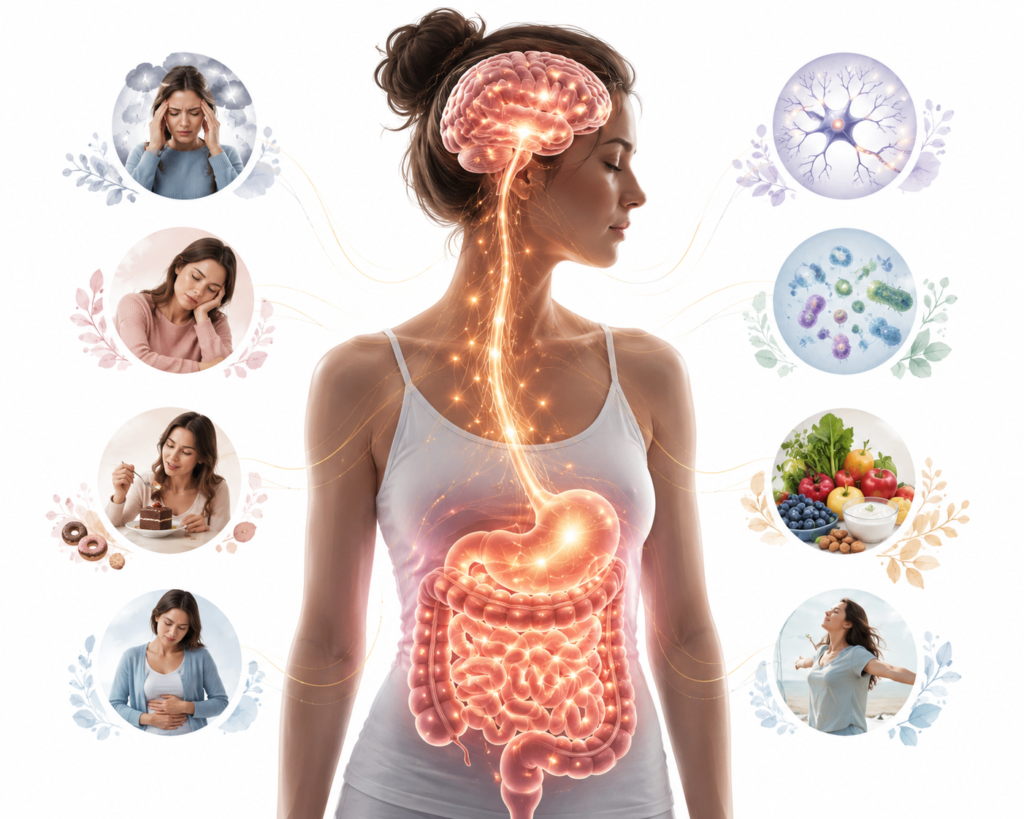
Your gut and brain are always communicating. This connection is often called the gut-brain axis.
Think about a stressful week.
You may:
- Sleep poorly
- Crave comfort foods
- Notice digestive problems
- Feel more anxious or tired
Many women find that digestive symptoms get worse during stressful times because stress can affect how the gut works.
Stress can also affect blood sugar regulation, which may influence cravings and appetite.
Women who struggle with energy crashes, cravings, or blood sugar fluctuations may also find this guide helpful:
• How to Balance Blood Sugar After 45 Naturally
Many women are surprised to learn how stress hormones may influence cravings, appetite, and stubborn belly fat during midlife.
Everyday Habits That Support Gut Health After 40
Many women find that eating more fiber, prioritizing protein, sleeping well, managing stress, and staying physically active create a strong foundation for better digestive health and overall wellness.
The encouraging news is that supporting gut health doesn’t require perfection.
Small, consistent habits often matter more than dramatic overhauls.
Eat More Fiber Gradually
Fiber feeds the good bacteria in your gut and helps keep your digestive system healthy.
Foods high in fiber include:
- Beans
- Lentils
- Oats
- Berries
- Apples
- Vegetables
- Nuts
- Seeds
Add fiber to your diet slowly. Also, drink plenty of water to help prevent bloating or other digestive discomfort.
Include Fermented Foods
Fermented foods contain good bacteria that may help support gut health.
Examples include:
- Plain yogurt
- Kefir
- Sauerkraut
- Kimchi
- Miso
- Cottage cheese with live cultures
You do not need to eat large amounts. Eating small servings a few times each week may help support a healthy and varied gut microbiome.
Prioritize Protein at Meals
Many women do not eat enough protein at breakfast.
Eating protein in the morning may help you feel full longer and may reduce afternoon cravings.
Simple high-protein breakfast ideas include:
- Eggs with vegetables
- Greek yogurt with nuts
- Cottage cheese with fruit
- A protein smoothie
Slow Down While Eating
Busy schedules often lead people to eat in the car, at their desk, or while looking at a phone.
Try these simple habits:
Sit down when you eat whenever possible
Chew your food well
Pause halfway through your meal
Eat without distractions a few times each week
These small changes can help you pay more attention to your hunger and fullness signals.
Move Your Body Consistently
Regular movement helps support healthy digestion in many ways.
You do not need hard or intense workouts to see benefits.
Helpful activities include:
Walking after meals
Strength training
Gardening
Stretching
Fun recreational activities
What matters most is being active regularly, not how intense your workouts are.
One simple habit many women find helpful is taking a short walk after eating. Walking after meals may support digestion, blood sugar balance, and overall metabolic health. You can learn more in our article on Walking After Meals for Blood Sugar After 40.
### Remember
Healthy digestion doesn’t improve overnight.
Like building strength or improving sleep, supporting your gut usually comes from small, consistent habits repeated over weeks and months—not from trying to follow a perfect plan.
Why Quick-Fix Diets Often Backfire
Many women reach their 40s after years of dieting.
Going back and forth between strict dieting and overeating can create stress around food. It can also make healthy habits harder to maintain.
Very strict diets that cut out whole food groups or greatly reduce calories may not work well over the long term.
Instead, ask yourself:
- Can I still follow this plan six months from now?
- Does this plan help me feel energized?
- Does it help me feel full and satisfied?
- Does it fit into my everyday life?
Healthy habits that you can keep for years usually work better than trying to be perfect for a short time.
A Gentle Reminder: Progress Isn't Always Visible on the Scale
Many women notice positive changes before they notice weight changes. Better digestion, steadier energy, fewer cravings, and feeling more comfortable after meals are meaningful signs that healthy habits are beginning to support overall wellness.
When gut health improves, you may notice positive changes even before the number on the scale changes.
You might notice:
Less bloating
Better digestion
More steady energy
Fewer cravings
A better mood
Better sleep
Feeling full longer after meals
These changes are important.
For many women in the United States, health in midlife is not about getting back the body they had at 25. It is about feeling healthy, energetic, comfortable, and confident again.
Supporting your gut health may be one important step toward feeling your best.
What Health Experts Say
Research suggests that gut health may influence appetite, digestion, inflammation, and overall metabolic health. Hormones, sleep quality, stress, dietary habits, and physical activity may all affect gut health during midlife.
### Health Disclaimer
This article is for educational purposes only and should not be considered medical advice. Always consult a qualified healthcare professional regarding persistent digestive symptoms or before starting new supplements.
### Sources
– Harvard Health Publishing
– National Institute on Aging
– American Gastroenterological Association
– Academy of Nutrition and Dietetics
Final Thoughts
If you have been doing all the “right things” but still struggle with weight changes after 40, it may help to look beyond calories and exercise. Your gut health may affect cravings, digestion, energy levels, and overall well-being.
The good news is that improving gut health does not require a perfect diet or major lifestyle changes. Small daily habits can make a big difference over time.
Try to:
Eat more fiber-rich foods
Manage stress
Get enough sleep
Choose healthy, nourishing meals more often
Remember, progress is not only about the number on the scale.
You may notice other positive changes, such as:
Less bloating
More steady energy
Fewer cravings
Feeling better overall
These changes matter.
Health after 40 is a journey, not a race.
Lifestyle habits remain the foundation of long-term wellness. Nutritional support may complement those habits for some women, but it should never replace balanced eating, regular movement, quality sleep, stress management, or guidance from a qualified healthcare professional.
Be patient with yourself. Focus on habits you can keep for the long term, and celebrate small wins along the way.
Your body is changing, but with the right support, you can still feel strong, energized, and healthy after 40.
If you’ve already improved your meals, digestion, sleep, and daily habits but still struggle with low energy, cravings, or slow progress, you’re not alone.
Many women who have already improved their meals, sleep, movement, and digestive habits eventually begin learning about additional nutritional support as one part of their overall wellness plan.
If you’ve already built healthy daily habits but still feel like your progress has slowed, you may want to learn more about evidence-informed nutritional support. Our Best Supplements for Women Over 40 guide explains commonly discussed ingredients, summarizes current research, and helps you compare different options alongside the healthy routines you’ve already established.
## Key Takeaways
– Gut health is only one part of healthy weight management after 40.
– Hormones, sleep, stress, movement, and nutrition all work together.
– Small daily habits usually outperform extreme diets over the long term.
– Better digestion, steadier energy, and fewer cravings are meaningful signs of progress.
– Healthy lifestyle habits remain the foundation, while nutritional support may complement them for some women.
Frequently Asked Questions
Can poor gut health make it harder to lose weight after 40?
Gut health is only one part of the picture. However, your digestive health may affect hunger, energy levels, inflammation, and eating habits, which can all play a role in weight management.
How can women over 40 improve gut health naturally?
Simple habits that may help include:
- Eating more fiber-rich foods
- Eating fermented foods
- Managing stress
- Getting enough sleep
- Staying active
- Limiting highly processed foods
Do women over 40 need probiotic supplements?
Not always. Many women can support gut health through food alone. Some may choose supplements based on their personal needs and advice from a healthcare professional.
How long does it take to improve gut health?
Everyone is different. Some women notice better digestion or more energy within a few weeks. Lasting results usually come from healthy habits practiced consistently over time.
Can menopause affect gut health?
Yes. Hormone changes during perimenopause and menopause may affect digestion, appetite, and gut bacteria. This may help explain why many women notice digestive changes during midlife.
What supplements do some women over 40 use to support gut health and metabolism?
While food and lifestyle habits should always come first, some women choose to explore supplements as additional support for digestive wellness, cravings, energy, and metabolism. If you’re researching options, our guide to the Best Supplements for Women Over 40 compares several popular choices.