Table of Contents
ToggleStress Eating After 40: Why Cravings Feel Different Than They Used To
Many American women over 40 suddenly notice something confusing: the same habits that once felt easy no longer seem to work. Cravings feel stronger, late-night snacking becomes harder to resist, and stress eating can suddenly feel much more emotional.
The same woman who once felt “in control” around snacks, sweets, or late-night eating may suddenly feel like cravings are harder to ignore. Busy U.S. routines, stress, poor sleep, emotional exhaustion, and hormonal shifts can all make eating patterns feel different than they did years ago.
Stress eating after 40 is rarely caused by a single issue.
More often, it’s the result of several factors working together, including stress, sleep, hormones, emotions, and everyday routines.
“Some women notice cravings hit hardest late at night after emotionally draining days — even when they tried to eat healthy earlier.
Others say stress eating feels less about hunger now and more about exhaustion, overwhelm, comfort, or simply trying to relax after busy routines.”
If you’ve ever wondered, “Why am I craving foods I never struggled with before?” you’re not alone.
Many women say the most frustrating part is realizing they’re trying just as hard as before— but their cravings, energy, and eating habits suddenly feel completely different.
During midlife, many women notice several changes happening at the same time, including:
• stress
• hormone changes
• poor sleep
• emotional exhaustion
• busy daily routines
This is one reason cravings and emotional eating can suddenly feel much harder than before.
Together, these factors can make cravings feel stronger and emotional eating harder to recognize.
Some women notice stronger cravings after stressful workdays, while others find themselves reaching for comfort foods almost automatically at the end of a long day. Many also notice that typical American meals high in sugar and processed carbohydrates can make cravings feel even more intense afterward.
Many women find that small, sustainable changes to sleep, stress management, meals, and daily routines gradually help them feel more in control of their eating habits. Understanding why these changes happen is the first step.
## Why Many American Women Feel Like Their Body Suddenly Changed After 40
Some women say the hardest part is not just the cravings.
It’s feeling like their body suddenly stopped responding the way it used to.
Many American women over 40 describe:
• getting hungrier at night
• craving sugar more often
• feeling emotionally exhausted after work
• struggling with stress snacking during busy routines
• feeling frustrated that healthy habits no longer feel “easy”
Why Stress Eating May Feel More Overwhelming During Busy American Routines
Stress affects both the body and the brain, and its effects can become more noticeable during midlife.
In the United States, many women over 40 deal with work, family responsibilities, poor sleep, stress, and hormone changes all at the same time. These daily pressures can affect hunger, cravings, and eating habits in emotional ways.
Some women realize they aren’t eating because they’re physically hungry.
Learning to recognize the difference between physical hunger and emotional hunger can be an important first step.
Instead, they’re responding to stress, mental fatigue, or the need for comfort after a demanding day.
Emotional eating is more likely during times of:
• Ongoing stress
• Physical tiredness
• Anxiety
• Poor sleep
• Mental fatigue
• Afternoon energy crashes
Over time, these patterns can make emotional eating feel automatic, even when physical hunger isn’t the main trigger.
Hormonal Changes May Affect Hunger Signals
Hormone changes during midlife may influence hunger, appetite, and emotional eating patterns.
Many women notice changes in:
Hunger
Feeling full
Energy levels
Mood
Cravings for sugar or carbs
As women move through their 40s and beyond, the body may react to stress differently than before.
These changes vary from person to person, but they may help explain why appetite and cravings sometimes feel less predictable.
Some women also notice more emotional eating during times of:
Poor sleep
Higher stress
Perimenopause
Busy routines
Less physical activity
For women wanting to better understand how hormonal changes may affect metabolism and weight patterns, this guide may also help:
Many Women Notice Cravings Increase After Poor Sleep
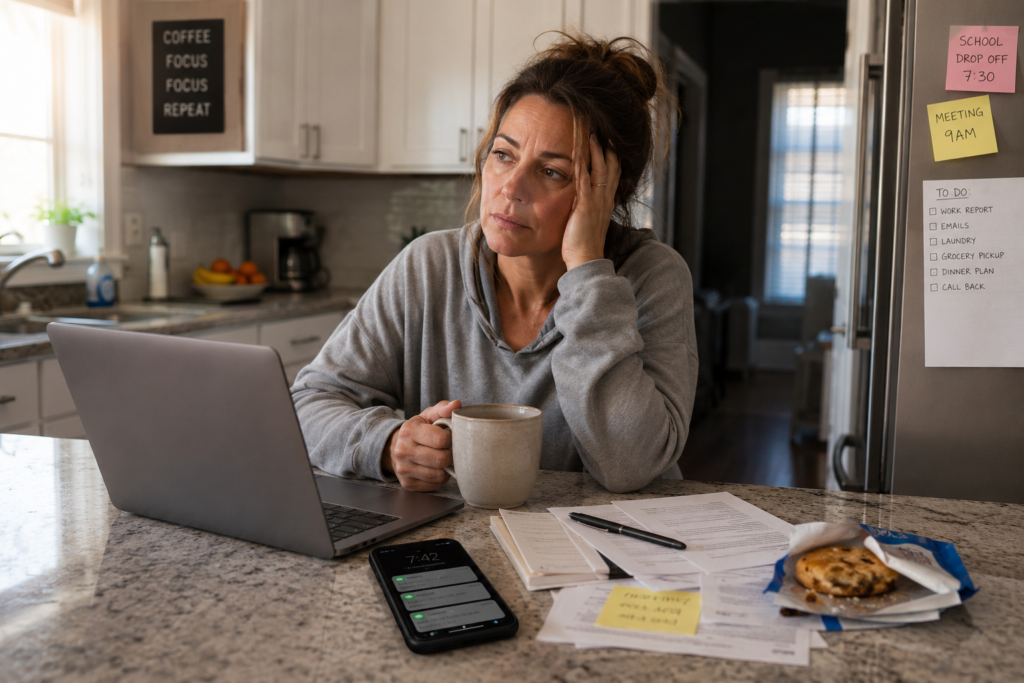
Sleep and cravings are strongly connected.
Many American women over 40 notice that after a bad night of sleep, they crave:
Sugary foods
Fast food
Salty snacks
Comfort foods
Processed carbs
Busy schedules, caregiving responsibilities, work demands, and everyday stress can all make consistent, high-quality sleep harder to achieve.
When sleep gets worse, many women feel:
Hungrier during the day
More emotional
More likely to snack without thinking
More likely to want quick energy foods
Over time, many women notice that poor sleep affects their energy, appetite, and food choices more than it once did.
How Fast-Paced Daily Habits May Be Fueling More Cravings After 40
Many commonly available convenience foods are designed to be highly appealing and easy to overeat.
During stressful periods, many people naturally gravitate toward foods that are convenient, familiar, and highly palatable, such as desserts, packaged snacks, sweet drinks, and fast food.
But some women notice these foods can lead to:
Blood sugar ups and downs
Afternoon energy crashes
More hunger later
More emotional eating
Stronger nighttime cravings
This cycle can feel frustrating because cravings may continue even after eating enough food.
That’s one reason balanced meals containing protein, fiber, and healthy fats may help some women feel satisfied for longer.
Many women begin focusing more on balanced meals that include:
- Protein
- Fiber
- Hydration
- Whole foods
- Regular meal timing
For women exploring ways to support more balanced eating patterns, this article may also be helpful:
Women who struggle with cravings, energy crashes, or constant hunger may also find it helpful to learn how to support healthier blood sugar balance during midlife.
Stress Eating After 40 Is Often Emotional, Not Physical
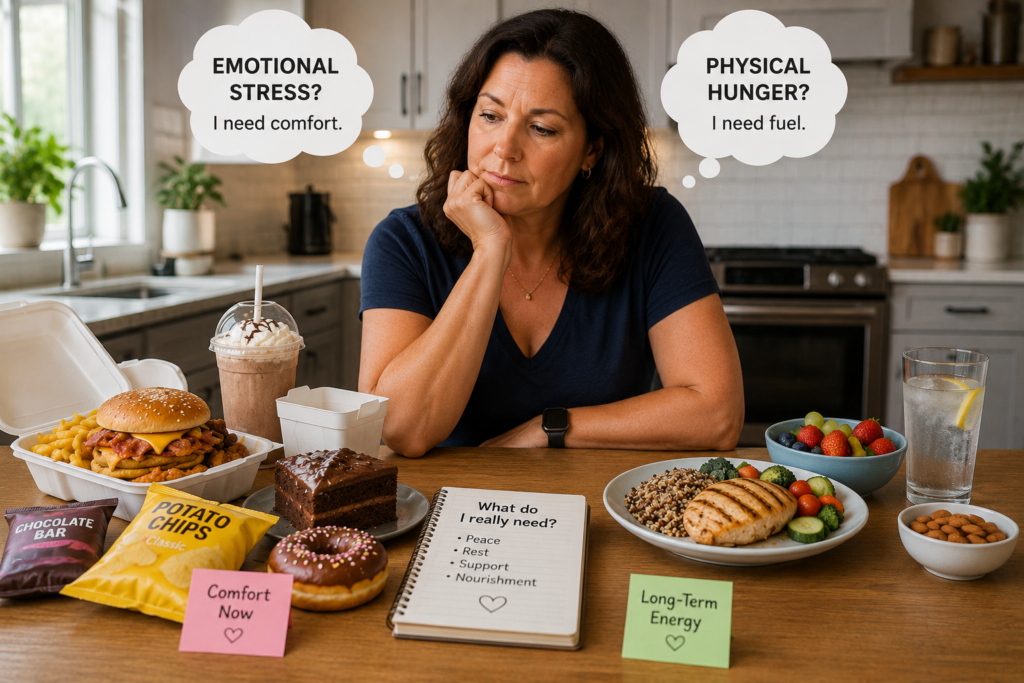
For some women, one realization slowly becomes clearer over time:
Stress eating after 40 is not always caused by hunger.
Over time, some women realize their cravings are driven less by physical hunger and more by emotional exhaustion, stress, mental overload, or the need to unwind after a demanding day.
Sometimes food becomes:
A way to relax
A comfort habit
A reward after a long day
A way to cope
A moment of emotional comfort
Mental fatigue and busy routines can gradually reinforce emotional eating patterns without people realizing it.
Some women notice they eat more when they feel:
Overwhelmed
Lonely
Burned out
Anxious
Mentally tired
Others notice cravings get stronger late at night when the day becomes quieter.
Pausing to ask, “Am I physically hungry, or am I looking for comfort?” can sometimes help interrupt this pattern.
Understanding these emotional triggers can help women feel less frustrated and kinder toward themselves.
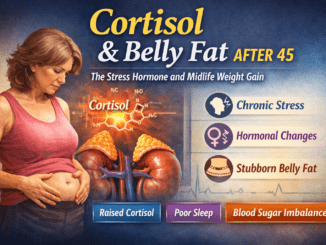
How Cortisol May Influence Cravings
Cortisol is often called the “stress hormone.”
When stress stays high for a long time, some women notice changes in:
Hunger
Energy levels
Belly fat
Sleep
Emotional eating habits
Some women notice increased hunger during stressful periods even when their activity levels haven’t changed.
Others notice stronger cravings for:
Sugar
Salty foods
Carbs
Comfort foods
Stress alone does not determine whether someone gains weight, but it may influence eating habits, sleep, and daily routines over time. But over time, some women begin noticing that long-term stress may affect eating habits more than they realized.
For additional insight into how stress patterns may affect weight and appetite, this article may help:
Many women are surprised to learn how stress hormones may influence cravings, appetite, and belly fat during midlife.
Why Some Women Look Beyond Diet Alone
Many women find that improving meals, sleep, hydration, and stress management creates an important foundation for feeling better.
However, some women still feel frustrated when cravings, low energy, or emotional eating patterns continue.
At this stage, some women begin exploring additional wellness strategies alongside healthy lifestyle habits.
Rather than looking for quick fixes, many women look for options that fit naturally into long-term routines and complement balanced meals, better sleep, and everyday movement.
Before trying additional support, many women spend time learning about nutrition, metabolism, and evidence-informed wellness strategies.
Small Habits That May Help Reduce Emotional Eating
Most women don’t need an extreme diet to begin making progress.
Instead, small daily habits often feel easier and more realistic to follow.
Some women focus on:
• Eating more protein at breakfast
• Drinking more water during the day
• Walking after meals
• Eating fewer late-night snacks
• Lowering stress
• Getting better sleep
• Planning balanced meals ahead of time
These habits may help support steadier energy and more regular hunger patterns during the day.
Many women also notice that strict dieting can sometimes make cravings stronger.
For some people, overly restrictive eating can increase feelings of deprivation, making cravings harder to manage over time.
Gentler routines often feel easier to follow for the long term.
Why Many Women Feel Frustrated With Themselves
One of the hardest parts of stress eating after 40 is the emotional side.
Many women blame themselves when cravings feel stronger than before.
Self-criticism often makes lasting behavior change more difficult than self-awareness and realistic expectations.
But often, many things may be happening at the same time:
• Hormone changes
• Emotional stress
• Poor sleep
• Busy schedules
• Blood sugar ups and downs
• Less recovery time
• Mental tiredness
This is one reason many American women over 40 feel confused when old habits or routines stop working like they once did.
For many women, things begin to change when they stop blaming themselves and start seeing cravings differently. Often, bigger lifestyle patterns—not lack of discipline—may be playing a role.
Where Many Women Start
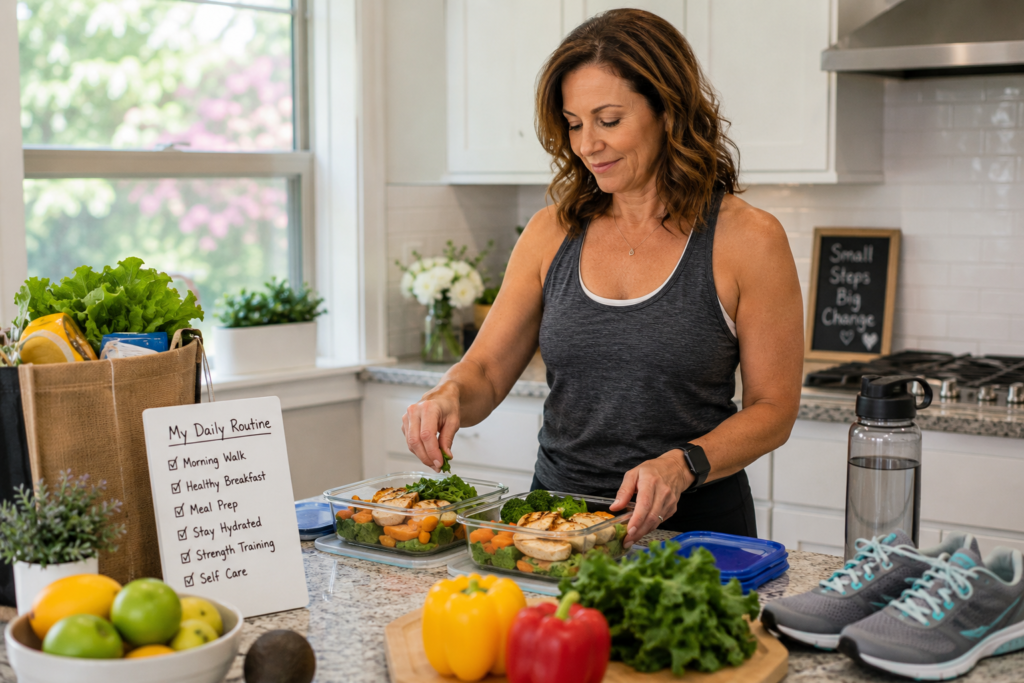
For many American women, lasting progress often begins with one or two manageable habits rather than trying to change everything at once.
Some women focus on:
- Walking more consistently
- Eating more balanced meals
- Improving hydration
- Supporting better sleep habits
- Reducing highly processed foods
- Building calmer daily routines
- Creating more realistic stress management habits
Many women find that choosing one habit to focus on first makes new routines easier to maintain over time than trying to change everything at once.
Stress Eating After 40 Often Improves With Consistency
After years of frustrating routines, it’s understandable why some people hope for quick results.
But emotional eating habits often improve slowly through small daily routines.
Some women notice improvement when they:
• Eat more regularly during the day
• Sleep better
• Avoid strict all-or-nothing dieting
• Build realistic exercise habits
• Lower stress when possible
• Create healthier evening routines
Small, consistent habits are often easier to maintain than dramatic lifestyle changes.
This is one reason many women discover that trying harder is not always the answer. Sometimes simpler routines work better than extreme approaches.
Over time, many women begin noticing:
• More steady energy
• Fewer strong cravings
• Better awareness of emotions
• Less mindless snacking
• Better daily routines
Many women feel relieved once they realize these struggles are far more common than they thought.
Expert Note
Research suggests that emotional eating during midlife may be influenced by stress levels, sleep quality, hormones, blood sugar regulation, and emotional well-being. Persistent changes in appetite or eating behaviors should always be discussed with a qualified healthcare professional.
Health Disclaimer
This article is for educational purposes only and should not be considered medical advice. Always consult a healthcare professional regarding persistent health concerns or before starting new supplements.
References
- National Institute on Aging.
- Harvard T.H. Chan School of Public Health.
- American Psychological Association.
- American Diabetes Association.
Conclusion
Stress eating after 40 can feel frustrating, emotional, and confusing for many women.
Many American women over 40 notice changes in cravings as life gets busier. Stress, poor sleep, hormone changes, and daily routines can all play a role. Things that once felt easy may suddenly feel harder to manage.
But many women also find that small and realistic habits often work better than strict diets or self-criticism.
Understanding how stress, sleep, hormones, cravings, and emotional eating influence one another can help you make more informed decisions about your daily habits.
may help women feel more supported and less discouraged as they build healthier long-term habits.
If you’ve already built healthier routines but still struggle with cravings or emotional eating, many women choose to learn more about how nutrition, metabolism, and evidence-informed nutritional support may complement those habits.
If you’re exploring additional nutritional support alongside healthy habits, our Best Supplements for Women Over 40 guide explains commonly discussed ingredients, summarizes current evidence, and outlines what to consider before deciding whether a supplement fits your needs.
Frequently Asked Questions
1. Why is stress eating after 40 so common?
Many women notice stress eating becomes more common after 40 because several things may happen at once. Busy routines, poor sleep, emotional stress, hormone changes, and changes in energy can all affect cravings and eating habits differently than before.
2. Can hormone changes increase cravings after 40?
Some women notice stronger cravings during hormone changes, especially during perimenopause and menopause. These changes can affect hunger, mood, energy, and emotional eating habits. This may make cravings feel stronger or harder to manage.
3. Why do I crave sugar more when I’m stressed?
Stress can affect energy and emotions. Because of this, many women may crave quick comfort foods like sweets or processed carbs. Meals high in sugar and refined carbs may also lead to blood sugar ups and downs, which can increase hunger and cravings later.
4. Does poor sleep make emotional eating worse?
Many women notice that poor sleep can increase hunger, lower energy, and make cravings harder to control. Poor sleep may also make stress feel harder to handle and can increase nighttime snacking habits.
5. What are realistic ways to reduce stress eating after 40?
Many women focus on small habits instead of strict diets. Helpful routines may include eating balanced meals, getting more protein and fiber, walking after meals, drinking more water, improving sleep habits, avoiding overly strict dieting, and creating calmer daily routines.
6. Why do healthy habits suddenly feel harder after 40?
Many women over 40 notice that stress, sleep changes, hormones, emotional exhaustion, and busy routines can all overlap at the same time. Because of this, cravings, hunger, and energy levels may start feeling very different than they did years earlier.
7. Should I talk to a doctor about emotional eating after 40?
If emotional eating, appetite changes, or cravings become severe, interfere with daily life, or occur alongside unexplained weight changes, it’s important to speak with a qualified healthcare professional.