Table of Contents
ToggleIntro
Wondering why belly fat increases after 45—even when your routine hasn’t changed?
Many American women notice stubborn belly fat, lower energy, and slower results that don’t match their effort.
This guide explains what may actually be happening—and what may help you start seeing changes again.
Many women notice changes in their body around this age.
In the United States, many women notice these changes during busy schedules, quick meals, and daily stress—making results feel slower and more frustrating.
Weight that once stayed stable may start moving to the waist. Belly fat may appear more easily. Losing weight may also feel harder than before.
These changes are common during midlife as hormones shift, muscle mass gradually declines, and sleep patterns may also change.
U.S. lifestyle patterns—like high stress, irregular meals, and reduced activity—can also influence how fat is stored after 45.
Daily habits and stress can affect how the body stores fat.
All these factors can influence how the body uses energy and where fat is stored.
Understanding why belly fat increases after 45 in women can make these changes easier to understand. It can also help women choose habits that support a healthy metabolism.
And the most frustrating part?
This is often the moment many women realize—it’s not about doing more, but understanding what actually supports their body now.
These changes often happen even when you’re doing everything “right.”
⭐ Where Many Women Start
If your body feels different after 45, you’re not alone. Many women begin by focusing on simple, consistent habits such as balanced meals, regular movement, strength training, quality sleep, and stress management to support their overall metabolic health.
What Happens to Metabolism After Age 45 (For American Women)
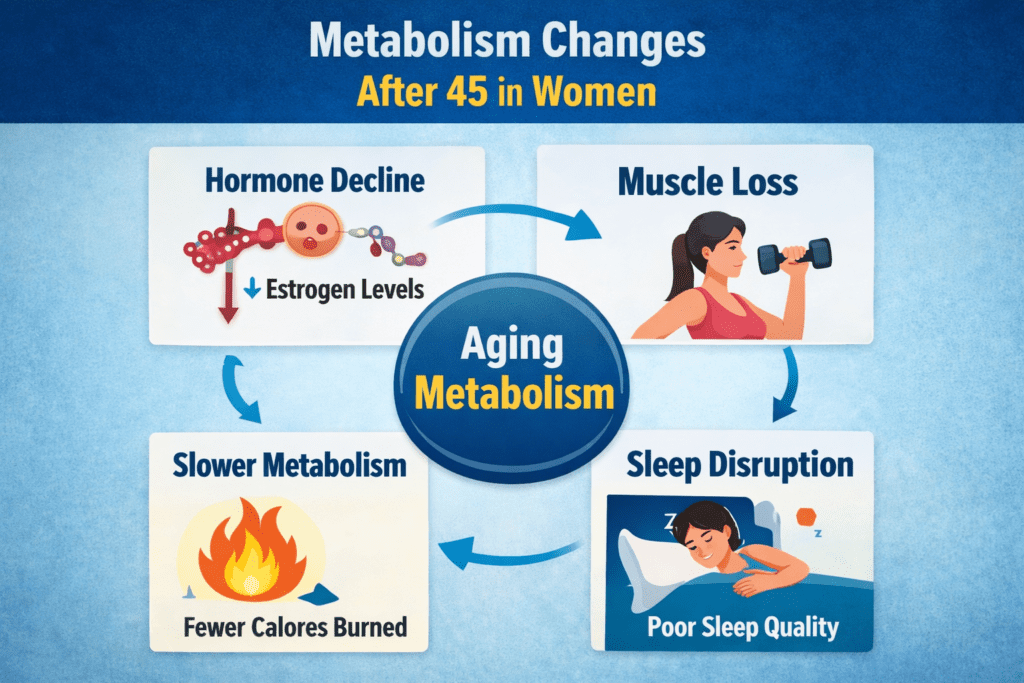
As the body gets older, metabolism begins to change. Metabolism is how the body turns food into energy and burns calories.
These changes often happen during midlife.
Hormone Changes
Hormones help control how the body stores fat. During perimenopause and menopause, estrogen levels slowly drop.
When estrogen drops, fat may start to store in new places.
When estrogen drops, fat may start to store in new places, particularly around the abdomen. If you’d like to understand this hormonal shift in more detail, read our guide on Hormonal Weight Gain After 45.
Many women notice more fat around the belly instead of the hips or thighs.
The National Institute on Aging says hormone changes with age can affect body fat and where the body stores it.
Muscle Loss
Muscle slowly decreases with age. Muscle burns more calories than fat.
When muscle mass goes down, the body may burn fewer calories each day.
Lifestyle Habits
Daily habits also affect body weight in midlife. Activity level, sleep, and food choices all play a role.
Small changes in these habits over time may lead to slow weight gain around the belly.
Why Belly Fat Increases After 45 in Women
Belly fat often increases after age 45 due to hormone changes, slower metabolism, reduced muscle mass, and changes in insulin sensitivity. These factors can shift fat storage toward the abdominal area during midlife.
Understanding why belly fat increases after 45 in women often involves looking at several metabolic factors working together.
While every person is different, certain patterns are commonly observed during midlife.
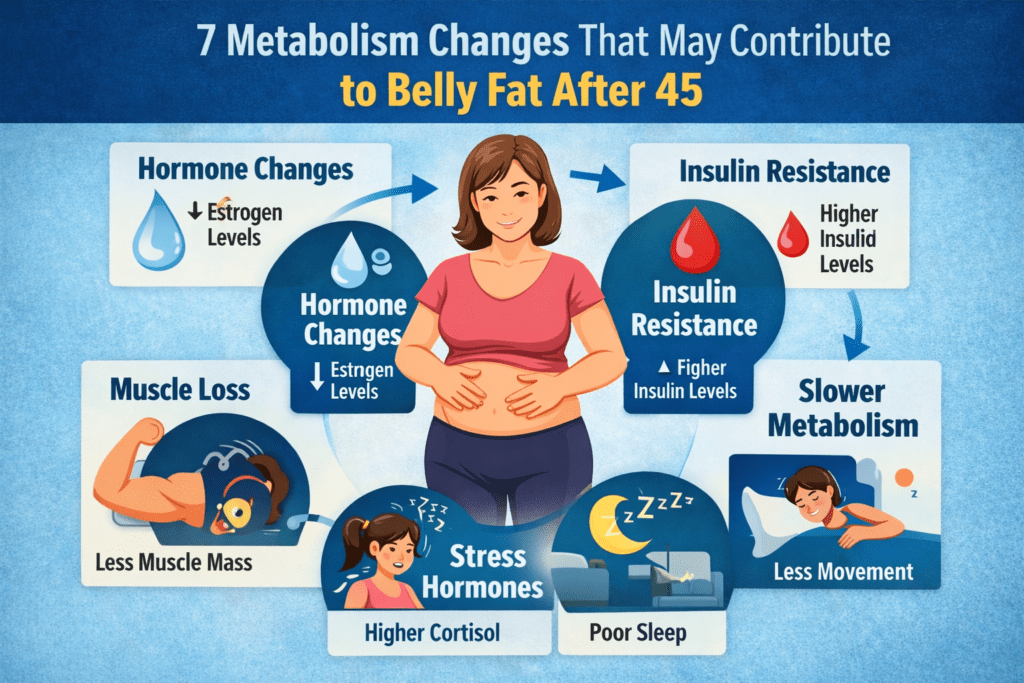
7 Metabolism Changes That May Contribute to Belly Fat
1. Hormone Changes
Estrogen helps control how the body stores fat. During menopause, estrogen levels slowly drop.
When estrogen drops, the body may store more fat around the belly.
2. Insulin Resistance
Insulin helps move sugar from the blood into the body’s cells for energy.
Sometimes the body stops responding well to insulin. When this happens, blood sugar balance may change.
Over time, higher insulin levels may cause the body to store more fat.
3. Slower Metabolism
Metabolism often slows a little with age.
For a deeper explanation, read our article on Why Metabolism Slows After 45.
This means the body may burn fewer calories than before.
Small changes in calorie balance over time may lead to slow weight gain.
4. Muscle Loss
Muscle helps the body use energy, but muscle mass gradually decreases with age.
When muscle drops, the body may use sugar less efficiently. This can affect metabolism and fat storage.
5. Stress Hormones
Stress can affect hormone balance. The body releases a hormone called cortisol during stress.
High cortisol levels may increase fat storage around the belly.
6. Sleep Changes
Sleep problems are common during midlife. Poor sleep may affect hunger hormones and energy balance.
7. Lower Daily Activity
Many adults move less as they get older. Busy schedules and lifestyle changes can reduce physical activity.
Lower activity means the body burns fewer calories each day. Over time, this may lead to weight gain.
Together, these factors help explain why belly fat increases after 45 in women.
Signs Metabolism May Be Slowing
Many women start asking why belly fat increases after 45 in women when they notice changes in their body.
Some common signs may include:
• Belly weight gain
• Trouble losing weight
• Low energy during the day
• Strong sugar cravings
• Feeling tired after meals
These signs can have many causes. They often lead people to learn more about metabolism and body changes in midlife.
You may also want to read our article Signs of Insulin Resistance After 45, which explains common body changes during midlife.
Habits That May Support Metabolic Health
Metabolism can change with age. But daily habits can still help support a healthy body.
Many health experts suggest focusing on simple habits each day.
Strength Training
Strength exercise helps keep muscle strong. Muscle helps the body use energy and burn calories.
Balanced Meals
Balanced meals can help keep energy steady. Try to include protein, fiber, and healthy fats in your meals.
Daily Movement
Move your body every day. Walking, cycling, or light exercise can help the body use sugar for energy.
Good Sleep
Sleep is important for hormone balance and overall health. Going to bed at the same time each night may help improve sleep.
Stress Control
Stress can affect the body. Simple habits like deep breathing, quiet time, or meditation may help lower stress.
If you want to learn more helpful habits, read our guide How to Reverse Insulin Resistance After 45. It explains simple ways to support healthy metabolism.
Nutrition and Blood Sugar Balance
Food plays an important role in metabolic health.
Many health experts suggest eating simple, whole foods.
Good choices may include:
• Fiber-rich vegetables
• Lean protein foods
• Healthy fats
• Whole foods with little processing
Eating fewer processed foods and sugary snacks may also help keep blood sugar steady.
You may also want to read our article Best Breakfast for Blood Sugar Balance. It shares simple meal ideas that help support steady energy.
Understanding the Bigger Picture
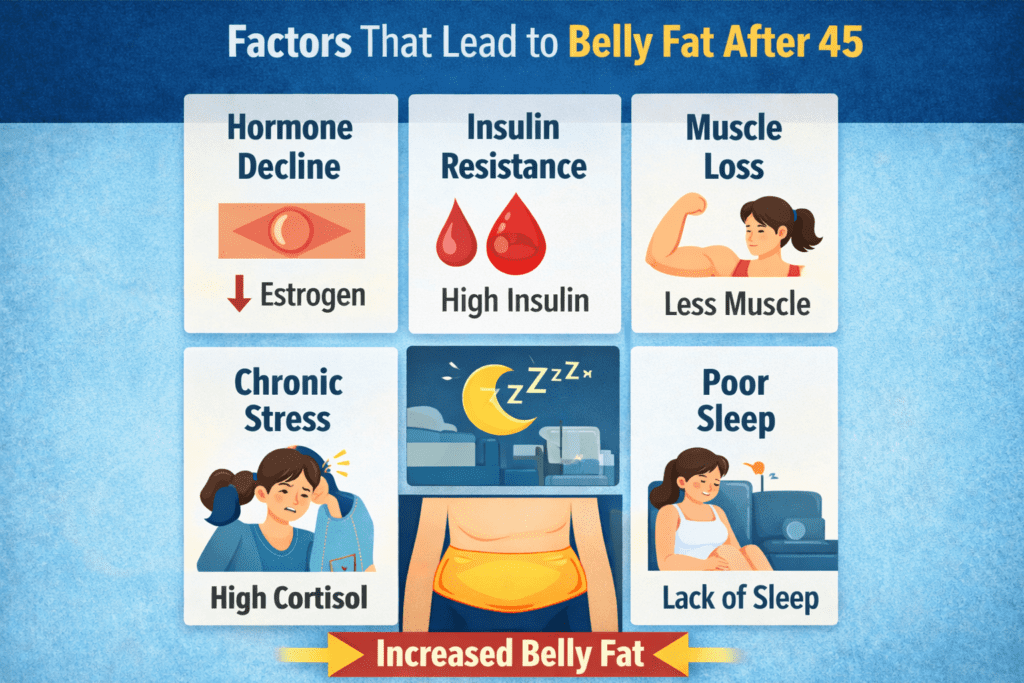
When learning why belly fat increases after 45 in women, it helps to know that many things affect body changes in midlife.
These may include:
• Hormone changes
• Slower metabolism
• Sleep patterns
• Physical activity levels
• Daily eating habits
Because of this, lasting results often come from small habits done every day, not quick fixes.
When to Speak With a Healthcare Professional
If you are worried about blood sugar, weight changes, or constant tiredness, it may help to talk with a doctor.
A healthcare professional can check your metabolic health and suggest steps based on your health history.
Frequently Asked Questions
Why does belly fat increase after 45 in women?
Belly fat may increase after age 45 because the body changes during midlife. Hormone changes, slower metabolism, and muscle loss can all play a role.
When estrogen levels drop during perimenopause and menopause, the body may store more fat around the belly.
Can insulin resistance cause belly fat after 45?
Yes, insulin resistance may play a role. Insulin helps move sugar from the blood into the body’s cells.
When the body does not respond well to insulin, the body may store more energy as fat. This can lead to more belly fat over time.
Is belly fat after menopause normal?
Yes. Many women notice more belly fat during menopause.
Hormone changes, slower metabolism, and muscle loss can change how the body stores fat during this stage of life.
What habits may help reduce belly fat after 45?
Healthy daily habits may help support metabolism.
These habits may include:
• Strength training
• Balanced meals
• Daily movement
• Good sleep
• Stress control
Does exercise help reduce belly fat after 45?
Yes, regular exercise may help support metabolism.
Strength exercise helps keep muscle strong. Aerobic exercise may also help support healthy weight balance.
Can sleep affect belly fat after 45?
Yes. Sleep plays an important role in hormone balance and metabolism.
Poor sleep may affect hunger hormones, energy levels, and stress hormones that can influence fat storage.
What foods support healthy metabolism after 45?
Many experts suggest eating whole foods such as:
• Vegetables
• Lean protein
• Fiber-rich foods
• Healthy fats
These foods may help support stable blood sugar and steady energy.
Expert Note
Research suggests that belly fat during midlife may be influenced by hormone changes, muscle mass, sleep quality, physical activity, dietary habits, stress levels, and overall lifestyle patterns. Because every woman is different, persistent or unexplained weight changes should be discussed with a qualified healthcare professional.
Health Disclaimer
This article is intended for educational purposes only and should not be considered medical advice. Always consult a qualified healthcare professional before making significant lifestyle changes or starting new supplements.
Research & References
This article was developed using publicly available information from:
- National Institute on Aging (NIA)
- Harvard T.H. Chan School of Public Health
- American Diabetes Association
- Academy of Nutrition and Dietetics
Final Thoughts
So, why belly fat increases after 45 in women is often linked to natural body changes during midlife.
Hormone changes, muscle loss, sleep problems, and insulin balance can affect how the body stores fat.
These changes are common. But healthy habits can still help support metabolism and energy.
Balanced meals, strength training, daily movement, quality sleep, and stress management remain the foundation of long-term metabolic health after 45.
If you’re looking for practical daily strategies to support these habits, you may also find our guide on Metabolism Reset After 40 helpful.
Some American women also choose to learn about supplements that may complement these healthy habits as part of their overall wellness routine.
If you’d like to compare evidence-informed options, explore our guide to Best Supplements for Women Over 40.