Table of Contents
ToggleIntro
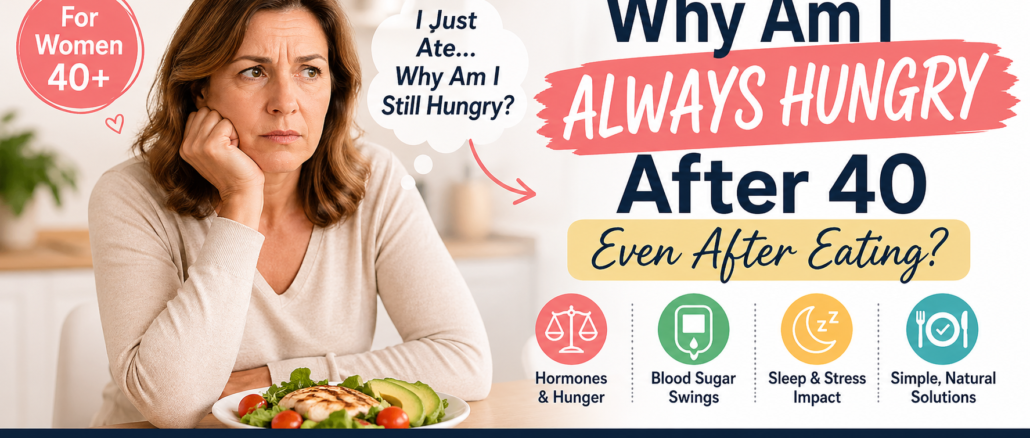
Why am I always hungry after 40 even after eating?
Have you ever finished a full meal… and still felt hungry shortly after?
✔ You just ate
✔ You should feel full
✔ But your body is still asking for more
If this keeps happening, it can feel confusing—especially when you’re doing everything “right.”
Many women over 40 notice this same shift, and it often reflects changes in hormones, sleep, metabolism, nutrition, and daily routines rather than a lack of willpower.
If this feels familiar, you’re not alone.
For some women, appetite changes after 40 can feel confusing because the same routines suddenly seem less predictable. You might eat the same meals you always have, follow your usual routine, and still feel like something is off.
It can be frustrating when the same meals and healthy habits that once left you feeling satisfied no longer seem to work the same way.
That disconnect between your efforts and your results can be discouraging, but it doesn’t always mean you’re doing something wrong.
Understanding why this happens is the first step toward finding practical ways to support your health during midlife.
Why Am I Always Hungry After 40 Even After Eating? What’s Really Happening

In this guide, you’ll learn seven common reasons many women feel hungry more often after 40, along with practical lifestyle habits that may help you feel more satisfied throughout the day.
Feeling hungry more often after 40 isn’t always a sign that you need more food or more willpower. During midlife, changes in hormones, metabolism, sleep, muscle mass, stress, and blood sugar regulation can all influence how hungry you feel.
1. Blood Sugar Swings Can Trigger Hunger
During midlife, some women notice that their blood sugar patterns feel less predictable than they did in earlier years.
Meals that are high in refined carbohydrates—such as toast by itself, sugary breakfast foods, or snacks without protein—may lead to faster changes in blood sugar for some women.
When blood sugar drops, some women notice:
• Hunger returning sooner
• Stronger cravings
• Lower energy
If hunger often returns soon after eating, learning more about healthy blood sugar patterns may help explain why.
2. Hormonal Changes Affect Appetite Signals
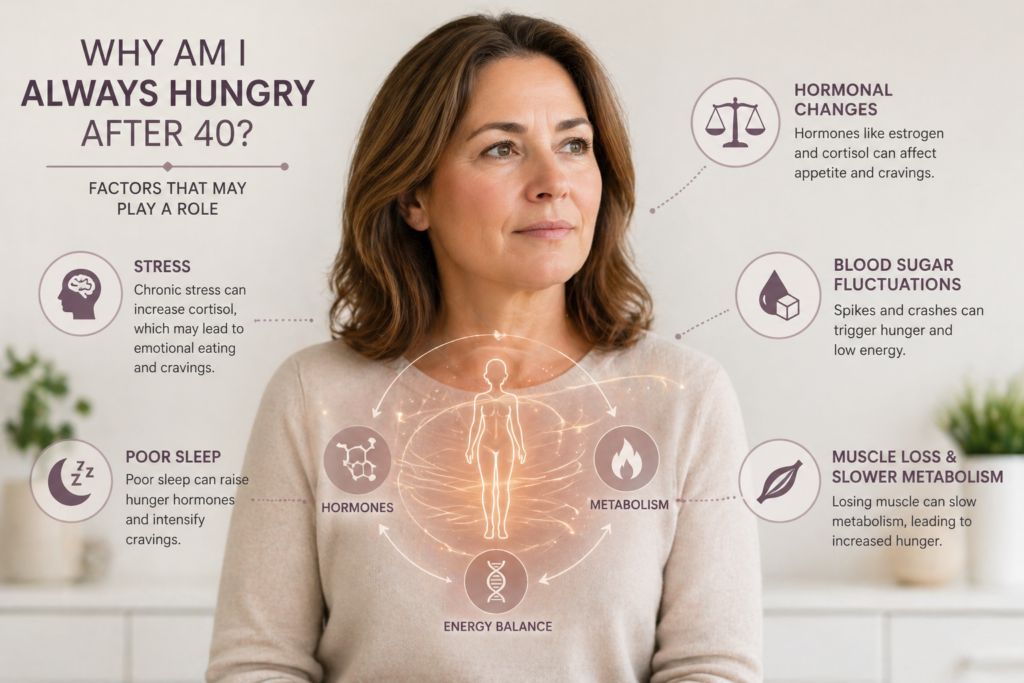
As hormone levels change during perimenopause and menopause, appetite signals may feel different than they did in your 20s or 30s.
After 40, changes in estrogen and other hormones can affect:
- How fast you feel full
- How often you feel hungry
- The foods you crave
3. Low Protein Intake Leaves You Unsatisfied
Protein plays an important role in helping many people feel satisfied after meals.
Busy schedules often lead to meals such as:
• Quick breakfasts
• Light lunches
• Snack-based meals
Meals that are lower in protein may leave some women feeling less satisfied, making hunger return sooner than expected.
Pairing protein with fiber-rich foods may help meals feel more filling for longer.
For many women, the goal isn’t simply eating more food. It’s choosing meals that help them feel satisfied for longer.
4. Poor Sleep Can Increase Hunger Hormones
Sleep affects more than energy. It also affects how hungry you feel.
When you don’t sleep well:
- You may feel more hungry
- Cravings may get stronger
- You may eat more at night
If poor sleep has become part of your routine, it may be influencing your appetite, cravings, and energy more than you realize.
5. Stress Can Make You Feel Hungrier
Ongoing stress may influence both appetite and food choices over time.
Busy schedules, emotional exhaustion, family responsibilities, and nonstop routines can quietly increase stress over time.
If stress-related cravings or emotional eating feel familiar, learning more about cortisol may help you better understand the connection.
• How Cortisol Affects Belly Fat After 45
Some women notice:
• Eating in response to emotions rather than physical hunger
• More frequent cravings
• Feeling hungry again soon after meals
This is one reason many women feel frustrated. Hunger isn’t always driven by food alone. Stress, sleep, hormones, and daily routines can all influence appetite during midlife.
6. Muscle Loss May Affect Metabolism
After 40, you may slowly lose muscle. This can change how your body uses energy.
If you’ve noticed that weight loss feels harder or your metabolism seems slower than it used to, this guide may help explain why:
• Why Metabolism Slows After 45
As muscle mass gradually changes with age, the body may use energy differently, which may influence appetite, energy levels, and metabolism. This can lead to:
- Low energy
- Feeling hungry more often
- Changes in body shape
7. Insulin Resistance May Play a Role
Some women start to show early signs of insulin resistance in midlife.
This may influence how your body uses glucose for energy, and some women notice:
• Feeling hungry more often
• Stronger cravings
• Changes in body-fat distribution
If you’re noticing cravings or frequent hunger, this may help you understand what’s happening:
Women noticing stronger cravings, energy crashes, stubborn hunger, or difficulty losing weight may also want to better understand the early signs of insulin resistance.
Why Some Women Still Feel Hungry Despite Healthy Habits
Feeling hungry despite making healthier choices doesn’t necessarily mean you’re doing something wrong.
In many cases, several small factors work together rather than one single cause.
Appetite during midlife is usually influenced by several factors working together, including sleep, hormones, nutrition, stress, physical activity, and blood sugar regulation. Looking at these areas together can provide a clearer picture than focusing on just one habit.
Where Many Women Start

Instead of extreme diets or restrictive eating, many women begin with simple, realistic changes.
These may include:
• Adding protein to meals
• Eating balanced meals with fiber and healthy fats
• Avoiding long gaps between meals
• Prioritizing sleep and stress management
These habits aren’t quick fixes, but they can provide a realistic starting point for supporting steadier energy, appetite, and overall wellness.
If you’ve already built consistent habits but still feel unusually hungry, many women choose to learn more about metabolism and evidence-informed nutritional support as a possible next step.
Our Best Supplements for Women Over 40 guide explains commonly discussed ingredients, summarizes current evidence, and outlines what to consider before deciding whether a supplement fits your needs.
Simple Daily Habits That May Help Women Feel Fuller After 40
Rather than focusing only on eating less, many women find that small daily habits help them feel more satisfied.
✔ Build Balanced Meals
Eat protein, fiber, and healthy fats in each meal. This can help control hunger.
✔ Eat at Regular Times
Try not to wait too long between meals. This can help avoid energy crashes.
✔ Stay Hydrated
Thirst can sometimes feel similar to hunger. Drinking water regularly throughout the day may help you better recognize when you’re truly hungry.
✔ Move Your Body
Gentle daily movement, such as walking, can support steady energy and become an easy habit to maintain.
What Many Women Combine With Healthy Eating After 40
Many American women over 40 begin with:
✓ More protein
✓ Better sleep habits
✓ Balanced meals
✓ Lower stress levels
✓ Regular daily movement
The goal isn’t perfection—it’s building a realistic routine that supports your changing body over time.
These habits support overall health whether or not you decide to use a supplement. Building a consistent routine first often makes it easier to evaluate whether additional support is appropriate for your personal goals.
Expert Note
Research suggests that appetite changes during midlife may be influenced by hormones, blood sugar regulation, sleep quality, stress levels, and body composition changes. Persistent hunger or unexplained appetite changes should always be discussed with a qualified healthcare professional.
Health Disclaimer
This article is for educational purposes only and should not be considered medical advice. Always consult a healthcare professional regarding persistent health concerns or before starting new supplements.
References
- National Institute on Aging.
- National Institute of Diabetes and Digestive and Kidney Diseases (NIDDK).
- Harvard T.H. Chan School of Public Health.
- American Diabetes Association.
Final Thoughts
Your body isn’t working against you—it may simply be responding differently than it did in earlier years. Understanding those changes can help you make more informed decisions about your daily habits and long-term wellness.
You don’t have to overhaul your lifestyle overnight. Small, consistent changes are often easier to maintain over time.
If you’ve been wondering why you feel hungry after 40 even after eating, you’re not alone. Many women notice similar changes during midlife.
Healthy habits remain the foundation for long-term wellness. Once those habits are in place, some women choose to learn more about evidence-informed nutritional support as an additional step.
If you’re exploring additional nutritional support alongside healthy habits, our Best Supplements for Women Over 40 guide explains commonly discussed ingredients, reviews current evidence, and highlights what to consider before making an informed decision.
Frequently Asked Questions
Here are simple answers to the most common questions women ask about hunger after 40:
1. Why am I still hungry after eating at 40+?
Feeling hungry after eating doesn’t always mean you need more food. For many women after 40, appetite can be influenced by hormone changes, blood sugar regulation, sleep quality, stress, muscle mass, and the balance of nutrients in meals. Looking at these factors together often provides a clearer explanation than focusing on just one cause.
2. Is it normal to feel hungry all the time after 40?
Many women notice increased hunger during midlife. Hormone changes, metabolism, sleep, stress, nutrition, and daily routines may all play a role.
3. Can hormones make you feel hungry more often?
Yes. Hormone changes can affect how full you feel. You may feel less full after meals or have stronger cravings.
4. How can I reduce hunger naturally after 40?
Many women find these everyday habits helpful:
- Eat balanced meals with protein and fiber
- Drink enough water
- Manage stress
- Eat at regular times
5. Can blood sugar affect hunger after 40?
Yes. When blood sugar rises and drops fast, it can make you feel hungry, cause cravings, and lower your energy.
6. Why do cravings often become stronger after 40?
Hormonal changes, poor sleep, stress, blood sugar fluctuations, and changes in body composition may all influence cravings during midlife.
7. Does metabolism slow down after 40?
Many women notice changes in metabolism during midlife due to factors such as hormone shifts, muscle loss, sleep quality, and lifestyle changes.
8. Should I talk to a doctor if I feel hungry all the time after 40?
Yes. Persistent hunger, sudden appetite changes, or unexplained weight changes should always be discussed with a qualified healthcare professional.