
Table of Contents
ToggleIntroduction
Hormonal weight gain after 45 can feel frustrating and deeply confusing—especially when you’re eating similarly, staying active, and still noticing stubborn belly fat, lower energy, and weight that suddenly feels harder to manage.
In the United States, many women over 40 start feeling like the strategies that once worked for their body suddenly stop working during perimenopause and midlife hormone changes.
This guide explains what may actually be happening—and what you can start doing differently today.
Many American women start noticing stubborn belly weight, lower energy, and slower results—even when doing everything the same.
This isn’t just about calories — it’s about hormones, metabolism, and how your body is changing during perimenopause.
Hormonal weight gain after 45 is mainly caused by declining estrogen, reduced muscle mass, increased insulin resistance, and higher cortisol levels. These changes affect how the body stores fat, especially around the abdomen, and how efficiently it burns calories.
Many women eventually realize the issue may not be motivation alone—but how hormones, metabolism, muscle loss, and blood sugar changes interact after 45. Understanding these changes is the first step toward choosing habits that better support your body during midlife.
And the most confusing part?
These changes often happen even when you’re doing everything “right.”
Why Weight Gain Feels Different After 45
Weight gain in midlife is not just about how many calories you eat. It’s more about how your body handles energy. This includes how it stores fat, how it uses sugar, and how well it burns calories each day.
After 45, several changes tend to happen. Fat often shifts toward the belly area, even if your weight stays the same. Muscle mass slowly decreases, which can lower the number of calories your body burns at rest. At the same time, blood sugar becomes harder to control, making it easier to store fat.
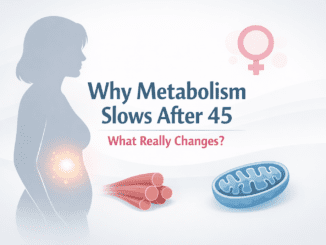
These changes are closely linked to what happens after 40, when hormones begin to affect metabolism more strongly. Many women notice similar patterns described in our guide on why metabolism slows after 45.
As hormone levels shift, the body does not burn calories as easily as it once did.
By the mid to late 40s, these effects become easier to notice. This is why weight gain during this stage can feel sudden, stubborn, and harder to reverse than before.
For many American women, this becomes the moment where weight gain finally starts making sense. The body is not necessarily “broken” — it is responding differently to hormone and metabolic changes than it did years earlier.
Many women don’t notice these changes right away—but over time, they can affect how the body responds to food, activity, and daily habits.
The Role of Estrogen in Midlife Weight Gain

Estrogen plays an important role in how your body stores fat, controls hunger, and manages blood sugar. When estrogen levels are steady, your body tends to handle energy and fat more easily.
As estrogen begins to change and slowly decline, several things can happen. The body may start storing more fat, especially around the belly. Blood sugar can become harder to manage, which makes fat storage easier. At the same time, keeping muscle becomes more difficult, and the body’s energy balance can shift.
Medical groups like the Mayo Clinic and the Cleveland Clinic have explained how these hormone changes during menopause can affect body shape and increase belly fat.
Before menopause, estrogen helps store fat in the hips and thighs. After estrogen drops, fat storage often moves toward the midsection instead.
This does not mean weight gain is guaranteed. It does mean that the approach you used before may need to change to match how your body works now.
Understanding hormonal weight gain after 45 starts with recognizing how estrogen directly influences fat distribution and metabolic efficiency.
To learn more about these hormone-related changes, you may also find this guide helpful:
Insulin Resistance and Blood Sugar Changes
Estrogen and insulin work closely together to control how your body uses sugar for energy. When estrogen levels start to drop, insulin may not work as well as it once did.
As this happens, cells can become less responsive to insulin, which can lead to higher blood sugar levels after meals. Your tolerance for carbohydrates may change, and cravings or energy crashes can become more common. Over time, these shifts can make it easier for the body to store fat, especially around the belly.
If you have noticed feeling hungrier than usual, getting tired in the afternoon, craving sugar more often, or gaining weight even when you eat moderately, blood sugar balance may be part of the reason. Many of these symptoms overlap with the common signs of insulin resistance after 45.
Cortisol, Stress, and Belly Fat

Midlife often comes with more stress than earlier years. Career pressure, caring for aging parents, money concerns, and changes in sleep can all add up over time.
Ongoing stress raises cortisol, the body’s main stress hormone. When cortisol stays high for long periods, it can lead to more fat storage around the belly. It can also disrupt sleep, increase cravings for high-calorie foods, and make it harder to keep muscle.
Poor sleep alone can affect weight control. Even small changes in sleep can alter hunger signals and make appetite harder to manage.
Hormonal weight gain after 45 is rarely caused by one issue.
Instead, it usually comes from a combination of:
- Hormone changes
- Blood sugar imbalance
- Chronic stress
- Muscle loss
- Lifestyle patterns
In most cases, it comes from several factors working together, including hormone changes, blood sugar shifts, stress levels, and daily lifestyle demands.
Why Muscle Loss Accelerates After 45
Muscle is active tissue that helps your body burn calories, even when you are resting. The more lean muscle you have, the more energy your body uses throughout the day.
Muscle mass starts to slowly decline in your 30s, and after 45 this loss often speeds up. Lower estrogen levels can make it harder for the body to build and maintain muscle. Recovery from exercise may take longer, and the number of calories burned at rest can drop.
As muscle decreases, calorie burn also drops. This makes fat easier to store and weight harder to manage, even if eating habits have not changed much.
This muscle loss is one of the most overlooked reasons for weight gain in midlife. Protecting and rebuilding lean muscle becomes one of the most effective ways to support metabolism after 45.
Age-related muscle loss can significantly affect strength, metabolism, and how efficiently the body uses energy over time, which is one reason weight management often feels different after 45.
Learn more about the connection between muscle and metabolism:
Why Belly Fat Increases During Perimenopause
Many women notice weight gain around the belly during perimenopause. This change often feels different from weight gain earlier in life.
Several factors usually work together. Estrogen levels fluctuate, which can affect where fat is stored. Visceral fat, which sits deep around the organs, tends to increase during this time. Muscle mass may decrease, stress hormones like cortisol may rise, and the body may not respond to insulin as well as before.
Visceral fat is active tissue that responds to hormones and stress. Because of this, belly fat during midlife can be harder to lose.
This is why weight gain around the midsection often does not respond well to traditional dieting alone. Many women also notice similar hormonal and metabolic patterns explained in our guide on why belly fat increases after 45 in women.
The good news is that hormonal weight gain after 45 is not random — it follows predictable biological patterns that can be addressed strategically.
This pattern of hormonal weight gain after 45 is largely driven by the interaction between estrogen decline, insulin sensitivity changes, and stress-related cortisol shifts.
Can Hormonal Weight Gain After 45 Be Prevented?

Hormonal changes are a normal part of midlife, but their effects on body shape can often be managed. With the right approach, it is possible to support metabolism and maintain strength.
One of the most effective strategies is strength training. Lifting weights or using resistance helps protect lean muscle, improves how the body handles blood sugar, and supports a higher calorie burn at rest. Even two or three strength sessions each week can lead to noticeable benefits over time.
These small changes may seem simple, but when done consistently, they can significantly improve how your body regulates weight, energy, and hormones over time.
What Helps Support Metabolism After 45 for Many Women in the United States
Many women reach this point and start wondering what actually helps. The good news is that small, consistent changes can make a real difference over time.
This is also why many traditional weight-loss approaches feel less effective after 45. Midlife metabolism often responds better to consistency, muscle support, blood sugar balance, and stress management than aggressive restriction alone.
Instead of focusing on extreme approaches, many American women find that simple daily habits can support metabolism, energy, and overall balance.
Increase Protein Intake
Getting enough protein helps protect muscle and keeps you feeling full longer. It also plays a role in steady energy throughout the day.
Women over 45 often do better when protein is spread evenly across meals. This approach supports muscle repair and helps keep blood sugar more stable.
Stabilize Blood Sugar
Simple daily habits can make a real difference. Pairing carbohydrates with protein helps slow blood sugar spikes and keeps energy more stable.
For practical food ideas, you may also enjoy:
👉 Best Breakfast for Blood Sugar Balance After 45
Taking a short 10 to 15 minute walk after meals can also help the body use sugar more effectively.
If long fasting periods leave you feeling tired or shaky, avoiding them may help. Keeping blood sugar steady sends fewer signals to store fat, which supports healthier weight balance over time.
Improve Sleep Quality
Good sleep habits can make a real difference. Try to keep a consistent sleep schedule, limit screen use in the evening, and find simple ways to relax before bed.
Better sleep helps regulate hunger signals and keeps stress hormones like cortisol in better balance, which supports healthier weight control.
If sleep has become more difficult during midlife, you may also find this guide helpful:
Manage Stress Strategically
Managing stress can be simple and practical when you build small daily habits into your routine.
You can support your body with light daily movement, slow and steady breathing, quiet mindfulness practices, and regular walks outdoors in natural light.
Lowering your overall stress levels may help reduce belly fat and improve how your body stores energy.
If stress has become a bigger challenge during midlife, this guide explains the connection:
Frequently Asked Questions
Why am I suddenly gaining weight at 45?
Weight gain around age 45 is commonly linked to hormonal changes, including declining estrogen levels, slower metabolism, increased insulin resistance, and higher stress hormone levels during perimenopause.
Does menopause slow metabolism?
Metabolism does not stop, but it can change. Hormone shifts may lower calorie burn at rest, affect muscle maintenance, and change where fat is stored.
Can hormone imbalance cause belly fat?
Yes, hormone changes can play a role. Lower estrogen and higher stress hormones like cortisol may encourage fat storage around the belly.
Is weight gain after 45 reversible?
For many women, body composition can improve. Strength training, enough protein, steady blood sugar, better sleep, and stress management often help support healthier weight balance.
Editorial Note: This article is intended for educational purposes and is based on publicly available nutrition, metabolism, and healthy aging research. Individual experiences vary, and the information provided should not be considered medical advice or a substitute for guidance from a qualified healthcare professional.
Final Thoughts
Hormonal weight gain after 45 isn’t something you have to accept without control.
When you understand how estrogen, insulin, stress, and muscle changes affect your body, you can take smarter, more effective steps that actually work for this stage of life.
Start small. Support your metabolism, stabilize your blood sugar, and reduce daily stress — and over time, your body can respond in ways that feel encouraging again.
The goal isn’t perfection. It’s consistency and understanding how your body works now.
For many women in the United States, this shift becomes less about chasing rapid weight loss and more about finally understanding why their body changed after 45 in the first place.
As you can see, hormonal weight gain after 45 is often influenced by several factors working together—not just one single cause. That’s why many women take a balanced approach and explore different ways to support their metabolism over time.
If you’ve already started improving your nutrition, sleep, movement, and stress management, you may also want to explore additional nutrition support that complements those healthy habits.
If you’ve already started improving your nutrition, sleep, movement, and stress management, you may also want to explore our Best Supplements for Women Over 40 guide. It explains commonly used metabolism-support ingredients, summarizes current research, and helps you compare options before deciding what may fit your goals.
Be the first to comment