Table of Contents
ToggleIntroduction
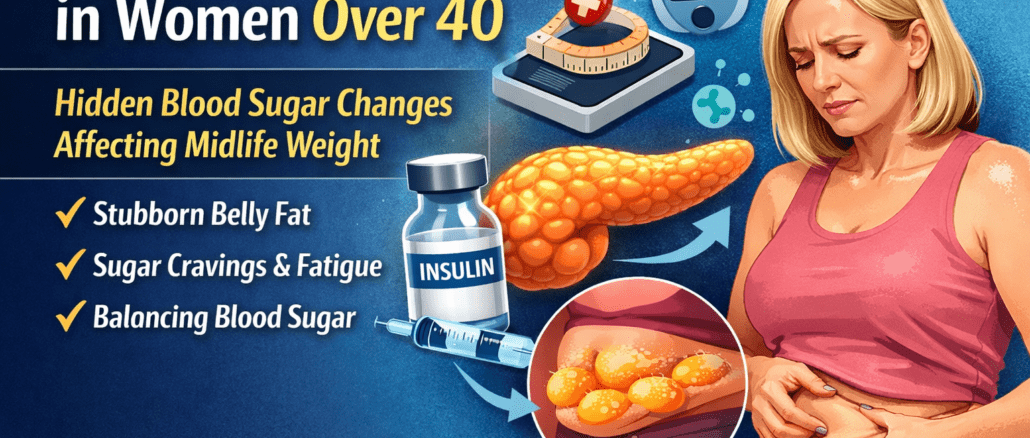
Many American women over 40 begin noticing stubborn belly fat, stronger cravings, lower energy, and weight gain that suddenly feels harder to manage than before. In the United States, busy schedules, stress, sleep changes, and hormone shifts can all quietly affect blood sugar balance during midlife.
If you feel like your body is gaining weight more easily after 40 — especially around your belly — insulin resistance could be part of the reason.
You may notice stronger cravings, energy crashes after meals, or feeling hungry again shortly after eating.
Even if your habits haven’t changed, your body may not be responding to blood sugar the same way it used to.
Because these changes happen gradually, many women do not immediately realize that blood sugar balance and insulin may be part of the reason.
If you’re trying to understand what’s happening, these may help explain it clearly:
➡️ Signs of Insulin Resistance After 45
➡️ Why Diet & Exercise Stop Working After 45
What Is Insulin Resistance in Women Over 40?
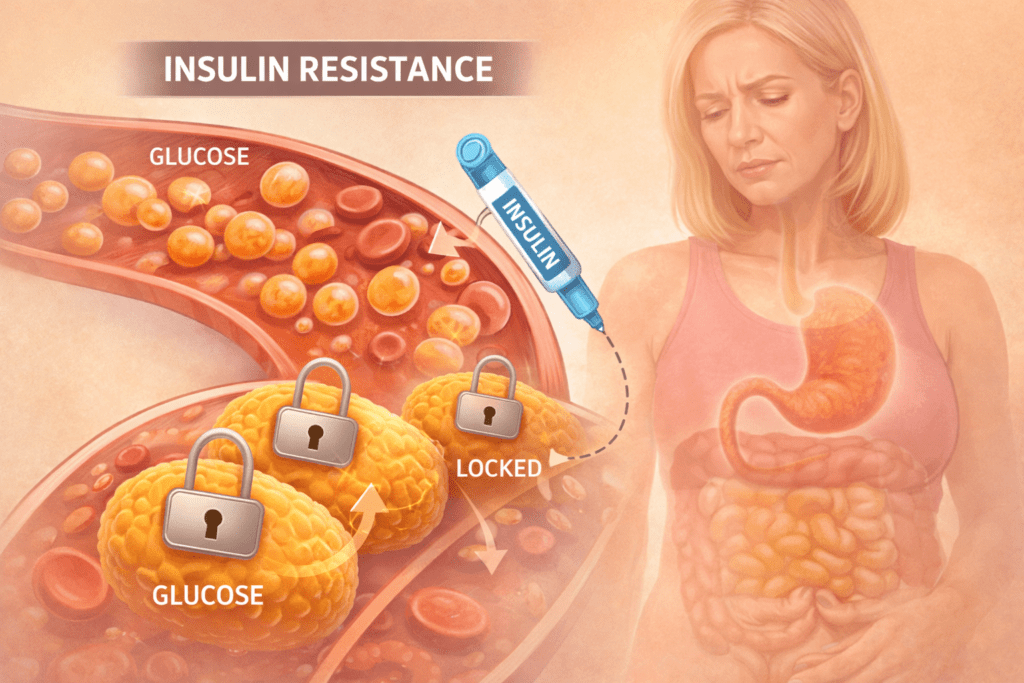
Insulin is a hormone that helps move sugar from your blood into your cells, where it can be used to create energy and keep your body running smoothly.
When your body becomes resistant to insulin, your cells do not respond as well as they should, which means sugar stays in the bloodstream longer and the body responds by producing even more insulin.
As insulin levels stay high, signals that promote fat storage increase, energy levels can rise and fall more sharply, and it becomes easier for weight to accumulate, especially in the abdominal area.
In women over 40, insulin resistance often develops slowly and quietly, so it may not show up clearly on lab tests at first, even though you may already notice changes in your energy levels, hunger cues, and how your body stores fat.
Insulin resistance happens when the body’s cells stop responding efficiently to insulin, making it harder for sugar to move out of the bloodstream and into the cells where it can be used for energy.
Why Insulin Resistance in Women Over 40 Becomes More Common
Hormones often begin to shift in the early 40s, even before menopause officially starts, and these changes can quietly affect how the body manages weight and energy.
To better understand these hormonal changes, you may also find this guide helpful:
👉 How Hormones Affect Metabolism After 40
Hormones play a major role in how your body stores fat and responds to blood sugar changes.
When estrogen levels begin to fluctuate or decline, cells may respond less efficiently to insulin, blood sugar becomes harder to control, and the body is more likely to store fat, especially around the belly.
When cells stop responding properly to insulin signals, it becomes harder for sugar to move out of the bloodstream and into the cells where it can be used for energy.
After the age of 40, this process can be influenced by hormonal changes, natural muscle loss, higher stress levels, and lower daily activity, which together create a situation where maintaining healthy blood sugar balance becomes more challenging.
If you’d like to learn how muscle affects metabolism during midlife, read:
Signs of Insulin Resistance in Midlife Women
Many women begin to notice symptoms long before they ever receive a formal diagnosis, which can make the experience confusing and frustrating.
Common signs may include increased belly fat, stronger cravings for carbohydrates, noticeable energy crashes after meals, feeling hungry again shortly after eating, difficulty losing weight despite effort, and frequent brain fog or mental sluggishness.
Because these symptoms often overlap with other hormone changes that happen during midlife, insulin resistance in women over 40 is frequently overlooked or mistaken for normal aging.
The Connection Between Insulin and Belly Fat

Insulin acts as a storage hormone, meaning that when blood sugar rises, it helps move and store extra glucose so the body can use it later.
When this process happens often, the body becomes more likely to store that extra energy as fat, especially when insulin levels remain high for long periods.
High insulin levels tend to push fat storage toward the abdominal area, and this type of fat, often called visceral fat, is more active in the body and closely linked to overall metabolic health.
This helps explain why weight gain during midlife often appears around the belly rather than in areas like the hips or thighs.
If stubborn belly fat feels more noticeable after midlife, this guide explains why these changes often happen:
How Stress and Sleep Influence Insulin
Insulin does not work on its own, because other hormones and daily habits strongly influence how it affects the body.
Chronic stress raises cortisol levels, which can push blood sugar higher, while poor sleep can make the body less responsive to insulin over time.
If you’re curious how long-term stress affects metabolism and belly fat during midlife, this guide explains the connection:
👉 Cortisol and Belly Fat After 45
When ongoing stress and poor sleep combine with the natural hormone changes that happen during midlife, the body may produce more insulin, store more fat, and struggle to keep energy levels steady throughout the day.
This layered effect helps explain why weight gain and ongoing fatigue so often appear together during midlife, even when eating habits have not changed much.
Sleep plays a bigger role than most people realize when it comes to metabolism and blood sugar.
If poor sleep has become more common after 40, you may also find this guide helpful:
What Actually Helps Improve Insulin Resistance in Many American Women Over 40

If you feel stuck, you are not alone. Many women in midlife notice that their usual habits stop working the way they used to.
The good news is that small, consistent changes can significantly improve how your body responds to insulin.
Here’s what actually helps improve insulin resistance in real life:
Most women see better results when they focus on:
• Supporting blood sugar balance daily
If you’re looking for practical meal ideas, you may also find this guide helpful:
👉 Best Breakfast for Blood Sugar Balance After 45
• Maintaining muscle through strength training
• Improving sleep and lowering stress
• Eating balanced meals with protein, fiber, and healthy fats
Frequently Asked Questions
What causes insulin resistance in women over 40?
Insulin resistance in women over 40 is often linked to natural hormone shifts, gradual muscle loss, higher stress levels, poor sleep, and lower daily activity, all of which can affect how the body handles blood sugar over time.
Does insulin resistance cause belly fat?
High insulin levels can encourage the body to store more fat, and this fat tends to collect around the abdomen more easily than in other areas.
Can perimenopause affect blood sugar?
Yes, changes in estrogen during perimenopause can affect insulin sensitivity and make blood sugar harder to regulate.
How do I know if I have insulin resistance?
Common signs include stubborn belly fat, feeling tired after meals, strong cravings for carbohydrates, and difficulty losing weight, while a healthcare provider can confirm insulin resistance through lab testing if needed.
Editorial Note: This article is intended for educational purposes and is based on publicly available nutrition, metabolism, and healthy aging research. Individual experiences vary, and the information provided should not be considered medical advice or a substitute for guidance from a qualified healthcare professional.
Final Thoughts
Insulin resistance in women over 40 is fairly common, and it does not mean that your body is broken or failing you.
It usually develops from a mix of gradual hormone changes, natural muscle loss, ongoing stress, and everyday lifestyle factors that begin to work together over time.
When you understand how insulin affects fat storage and energy levels, it becomes easier to adjust your habits in ways that better support your body during midlife.
Metabolism after 40 does work differently, but with the right approach, it can still be supported in ways that feel realistic, steady, and sustainable.
If you’ve started improving your daily habits and want to explore additional nutrition support, our Best Supplements for Women Over 40 guide explains commonly used metabolism-support ingredients, summarizes current research, and helps you compare options before deciding what may fit your goals.


Be the first to comment