Table of Contents
ToggleIntro
If you’re an American woman over 40 and your body suddenly feels different—even when your habits haven’t changed—you’re not imagining it.
The 7 hormone changes that affect weight after 40 may explain why many American women notice stubborn weight, low energy, and new fat patterns that don’t make sense.
This guide explains what may actually be happening—and what you can start doing differently today.
In the United States, women often notice these changes during busy schedules, quick meals, and high daily stress—making the shift even more confusing.
Even when eating the same foods and keeping the same habits, weight may become harder to manage.
This often happens because hormone levels change during the 40s.
Hormones help control many body functions. They affect metabolism, hunger, energy use, and fat storage.
U.S. lifestyle patterns—like coffee-first mornings, rushed meals, and inconsistent sleep—can also influence how these hormone changes show up.
When hormone levels shift, the body may store fat in new places or burn calories more slowly.
Understanding these hormone changes can help women make better lifestyle choices and support long-term health.
And the most confusing part?
These changes often happen even when you’re doing everything “right.”
That’s usually the moment many women realize—this isn’t just about effort anymore… something deeper is changing.
⭐ Where Many Women Start
If your body feels different after 40, many women begin by focusing on simple daily habits such as balanced nutrition, strength training, quality sleep, and stress management before considering additional options.
Why Hormones Influence Weight After 40 (For American Women)
Hormones are chemical messengers in the body.
They help control how the body uses energy, stores fat, and keeps muscles strong.
During midlife, hormone levels start to change as part of normal aging.
These changes can affect hunger, metabolism, and where the body stores fat.
Hormone changes and age-related shifts in muscle mass may influence metabolism during midlife, which is why healthy lifestyle habits often become increasingly important after age 40.
Eating foods rich in protein, fiber, vitamins, and healthy fats may help support metabolism and steady energy during the day.
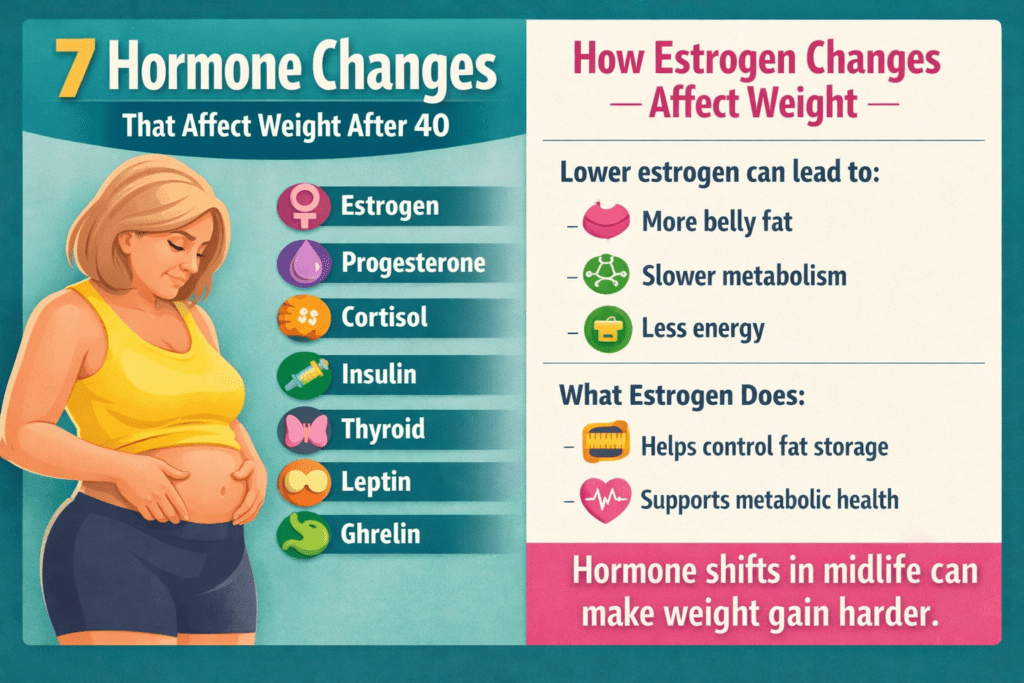
1. Estrogen Changes
Estrogen is an important hormone for women. It helps control body weight and fat storage.
As women get closer to perimenopause, estrogen levels begin to drop.
This change can affect how the body stores fat.
Lower estrogen levels may lead to:
More belly fat
• Changes in metabolism
• Changes in energy balance
Many women first notice these changes through stubborn belly fat patterns. Learn more in Why Belly Fat Increases After 45 in Women.
2. Progesterone Fluctuations
Progesterone is another hormone that changes during midlife.
As progesterone levels drop, some women may notice fluid retention and changes in hunger.
Sleep may also change during this time.
Poor sleep can affect metabolism. It may increase hunger and lower energy levels.
Sleep disruptions are common during midlife. You can also read Why You Wake Up at 3AM After 40.
When energy is low and hunger is high, weight can become harder to manage.
3. Cortisol and Stress Hormones
Cortisol is known as the body’s stress hormone.
It helps the body respond to stress.
When stress stays high for a long time, cortisol levels can rise.
High cortisol may cause:
High cortisol may cause:
• More hunger
• More belly fat
• Changes in blood sugar
Chronic stress may affect weight differently during midlife. Learn more in Cortisol and Belly Fat After 45.
4. Insulin Sensitivity Changes
Insulin helps control blood sugar levels in the body.
As women get older, insulin may not work as well as before.
This is called lower insulin sensitivity.
When this happens, the body may store more fat. Blood sugar levels may also change more often.
Understanding insulin changes is an important part of learning about the 7 hormone changes that affect weight after 40.
Many women notice these changes first through blood sugar and belly fat patterns.
You can learn more in our guide Can Insulin Resistance Cause Belly Fat After 45.
5. Thyroid Hormone Changes
The thyroid is a small gland that makes hormones.
These hormones help control metabolism.
When thyroid hormone levels change, metabolism may slow down.
This may cause:
Feeling tired
Slower calorie burning
Changes in weight
Even small changes in thyroid hormones can affect how the body uses energy.
6. Leptin and Appetite Signals
Leptin is a hormone that helps control hunger.
It tells the brain when the body has enough energy stored.
During midlife, hormone changes may affect how well leptin works.
When leptin signals do not work as well, the body may feel more hungry.
This can also cause the body to store more fat.
7. Ghrelin and Hunger Hormones
Ghrelin is known as the hunger hormone.
It tells the body when it needs food.
After age 40, sleep changes and hormone shifts may affect ghrelin levels.
When ghrelin levels rise, hunger may increase. This can make portion control harder.
Because of this, healthy eating and good sleep become even more important.
How Hormone Changes Affect Metabolism After 40
Understanding the 7 hormone changes that affect weight after 40 can help explain why metabolism often changes during midlife.
Hormones affect many body functions, including:
Fat storage
Muscle strength
Hunger control
Energy production
When hormone levels change, the body may store fat in new places. The body may also burn calories more slowly.
To understand metabolism changes, read our guide Why Is Losing Weight After 40 So Hard for Women.
These hormone changes are a normal part of aging. Healthy lifestyle choices can help support metabolism and overall health.
Signs Your Hormones May Be Affecting Weight After 40
Many American women notice one or more of these signs during midlife:
✓ Stubborn belly fat
✓ Lower daily energy
✓ Increased cravings
✓ Poor sleep
✓ Weight loss feels harder than before
✓ Hunger patterns have changed
✓ Fat seems to collect around the midsection
If several of these sound familiar, hormone changes may be contributing.
Many women begin researching lifestyle changes and additional wellness strategies after recognizing these patterns.
Healthy Habits That May Support Hormone Balance
Hormone changes are a normal part of aging. However, healthy habits can help support hormone balance and metabolism.
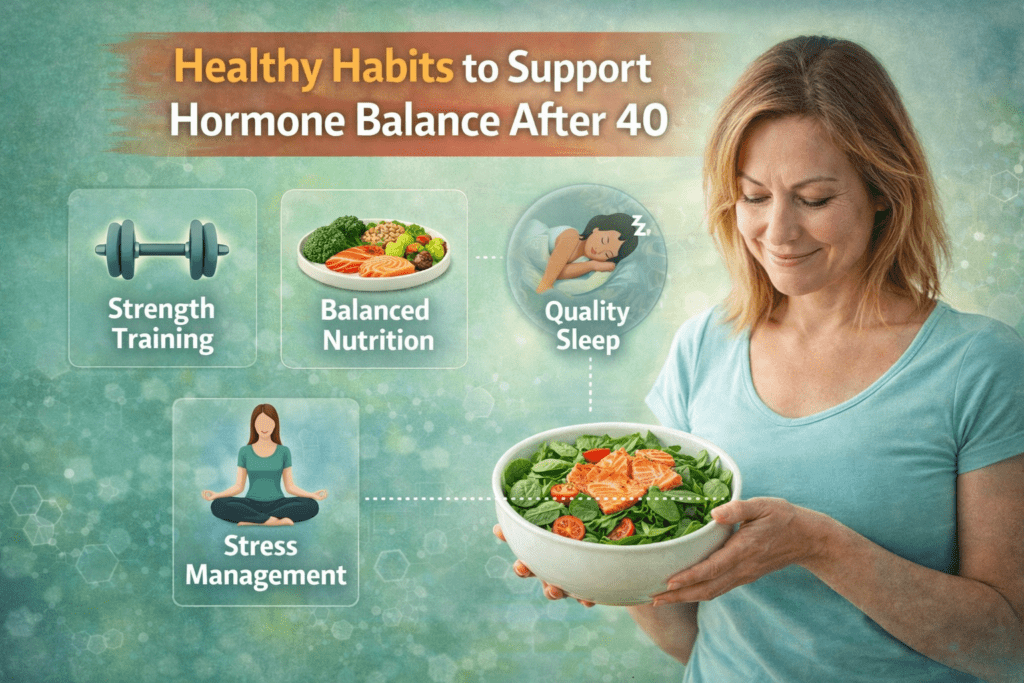
Helpful habits include:
Strength Training
Building muscle helps support metabolism. Muscle burns more calories than fat.
Balanced Nutrition
Meals with protein, fiber, and healthy fats help keep energy steady during the day.
Balanced meals can help support metabolism. You can also read our guide What Foods Help Boost Metabolism After 40.
Stress Management
Activities like walking, meditation, and yoga may help lower stress levels.
Quality Sleep
Getting 7–8 hours of sleep each night helps control hormones that affect hunger and metabolism.
Why Many Women Are Researching Additional Metabolism Support
Many women also compare ingredients, customer experiences, and daily routine compatibility before choosing any metabolism support option. Taking time to research can help women find an approach that fits their individual needs and lifestyle.
Healthy habits remain the foundation of long-term health. However, some women choose to add targeted daily support when metabolism, cravings, or energy changes become more noticeable during midlife.
Many women prefer options that fit easily into busy American lifestyles without requiring extreme dieting or complicated routines.
What Women Often Look For When Choosing Metabolism Support
Healthy habits remain the foundation of long-term health. However, many American women begin researching additional support when:
• Weight loss feels harder despite healthy habits
• Energy stays lower than expected
• Cravings become more frequent
• Belly fat becomes increasingly stubborn
Many women prefer options that fit easily into busy American lifestyles and complement healthy routines rather than replace them.
What Actually Helps After 40
Many American women find that small, consistent changes matter more than extreme diets.
Common approaches include:
• Supporting metabolism with protein-rich meals
• Managing stress to reduce cortisol spikes
• Improving sleep quality
• Adding light strength training
And this is where many women notice the biggest difference.
Because once you understand what’s actually changing, your approach becomes simpler—and more effective.
Expert Note
Research suggests that hormone changes during midlife may influence metabolism, fat storage, appetite, energy levels, and body composition. Factors such as sleep quality, stress levels, dietary habits, physical activity, and insulin sensitivity may also affect weight management after 40. Persistent or unexplained changes in weight, appetite, or energy levels should always be discussed with a qualified healthcare professional.
Health Disclaimer
This article is for educational purposes only and should not be considered medical advice. Always consult a healthcare professional regarding persistent health concerns or before starting new supplements.
References
- National Institute on Aging
- Harvard T.H. Chan School of Public Health
- American Gastroenterological Association (when relevant)
- American Diabetes Association (when relevant)
- Other relevant authoritative sources based on the article topic
For additional support, explore 10 Metabolism Boosting Foods for Women Over 40 to discover nutrition strategies that complement these healthy habits.
Final Thoughts
The 7 hormone changes that affect weight after 40 help explain why many women notice body changes in midlife.
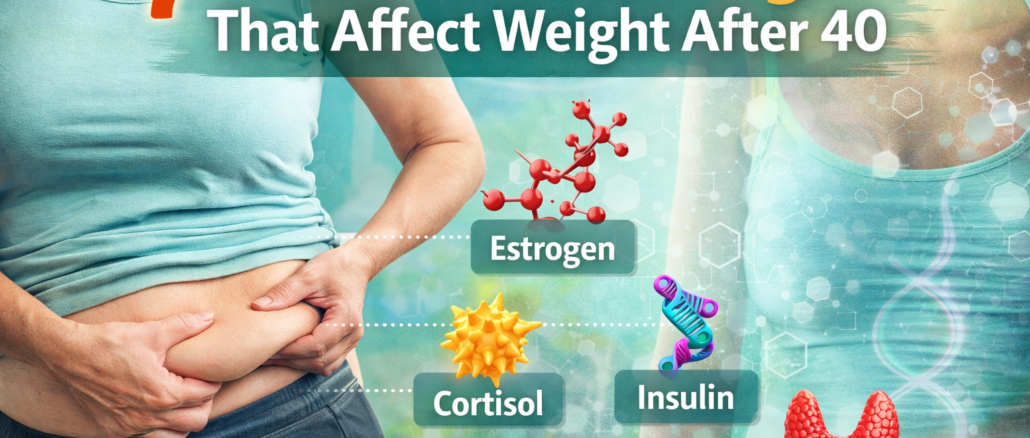
Hormones such as estrogen, progesterone, cortisol, insulin, thyroid hormones, leptin, and ghrelin can affect metabolism and fat storage.
These changes are a normal part of aging. Understanding them can help women make better lifestyle choices.
Healthy habits can help support metabolism. These habits include:
Eating balanced meals
Staying physically active
Managing stress
Getting good sleep
These steps may help support steady energy and metabolic health during midlife.
In the United States, many women are now combining these habits with targeted support that fits into their daily routine and lifestyle.
Healthy habits remain the foundation of long-term wellness. However, some American women over 40 also research additional nutritional support alongside balanced nutrition, movement, stress management, and quality sleep.
Curious what many women are researching for metabolism support? Learn more here →
Frequently Asked Questions
What Are the 7 Hormone Changes That Affect Weight After 40?
Seven hormones can change after age 40. These include estrogen, progesterone, cortisol, insulin, thyroid hormones, leptin, and ghrelin.
These hormones affect metabolism, hunger, fat storage, and energy use. When hormone levels change, weight control may become harder during midlife.
Why Do Hormone Changes Cause Weight Gain After 40?
Hormones affect how the body stores fat, burns calories, and controls hunger.
During midlife and perimenopause, hormone levels can shift. Because of this, metabolism may slow a little.
Fat storage may also change. Many women notice more fat around the belly area.
Does Estrogen Affect Weight After 40?
Yes, estrogen affects metabolism and fat storage.
When estrogen levels drop during perimenopause, the body may store more fat around the belly instead of the hips and thighs.
Can Stress Hormones Affect Belly Fat After 40?
Yes. High levels of cortisol can increase hunger and fat storage.
Cortisol is the body’s main stress hormone. When stress stays high for long periods, belly fat may increase.
Exercise, good sleep, and relaxation can help support healthy hormone balance.
How Can Women Support Hormone Balance After 40?
Women can support hormone balance with healthy daily habits.
Helpful habits include:
Regular physical activity
Balanced meals with protein and fiber
Stress management
Good sleep
Strength training to maintain muscle
These habits may help support healthy hormones and weight balance.