Table of Contents
ToggleIntro
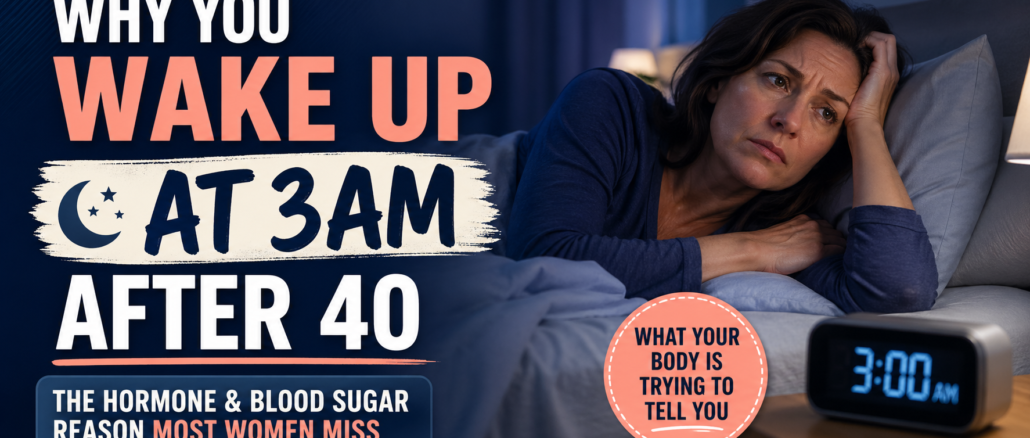
Why You Wake Up at 3AM After 40 — are you lying awake at night wondering why your body suddenly won’t stay asleep?
If you’ve been waking up at 3AM after 40 and lying there wide awake, wondering “why is this happening to me?”—you’re not alone.
For some women, the shift happens gradually. Others feel like it happens almost overnight.
- Waking at the same time every night
- A racing mind at 2–4AM
- Feeling tired, but unable to stay asleep
And the most confusing part?
It often happens even when you’re doing everything “right.”
“You cut back on sugar.
You try to go to bed earlier.
Maybe you even stop scrolling before bed.
But your body still wakes up wide awake at 3AM.”
That’s often when the usual explanations stop making sense.
It can feel frustrating… confusing… and even a little isolating when it keeps happening night after night.
Because nothing obvious has changed.
This pattern is more common than many women realize, and it often reflects several changes happening at the same time rather than one single cause.
These middle-of-the-night wake-ups are often linked to changes in hormones, blood sugar regulation, stress, and sleep patterns during midlife.
Why You Wake Up at 3AM After 40 (What’s Really Happening)

During midlife, several gradual changes can influence how well you sleep. Individually these changes may seem small, but together they can make nighttime waking more noticeable.
Some of the changes that may affect sleep include:
• Changes in estrogen
• Changes in progesterone
• Changes in cortisol patterns
• Overnight blood sugar fluctuations
• Lighter, more easily interrupted sleep
Together, these changes can make nighttime waking more common, especially between 2 AM and 4 AM.
Not every woman experiences these changes, but they may help explain why sleep suddenly feels different after 40.
Blood Sugar Drops During the Night (and May Wake You Up)

One possible reason some women wake between 2 AM and 4 AM is a change in overnight blood sugar regulation.
While you sleep:
• Your body continues using energy.
• Blood sugar naturally changes overnight.
• If your body senses that more glucose is needed, it may release stress hormones that can make you feel more alert.
Some women notice:
• Waking suddenly
• Feeling alert despite being tired
• Difficulty falling back asleep
If you also experience daytime fatigue or afternoon energy crashes, it may be helpful to consider whether your nighttime sleep pattern is part of the same picture.
If nighttime waking is accompanied by daytime fatigue or energy crashes, learning more about healthy blood sugar balance may help connect the two.
Cortisol Spikes at the Wrong Time
Cortisol should rise in the morning, not at night.
This natural daily rhythm is part of your body’s internal clock and helps regulate your sleep-wake cycle.
But after age 40, many women deal with:
- More stress
Busy schedules, late meals, screen time, and ongoing stress can all make it harder for your body to fully relax before bedtime.
- Busy daily life
- Poor sleep
Together, these factors may influence your body’s normal cortisol rhythm.
When cortisol rises at the wrong time, it may contribute to waking during the early morning hours instead of helping you wake up for the day.
Research shows that changes in cortisol timing can affect sleep.
During midlife, changes in hormones, stress, and daily routines can all influence when cortisol rises, which may contribute to nighttime wakefulness for some women.
Women struggling with stubborn belly fat, stress, and poor sleep may also find it helpful to understand how cortisol affects metabolism during midlife.
• How Cortisol Affects Belly Fat After 45
When cortisol patterns change, some women notice that staying asleep becomes more difficult, especially during the early morning hours.
Why Your Mind Races at Night
Many women describe waking up with a racing mind, even when they still feel physically tired.
Changes in your body’s nighttime stress response may be one reason this happens.
When cortisol rises during the night:
• Your brain becomes more alert.
• Everyday worries may feel more intense.
• Relaxing and falling back asleep can become more difficult.
That’s why 3 AM thoughts can feel overwhelming, even if they didn’t before.
Signs Your Body Is Out of Balance
If you wake up at 3 AM after 40, you may also notice:
- Feeling tired during the day
Some women feel exhausted by late afternoon and rely on extra caffeine to get through the rest of the day.
- Energy crashes in the afternoon
- Sugar cravings
- Belly weight that won’t go away
- Trouble staying asleep
These symptoms often overlap in ways that are easy to miss at first.
On their own, these symptoms may not seem connected. Together, however, they can point to broader midlife changes affecting sleep, energy, and metabolism.
Although these symptoms can have many causes, they sometimes reflect broader changes in metabolism, stress, and sleep during midlife.
If you’re noticing several of these changes together, learning more about metabolism may help explain how they can be connected.
Simple Habits That Can Help
Start with small, simple changes:
✔ Eat a balanced evening meal
Include protein, fiber, and healthy fats to help you feel satisfied throughout the night.
✔ Limit sugary foods late in the evening
Some women find this helps support steadier overnight energy.
✔ Reduce screen time before bed
Giving yourself time away from bright screens may help your body prepare for sleep.
✔ Keep a regular sleep schedule
- Go to bed and wake up at the same time
- Helps your body stay on track
If you’ve also been noticing low energy, stubborn weight gain, or changes in how your body responds to food, this guide may help explain what’s happening:
• Why Metabolism Slows After 45
If you’ve already improved your sleep habits, reduced stress, and made healthier lifestyle changes but still wake up at the same time each night, you’re not alone.
When healthy habits don’t fully resolve nighttime waking, many women continue learning about lifestyle strategies and evidence-informed nutritional support.
If you’re exploring additional nutritional support alongside healthy sleep habits, our Best Supplements for Women Over 40 guide explains commonly discussed ingredients, summarizes current evidence, and outlines what to consider before making a decision.
Why Some Women Still Wake Up at 3AM Despite Healthy Sleep Habits
Many women improve their bedtime routines, avoid screens, reduce sugar, and try to manage stress—yet still wake up at the same time every night.
This can feel especially frustrating when you’ve already made healthy lifestyle changes but still wake up at the same time each night.
This doesn’t necessarily mean those healthy habits aren’t working. It may simply mean there are several factors contributing to disrupted sleep rather than a single cause.
What Often Changes First After 40

Instead of extreme changes, many women begin with simple, sustainable steps:
- Supporting blood sugar through balanced meals
- Managing stress more intentionally
- Improving sleep habits gradually
Some women start paying closer attention to things they ignored for years—like late-night snacking, skipping protein during busy mornings, or relying on caffeine to push through exhaustion.
Looking for patterns over several weeks can often provide more useful insights than focusing on a single night’s sleep.
Why You Should Not Ignore This Pattern
Waking up at 3 AM occasionally is common. If it becomes a regular pattern, it may be worth looking at the broader factors that can affect sleep during midlife.
Your body may be reacting to:
- Hormone changes
- Blood sugar ups and downs
- Too much stress
• 7 Hormone Changes That Affect Weight After 40
When you understand this early, you can make better choices.
Many women begin by focusing on:
✓ A consistent sleep schedule
✓ Balanced evening meals with protein and healthy fats
✓ Daily stress management
✓ Limiting stimulating activities before bed
If nighttime waking continues despite healthy habits, some women choose to learn more about additional nutritional support that may complement—not replace—a healthy lifestyle.
Expert Note
Research suggests that hormonal changes, blood sugar regulation, stress levels, and sleep habits all play important roles in sleep quality during midlife. Persistent sleep problems should always be discussed with a qualified healthcare professional.
Health Disclaimer
This article is for educational purposes only and should not be considered medical advice. Always consult a healthcare professional regarding persistent sleep concerns or before starting new supplements.
References
- National Institute on Aging.
- National Institute of Diabetes and Digestive and Kidney Diseases (NIDDK).
- American Academy of Sleep Medicine.
- Centers for Disease Control and Prevention (CDC).
Final Thoughts
If you wake up at 3 AM after 40, it is not random.
And it is not “just aging.”
Your body may simply be responding differently than it did in earlier years, making it worthwhile to take a fresh look at your sleep habits, stress levels, nutrition, and overall routine.
Understanding the possible reasons behind nighttime waking can help you make informed, realistic changes that support better sleep over time.
If you’ve already improved your sleep habits, reduced stress, and made healthier lifestyle changes but still wake up during the night, you’re not alone.
Many women begin researching additional wellness strategies alongside healthy routines when progress feels slow.
If you’re exploring additional nutritional support alongside healthy sleep habits, our Best Supplements for Women Over 40 guide explains commonly discussed ingredients, summarizes current evidence, and highlights what to consider before making an informed decision.
Frequently Asked Questions
1. Why do I wake up at 3 AM after 40?
Many women wake up at 3 AM after 40 because the body changes. Hormones go up and down. Stress hormone levels can rise. Blood sugar can drop at night. These changes can make your body more sensitive and wake you up early.
2. Is waking at 3 AM a sign of hormone issues?
In many cases, yes. After 40, hormone levels change. Sleep patterns can shift. Your stress response may get stronger. If cortisol rises too early or estrogen drops, your sleep may break during the night.
3. Can blood sugar cause night waking?
Yes, it can. While you sleep, your blood sugar can drop. If it drops too low, your body releases cortisol to fix it. This can wake you up suddenly, often between 2 and 4 AM.
4. Why is it hard to fall back asleep?
When you wake up, your brain becomes more alert. Your thoughts may start racing. Your body may feel tense. This makes it harder to relax and fall back asleep.
5. What can help reduce 3 AM waking?
Some simple steps may help. Eating meals with protein and healthy fats can support your body at night. Avoiding sugar late at night may prevent sudden drops. Managing stress during the day can help your body stay calm. Keeping a regular sleep routine can also support better sleep. If needed, some women explore other ways to support sleep and overall balance.
6. What support options do many women explore for better sleep after 40?
Many women begin with healthy sleep habits, balanced meals, and stress management. When nighttime waking continues, some women also explore additional wellness support designed to complement these healthy routines.
7. Can hormone changes really affect sleep after 40?
Yes. Fluctuations in estrogen and progesterone may affect sleep quality, nighttime temperature regulation, and stress responses, making nighttime waking more common during midlife.
8. Should women over 40 talk to a doctor about persistent nighttime waking?
Yes. If sleep disruptions continue for several weeks, interfere with daily life, or occur alongside other symptoms, it’s important to discuss them with a qualified healthcare professional.