
Does poor sleep slow metabolism after 45? Many American women over 40 notice that even when their eating habits stay the same, they suddenly feel more tired, gain weight more easily, and struggle with stronger sugar cravings. In the United States, busy schedules, stress, screen time, and changing hormones can quietly affect sleep quality — and sleep may influence metabolism more than many women realize.
Many women over 45 notice their body changing in frustrating ways. What worked before suddenly stops working.
And one of the most overlooked reasons?
Sleep.
Poor sleep doesn’t just make you tired — it can quietly affect your hormones, hunger, and how your body burns energy.
Let’s break down what’s really happening — and what actually helps.
Many women over 45 notice that their energy, cravings, sleep quality, and metabolism suddenly feel different than they did just a few years earlier. They may feel slower. They may gain weight even when they eat the same way. But many do not think about sleep.
Sleep affects how your body burns calories. It also affects hunger, energy, and hormones.
When you understand how poor sleep slows metabolism after 45, you can make small changes that help your body feel better, burn energy well, and stay balanced.
You may also notice related changes explained in our guide on Why Metabolism Slows After 45.
Table of Contents
ToggleWhy Does Poor Sleep Slow Metabolism After 45?
To see if poor sleep slows metabolism after 45, we need to look at what happens in midlife.
Research has shown that poor sleep may affect appetite regulation, cravings, and overall metabolic health.
If you’d like to understand why metabolism changes become more noticeable during midlife, read Why Metabolism Slows After 45.
During this time:
Estrogen goes up and down
Stress hormone levels can rise faster
You slowly lose muscle
Your body may not handle sugar as well
Now add poor sleep on top of that.
The CDC says that not getting enough sleep can affect hunger and how your body uses energy.
When you do not sleep well, your body goes into stress mode.
How Poor Sleep Affects Hormones After 45
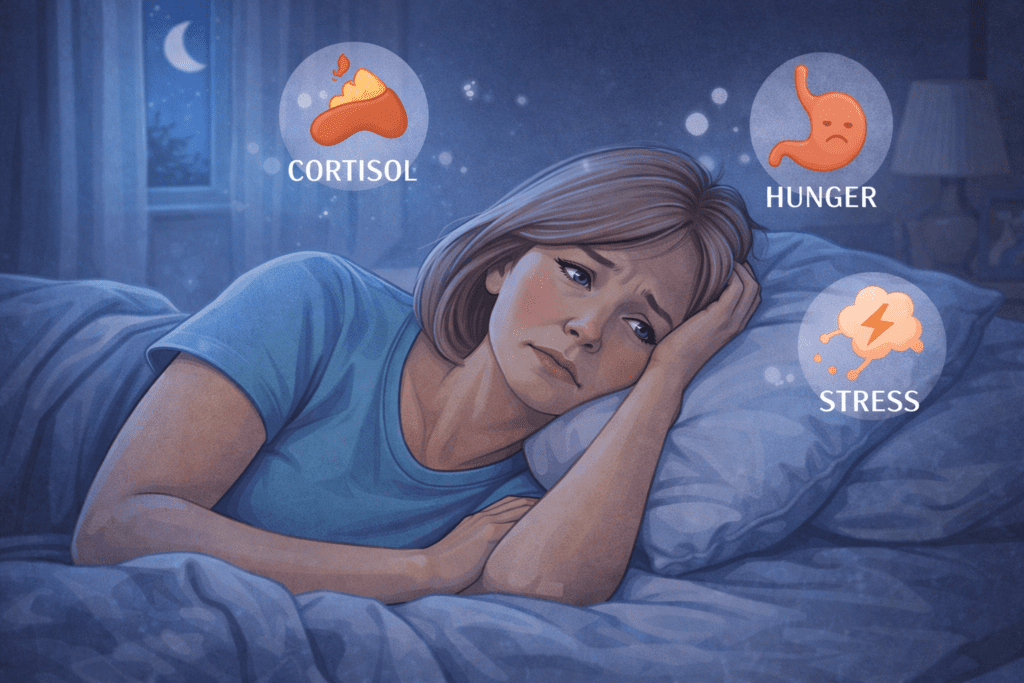
If you ask does poor sleep slow metabolism after 45, hormones are one big reason the answer can be yes.
Sleep affects several key hormones in the body.
Cortisol
Poor sleep can raise cortisol, the stress hormone.
When cortisol stays high, the body may store more fat around the belly.
(You can learn more in our guide on Cortisol and Belly Fat After 45.)
Ghrelin and Leptin
Sleep also affects hunger hormones.
Lack of sleep can:
Raise ghrelin (the hunger hormone)
Lower leptin (the fullness hormone)
This can make you feel hungrier and eat more than usual.
Insulin
Sleep also helps control blood sugar.
Studies show that even short periods of poor sleep can make the body less sensitive to insulin.
When insulin works less effectively, blood sugar balance can become harder for the body to manage.
When this happens, the body may store more energy as fat.
Does Poor Sleep Slow Metabolism After 45 by Reducing Muscle?
Yes, sleep can affect metabolism in an indirect way.
Muscle helps your body burn energy. When sleep is poor for a long time, several things can happen:
Your body takes longer to recover
Muscles repair more slowly
Strength training feels harder
Adults naturally lose muscle over time, especially when strength training and muscle-support habits are inconsistent.
Learn more about this in our guide on Muscle Loss After 45.
Good sleep helps the body recover and rebuild muscle.
Signs Poor Sleep May Be Affecting Your Metabolism
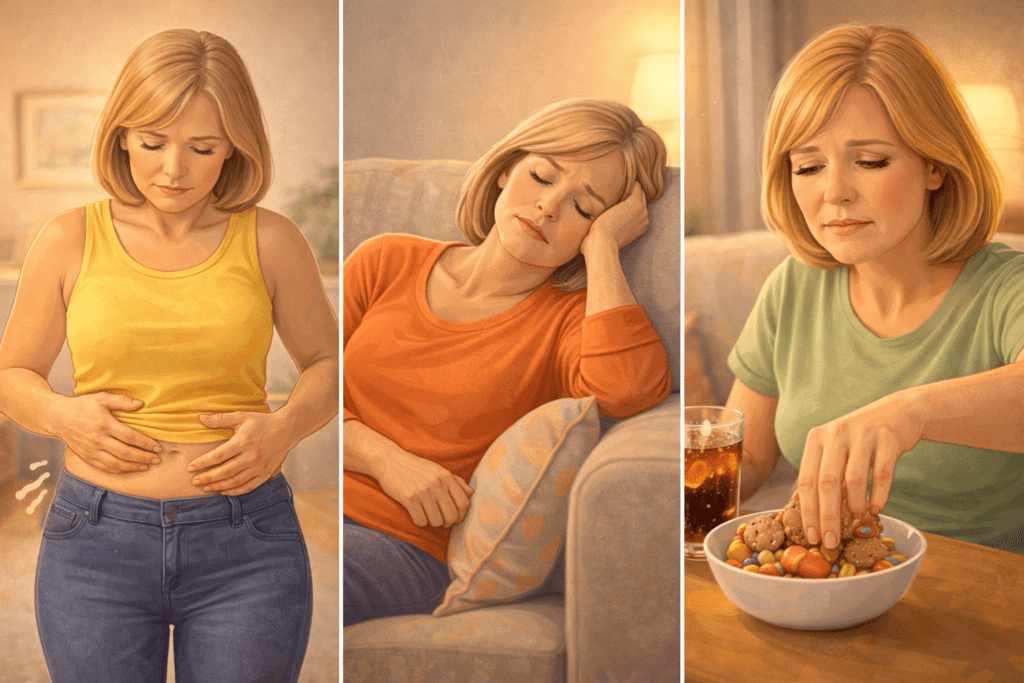
If you wonder does poor sleep slow metabolism after 45, watch for these signs:
More belly fat
Strong cravings for carbs or sugar
Energy crashes in the afternoon
Trouble losing weight
Feeling tired but unable to relax at night
These signs often appear when metabolism begins to slow after 45.
(You can also review our guide on Signs Your Metabolism Is Slowing After 45 for a broader overview.)
For many women, poor sleep may be the missing piece.
Why Sleep Becomes Harder After 45 for Many American Women
Sleep changes are common in midlife, especially for many women in the United States balancing stress, work, family responsibilities, and changing hormones.
Hormone changes play a major role in sleep quality during midlife. Learn more in How Hormones Affect Metabolism After 40.
This happens for several reasons:
Estrogen can affect body temperature
Progesterone helps the body relax
Stress often increases during this time
Night sweats may wake you up
Sleep problems during perimenopause are very common.
But just because it is common does not mean you should ignore it.
Simple Fixes If Poor Sleep Is Slowing Metabolism After 45

If poor sleep slows metabolism after 45, there are simple steps you can take.
Start with small changes.
Keep a Regular Sleep Time
Go to bed and wake up at the same time every day.
Reduce Light at Night
Turn off phones, TVs, and screens about one hour before bed.
Eat Light in the Evening
Avoid lots of sugar or alcohol late at night.
Do Strength Training
Try strength training two to three times each week.
Muscle helps the body burn more energy.
Lower Stress Before Bed
Simple habits help relax the body.
Slow breathing or gentle stretching can help lower stress hormones at night.
These habits may seem simple, but when done consistently, they can significantly improve how your body regulates energy, hunger, and metabolism over time.
When Lifestyle Support Isn’t Enough
If you have improved your sleep but still wonder does poor sleep slow metabolism after 45, it may help to look at a few other areas.
These include:
Blood sugar balance
Thyroid health
Long-term stress
All of these can affect how the body uses energy.
Small improvements made consistently often create meaningful long-term results, especially when sleep, nutrition, movement, and stress management work together.
If you’ve improved your sleep but still feel like your metabolism isn’t responding, you’re not alone.
Many women over 45 look at additional support alongside better sleep, balanced nutrition, and strength training.
You can also explore our guide on Best Supplements for Women Over 40 to learn what many women are adding alongside healthier sleep and metabolism-support habits:
The Bottom Line: Does Poor Sleep Slow Metabolism After 45?
Yes — poor sleep can affect your body in many ways.
It can change hormones, hunger, blood sugar control, and muscle recovery.
Sleep alone does not control metabolism.
But poor sleep over time can make other midlife changes worse.
The good news is that sleep can improve. Many American women over 40 begin noticing positive changes when they support sleep quality, stress levels, blood sugar balance, and consistent daily routines together.
Simple habits can help:
Keep a regular daily routine
Manage stress
Do strength training
Eat balanced meals
These habits help support a healthy metabolism, even after 45.
When you understand whether poor sleep slows metabolism after 45, you can see what may be affecting your body.
And when you have clarity, it becomes easier to make better choices.
If you’ve already started improving your sleep, nutrition, movement, and daily habits but want to compare additional nutrition options many women over 40 explore, our Best Supplements for Women Over 40 guide can help you understand which approaches may best fit your goals.
FAQ: Does Poor Sleep Slow Metabolism After 45?
- Can poor sleep slow metabolism and cause weight gain after 45?
Yes. Poor sleep can disrupt hunger hormones, increase cravings, reduce energy levels, and affect how your body burns calories, which may lead to gradual weight gain. - How many hours of sleep do women over 45 need?
Most women need 7 to 8 hours of good sleep each night. This helps the body rest and stay balanced. - Does sleep affect belly fat?
Yes. Poor sleep can raise stress hormones like cortisol. This can lead to more belly fat. - Can better sleep improve metabolism?
Yes. Good sleep helps your body work better. It supports hormones, muscles, and energy use. - Why is sleep harder after 45?
Sleep can get harder due to hormone changes, stress, and daily habits during midlife.
Be the first to comment