Table of Contents
ToggleIntroduction
Many American women over 45 notice a frustrating shift: the same meals, workouts, and healthy habits that once worked suddenly feel far less effective.
In the United States, women often notice stubborn belly fat, lower energy, slower recovery, and unexpected weight gain during midlife — even when they are trying harder than ever to stay healthy.
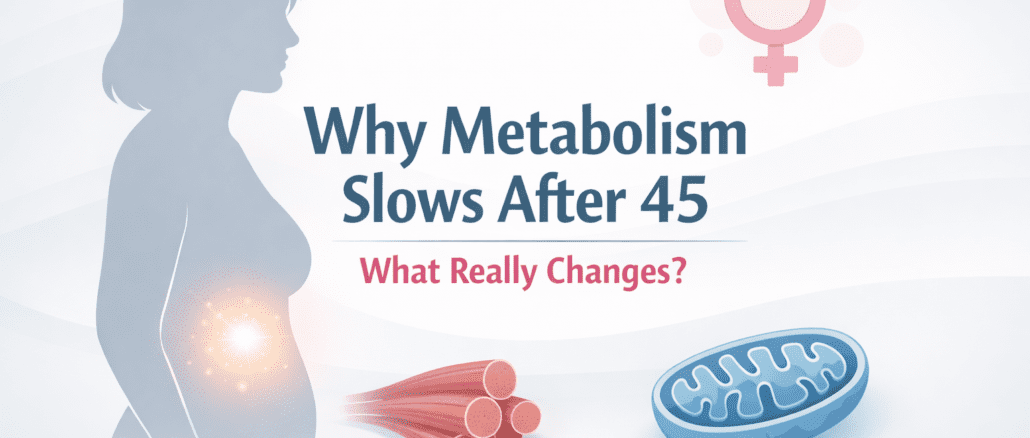
Why metabolism slows after 45 is something many women begin to notice when their body no longer responds the same way it used to.
If you feel like your metabolism suddenly slowed down after 45 — even though you’re trying harder than ever — you’re not imagining it, and you’re definitely not alone.
You may be eating the same, exercising the same… but your body feels completely different.
Weight gain happens more easily. Energy drops. And fat, especially around the belly, becomes harder to lose.
Many women also begin wondering why they are gaining weight after 45 even when their eating habits have not changed much. Similar patterns are explained in our guide on hormonal weight gain after 45.
For many American women, this becomes the moment things finally start making sense. The body is not simply responding the same way it did in earlier decades, even with similar habits.
Several biological and hormonal changes begin happening during midlife, and together they can significantly affect how the body uses energy, stores fat, and responds to healthy habits.
Hormonal Shifts in Midlife

One major reason metabolism slows after 45 is hormonal change.
In the United States, many women begin noticing these shifts during busy years filled with work stress, family responsibilities, inconsistent sleep, and changing wellness routines.
As women approach perimenopause and menopause, estrogen and progesterone levels begin to fluctuate and gradually decline.
Estrogen plays a key role in regulating fat distribution, appetite signals, and insulin sensitivity. Research continues to show that menopause-related hormonal changes can influence body weight, fat distribution, energy levels, and metabolic health in midlife women.
If you’d like a deeper explanation of how hormone changes influence metabolism during midlife, you may also find this guide helpful:
Loss of Lean Muscle Mass

Another reason metabolism slows after 45 is muscle loss.
Muscle burns more calories than fat. It works even when the body rests.
After age 30, muscle slowly drops each year. This happens faster without strength training.
By the mid-40s, this loss can lower calorie burn.
With less muscle, the body needs fewer calories. Eating the same can lead to weight gain.
Muscle also helps control blood sugar. It pulls sugar from the blood for energy.
When muscle drops, blood sugar control gets weaker. This can lead to more fat storage.
Changes in Mitochondrial Efficiency
Metabolism is not only about hormones or muscle. It also depends on each cell.
Inside cells are mitochondria. They help make energy from food.
As women age, these parts work less well. The body makes energy more slowly.
This can happen even with the same calories.
Stress, hormone changes, and less movement can add to this.
When cells make less energy, metabolism feels slower. Tiredness can increase.
Workout recovery may also take longer.
This shows why midlife metabolism is complex. It is not just about calories.
Regular movement helps cell energy. Good food and rest also support metabolism.
Many women also begin noticing subtle signs their metabolism is slowing long before major weight changes appear.
If these symptoms sound familiar, you may also find these guides helpful:
Insulin Sensitivity and Fat Storage
Another reason metabolism slows after 45 is insulin change.
Insulin helps move sugar from the blood into cells. Cells use this sugar for energy.
In midlife, hormones shift and muscle drops. This can make insulin work less well.
When insulin works poorly, blood sugar rises. The body may store more fat.
Many women gain weight around the belly after 45. This often links to insulin and hormone changes.
It is not only about eating more.
Better insulin control needs daily habits. Strength training helps a lot.
Meals with protein and fiber help too. Good sleep and low stress matter.
These habits help keep metabolism steady in midlife.
For many women, this is the moment things start feeling confusing.
The body suddenly reacts differently to foods, workouts, stress, sleep, and even daily routines that once felt manageable.
Many American women describe this stage as feeling like their body changed without warning.
Why Traditional Dieting Becomes Less Effective
Many American women feel frustrated after 45 because they are genuinely trying.
They are meal prepping, walking more, avoiding sugar, joining gyms, and following the same wellness habits that worked for years — yet their body feels completely different.
The same diets no longer work. Eating less or doing more cardio may change nothing.
This is one reason many women feel like diet and exercise stop working after 45 despite putting in more effort than before. Many women notice similar frustrations described in our guide on why losing weight after 40 feels so difficult for women.
This happens because metabolism is more complex now. Calories are not the only factor.
Hormone changes affect results. Muscle loss also plays a role. Insulin changes matter too.
Very low calories can slow metabolism more. The body tries to save energy.
This makes weight loss harder over time.
Too much cardio can also cause muscle loss. Less muscle means slower calorie burn.
A better plan works best after 45. Strength training helps protect muscle.
Enough protein also matters. These steps support a healthy metabolism.
What Actually Helps When Metabolism Slows After 45?
Understanding the causes is important—but knowing what actually helps is what creates results.
Many American women see better progress when they stop relying on extreme dieting and instead focus on sustainable habits that fit realistic U.S. lifestyles:
• Supporting hormone balance
• Maintaining muscle through strength training
• Keeping blood sugar stable
• Improving sleep and stress levels
• Supporting cellular energy
What Women Can Do to Support Metabolism

Metabolism slows after 45. But women can still support it.
Here are simple steps that help.
1. Build and keep muscle
Strength training helps keep muscle strong. Muscle burns calories at rest.
Even two or three workouts a week can help.
If you’d like to understand why preserving muscle becomes so important after midlife, this guide explains it in more detail:
2. Eat enough protein
Protein helps protect muscle.
If you’re unsure how much protein is appropriate during midlife, this guide explains recommended daily intake and practical meal ideas:
👉 How Much Protein Do Women Over 45 Need?
It also helps recovery.
Try to spread protein across meals.
3. Sleep well and lower stress
Sleep affects hormones.
If sleep has become more difficult after 45, you may also find this guide helpful:
👉 Does Poor Sleep Slow Metabolism After 45
Poor sleep can raise stress hormones.
High stress can raise hunger and fat storage.
4. Stay consistent with supportive habits
Small, sustainable changes practiced consistently often have a greater long-term impact than extreme diets or short-term routines. Building habits around movement, balanced meals, sleep, and stress management creates a stronger foundation for metabolic health.
Knowing why metabolism slows is the first step.
After 45, progress is not about strict dieting.
It is about steady habits, strong muscles, and balance.
Editorial Note: This article is intended for educational purposes and is based on publicly available nutrition, metabolism, and healthy aging research. Individual experiences vary, and the information provided should not be considered medical advice or a substitute for guidance from a qualified healthcare professional.
Final Thoughts
Metabolism slows after 45 because of natural changes in hormones, muscle tissue, and cell energy systems, but these shifts are a normal part of midlife and should not be seen as permanent limits.
When women understand why metabolism slows after 45, they can stop blaming willpower and instead focus on supporting the body through balanced hormones, preserved muscle mass, and healthy cellular energy production.
With informed choices and steady daily habits, metabolism slows after 45 far less than many women expect, and strength training, proper nutrition, and recovery-focused routines can help maintain energy, stability, and resilience throughout midlife.
If you’ve been focusing on healthy habits but still feel like something is missing, you’re not alone.
For many women in the United States, this becomes the point where they finally realize their body is responding differently—not failing.
If you’ve already started improving your nutrition, sleep, strength training, and daily routines, you may be looking for additional ways to support those healthy habits.
Our Best Supplements for Women Over 40 guide explains commonly used metabolism-support ingredients, summarizes current research, and helps you compare options before deciding what may fit your goals.
FAQ: Why Metabolism Slows After 45
Why does metabolism slow after 45 in women?
After 45, metabolism slows mainly due to hormonal changes, reduced muscle mass, and lower cellular energy production, all of which affect how efficiently your body burns calories.
Can metabolism be improved after 45?
Yes, it can. Lift weights. Eat enough protein. Keep your blood sugar steady. Sleep well. These habits help your body burn better.
Does menopause slow metabolism?
Yes. During menopause, hormones change. This can lead to more fat and less muscle. It can also slow how your body uses energy.
Why am I gaining weight without eating more?
Your body may burn less than before. At the same time, it may store more fat. This can happen even if you eat the same.
Is slow metabolism permanent?
No, it is not. With simple habits, you can support your metabolism and improve it over time.

Be the first to comment